
The most common first job for a new professional organizer is a pantry or a primary closet, it takes 4 to 6 hours, and it bills between $350 and $750 plus $150 to $600 in bins and labels. That job is also where most new organizers lose money, because they spend four unbilled hours shopping for products, two more returning what did not fit, and then feel awkward charging for any of it.
This guide covers how to start a home-organizing business that books real clients and bills for all of the work: which niche to pick, how to price by the hour and by the space, what insurance you actually need, how to buy and mark up products without eating your margin, and where the first five clients come from. It is written for someone starting solo with a car, a label maker and a few hundred dollars, in a market where the customer usually found you on Instagram, through a realtor, or in a neighborhood Facebook group.
Expect to spend $600 to $1,500 to launch lean, or $3,000 to $4,500 with a full product kit, a website and NAPO membership, and 2 to 6 weeks from decision to first paid session.
What a home-organizing business actually looks like day to day
The work is part editing, part design, part physical labor and part counseling. A typical full day is one client session of 5 to 7 hours: an hour pulling everything out of the space, two to three hours sorting with the client into keep, donate, relocate and trash, an hour or two placing and containing, and thirty minutes on labels and a walk-through. You lift bins all day, kneel on hard floors and make several hundred small decisions on someone else’s behalf while they tell you about their mother.
Demand peaks in January (resolutions), late spring (garages, moves), August (kids’ rooms) and October through mid-November (before hosting); late December is quiet. Move-in unpacks, downsizing for older adults and pre-listing declutters for realtors run year round and are the most reliable revenue because someone else’s deadline sets the schedule.
Margins are excellent on labor, since you have no inventory and no truck, and thin on product unless you mark it up deliberately. The person who thrives is decisive, physically fit, unbothered by mess and genuinely warm; clients are embarrassed when you arrive and grateful when you leave, and the referral happens in between. What kills these businesses is under-pricing, unbilled hours (shopping, planning, driving donations) and a calendar full of one-off closets with no repeat or partner work.
Two market signals: a whole-home unpack after a move, two organizers over two days, bills $2,500 to $5,000 in most metros, and realtors regularly refer pre-listing declutters at $500 to $1,500 because a decluttered house photographs and sells better.
Step 1: Pick your niche and your service model
“I organize homes” is too broad to market. Pick a lane for the first year, take adjacent work when it comes, and specialize once you know what you enjoy.
| Niche | Typical job | Pricing pattern | Trade-offs |
|---|---|---|---|
| Closets, pantries, kitchens | 4–8 hours per space | Package per space, $400–$1,200 plus product | Most searched, most Instagram-friendly, most competition |
| Move-in unpacking and setup | 2–4 organizers, 1–3 days | $1,500–$6,000 per move | Big tickets, realtor and mover referrals, needs helpers fast |
| Downsizing and senior moves | Multi-week projects | Hourly or project, $2,000–$8,000 | Steady, emotionally heavy, NASMM training helps |
| Garages, basements, storage units | Full day, heavy lifting | $600–$1,500 plus hauling | Men hire for this; pairs with junk removal |
| Home office and paper | Half day, recurring | Hourly, $75–$150 | Small tickets but repeat maintenance visits |
| Playrooms and kids’ spaces | Half day | Package, $350–$700 | Fast, product-heavy, seasonal in August |
There are also two service models layered on top. The labor-only model has the client buy products (you send a shopping list) and you bill hours. The full-service model has you plan, purchase, deliver, install and return, and bill product at retail or with a markup. Full-service earns more and feels more premium, and it is where the unbilled hours hide, so if you choose it, bill a planning-and-sourcing fee (2 to 3 hours) on every project.
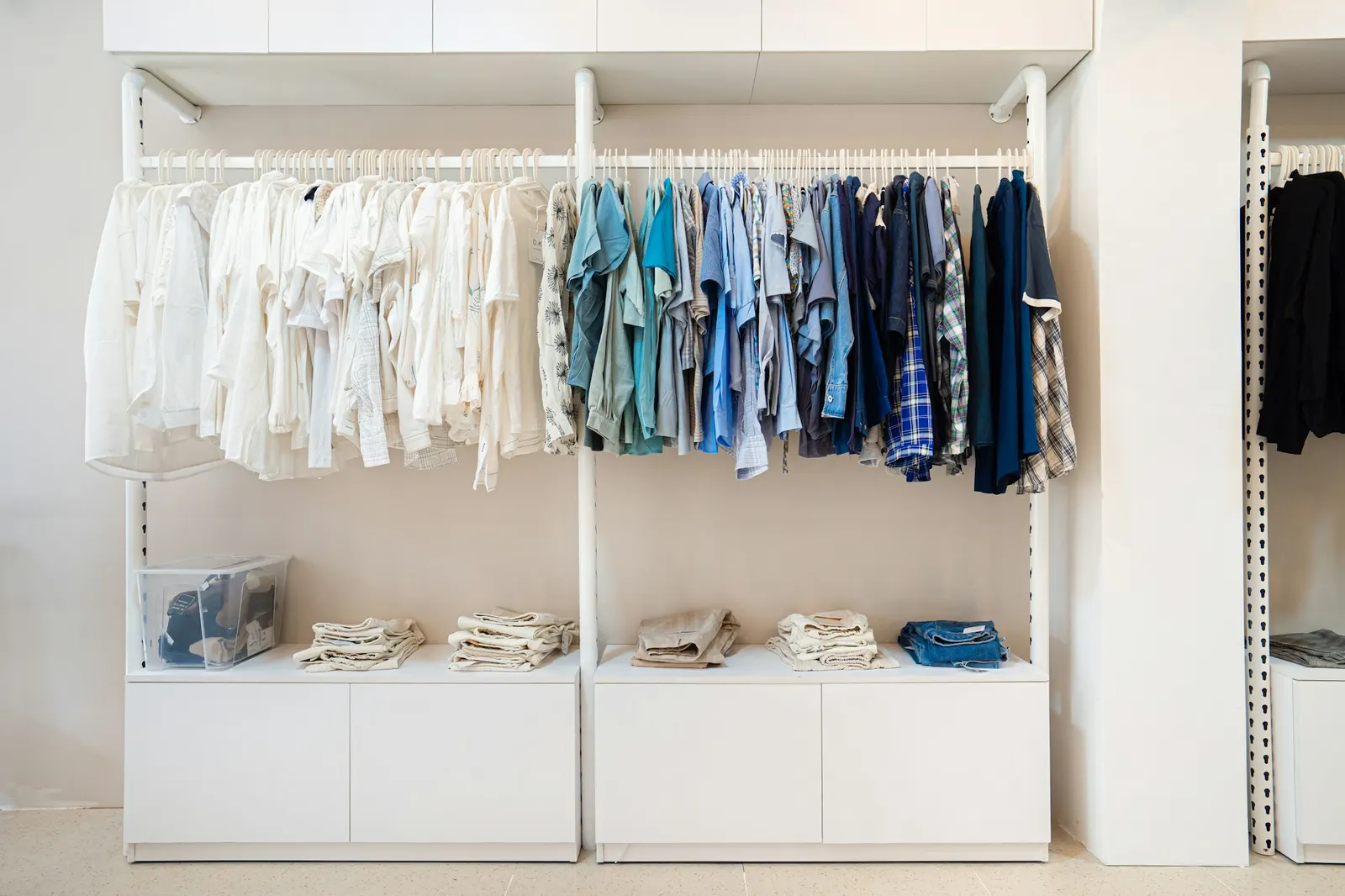
Tip: Your first niche should be the space you can photograph best. Before-and-after photos are the whole marketing engine, and a pantry with matching bins photographs better than a filing cabinet.
Step 2: Legal setup, certifications and what you actually need
You need very little paperwork to organize someone’s closet, which is exactly why you should get the little you need right.
- Entity. An LLC ($50 to $500 depending on the state) is the standard choice for anyone working alone inside clients’ homes with their belongings. It costs less than one client’s broken lamp. A sole proprietorship is legal but leaves your personal assets exposed. Get a free EIN from the IRS and open a business checking account.
- Business license. Most cities and counties require a general business license ($25 to $150 a year). Search “[your city] business license home-based.”
- Sales tax permit. If you resell products to clients (bins, shelving) you are a retailer in most states and need a seller’s permit to collect sales tax on the product portion. If you only bill labor and the client buys products, you usually do not. Labor for organizing is not taxable in most states; check your state’s department of revenue.
- Certification. None required. The CPO credential from the Board of Certification for Professional Organizers needs 1,500 paid hours first. NAPO membership (around $300 a year plus a one-time fee) gets you a directory listing, a code of ethics to put on your site, and courses that are worth taking in your first six months. For senior work, the National Association of Senior and Specialty Move Managers has training clients’ families recognize. For hoarding-adjacent work, the Institute for Challenging Disorganization offers courses.
- Contracts. A one-page client agreement covering scope, rate, minimum session length, cancellation (48 hours), what happens to donated items, that final keep-or-toss decisions are the client’s, and a photo release for before-and-afters. Have a lawyer glance at it once; templates from NAPO are a fine starting point.
Step 3: Insurance for a home organizer
You are alone in someone’s house moving their belongings and, often, driving their donations away in your car. Three coverages, and a fourth when you hire.
| Coverage | Why you need it | Typical annual cost |
|---|---|---|
| General liability, $1,000,000 per occurrence | You break a vase, a client trips on your bins, a shelf you installed falls | $350–$800 |
| Hired and non-owned auto | You drive donations or products in your personal car for the business | $150–$400 (or a business-use endorsement on your personal policy) |
| Surety bond or dishonesty bond | Reassures clients about theft; some realtors and senior facilities require it | $100–$300 |
| Workers’ compensation | Required in most states from your first employee | $1,200–$3,000 for one helper |
Professional liability (E&O) is optional for organizers; a few carry it for downsizing work where a family later disputes what was discarded. More useful is the clause in your contract that the client makes every final decision on disposal, and a photo of every donation load.
Step 4: Equipment, product kit and startup costs
Your kit fits in a rolling tote and the back seat of a car.
| Item | Lean setup | Full setup |
|---|---|---|
| Label maker and tape (Brother P-touch or similar) | $60 | $180 (plus a Cricut for vinyl labels, $250) |
| Sorting bins, collapsible crates, contractor bags | $80 | $200 |
| Tools: tape measure, laser measure, drill, level, box cutter, shelf pins | $60 | $350 |
| Sample and loaner products (bins, turntables, drawer dividers) | $0 | $600–$1,200 |
| Rolling cart or tote, step stool, knee pads, gloves | $70 | $200 |
| Camera phone and a clip-on light for photos | $0 | $150 |
| LLC, EIN, business license, sales tax permit | $100 | $500 |
| Insurance, first year | $400 | $1,200 |
| NAPO membership and a first course | $0 | $500 |
| Website, domain, Google Business Profile, business cards | $50 | $350 |
| Branded polo or apron | $0 | $120 |
| Total | $820 | $4,350–$5,200 |
You do not need a product inventory. You need trade accounts so you can buy per project: The Container Store’s trade program, iDesign and mDesign direct, Amazon Business, and Target and IKEA for budget clients. Keep a spreadsheet of your 30 go-to products with dimensions; the first time a client’s drawers are 14 inches deep and every divider you bought is 15, you will understand why.
Step 5: Pricing that gets paid for every hour
Organizers price three ways, and most use two at once.
Hourly is simplest: $60 to $125 for a solo organizer in 2026, with a 3- or 4-hour minimum. New organizers in mid-size markets start at $55 to $70; in New York, the Bay Area, Los Angeles and Miami, $100 to $150 is normal and design-led organizers charge $200 or more. The risk is that clients watch the clock.
Packages by space are what experienced organizers move to: a fixed price for a finished pantry or reach-in closet, based on your average hours for that space plus a planning fee and a buffer. Clients say yes faster to “$650 for your pantry, done in a day” than to “$85 an hour, probably 6 to 8 hours.”
Project quotes cover moves, downsizing and whole homes: a walk-through, a written scope by room, a team size and a day count, priced at the team’s combined rate with a 10 percent contingency.
| Service | Typical 2026 price | Notes |
|---|---|---|
| Hourly, solo organizer | $60–$125 an hour, 3-hour minimum | Charge travel beyond 20 miles |
| Virtual organizing session | $50–$90 an hour | Video call, client does the labor |
| Reach-in closet | $350–$650 plus product | 4–6 hours |
| Walk-in closet or pantry | $500–$1,200 plus product | 6–10 hours |
| Kitchen (all cabinets and drawers) | $800–$1,800 plus product | 1–2 days, often two organizers |
| Garage | $700–$1,500 plus product and hauling | Full day, two people |
| Move-in unpack, 3-bedroom home | $2,500–$5,000 | 2–3 organizers, 2 days, kitchen first |
| Monthly maintenance visit | $200–$400 | 2–3 hours, recurring |
| Product sourcing and planning fee | 2–3 hours at your rate, or 15–25% markup on product | Bill one or the other, always |
The math to a monthly income: a solo organizer who books three client days a week at an average of $600 in labor grosses about $7,800 a month, plus $400 to $900 in product margin if you mark up. Twenty billable client hours a week is a realistic full-time load; the other fifteen to twenty hours go to consultations, shopping, returns, photos and marketing, which is why the planning fee matters.
On product, pick one policy and put it on your site. Either the client buys everything from your list (no markup, no liability, slower projects), or you buy at trade pricing and bill retail plus 15 to 25 percent for sourcing, or you bill product at cost and charge sourcing hours. Organizers who do none of these give away 8 to 12 hours a month.

Step 6: Get online where clients actually look
An organizing client decides based on photos and a feeling of trust, then checks that your prices are in their range and that you serve their neighborhood. Your website needs to answer all three in under a minute: a gallery of real before-and-afters (yours, not stock), a services page with starting-at prices or package prices, your service area, a short bio with your face, two or three reviews, and a book-a-consultation form that asks about the space, the deadline and the budget range.
You can have Restart build it: describe the business, the spaces you organize, your area, your pricing and how you want people to reach you, and it builds the pages, writes the copy, designs the site and publishes it to a real URL. Change anything afterwards by asking, which matters in a business where you add a new package or a new photo set every month. Restart’s service businesses page shows what it produces for trades like this.
Alongside the site:
- Instagram is the portfolio. Post before-and-afters, a reel of the sort, a labeled drawer. Local hashtags and geotags bring neighbors; organizers in most metros get their first stranger client from Instagram within 60 days of consistent posting.
- Google Business Profile under “Professional organizer,” with your service area, 15 or more photos and a review request texted to every client the day after the session. Reviews mentioning the neighborhood and the type of space help you rank for “closet organizer near me.”
- A business phone and calendar link. Answer consultations within an hour; the second organizer a client contacts usually books the job.
- A one-page PDF of services and prices you can send to realtors and movers.
Step 7: Land the first five clients
The first five jobs come from people who already trust you or from partners who need what you sell.
Direct
- Your own circle, at a real price. Offer three friends or neighbors a pantry or closet at 25 percent off your published rate in exchange for a review and before-and-after photos. Do not work free; free clients do not refer paying ones.
- Neighborhood Facebook groups and Nextdoor. Reply to every “does anyone know an organizer” post within an hour with a photo and your starting price. Post your own before-and-afters monthly where group rules allow.
- Thumbtack and Bark cost $15 to $40 per lead and convert one in four or five for a well-written profile with photos. Use them to fill the first two months, then stop.
Partners
- Real estate agents. Pre-listing declutters ($500 to $1,500) and move-in setups for their buyers. Bring coffee to a brokerage’s weekly meeting and leave your PDF. One agent who closes 20 homes a year is worth 5 to 8 jobs.
- Moving companies and the moving company owners in your area rarely offer unpacking; offer to be their unpack partner and give them a referral fee or reciprocal referrals.
- Interior designers and stagers, who need closets to match the rooms they finished.
- Senior living communities and estate attorneys for downsizing work.
- Junk haulers and cleaners. A junk removal crew sees every overflowing garage in town, and a cleaning company is in the same homes weekly.
For the first five jobs, charge your published minimum, not less, and set the terms clearly in a text before you arrive: session length, rate, what the client should do beforehand (nothing; do not let them pre-sort), and that you photograph the space. Send the before-and-after the same evening with a review link. Ask, at the end of the session, “Is there another room you’d want to do this year?” Roughly half say yes, and that is your repeat calendar.
Watch out: Never agree to a “quick consult” that turns into two hours of unpaid organizing advice. Paid consultations ($75 to $150, credited toward the first session) filter serious clients and pay for your time.
Step 8: Operate, hire and scale past your own hours
Sessions and scheduling. Book 5- to 7-hour sessions, one per day, and hold Fridays for shopping and returns. Take a 50 percent deposit on packages and a card on file for hourly work, with a 48-hour cancellation fee equal to your minimum. Track hours per space type in a spreadsheet; after ten jobs your package prices will be accurate.
Donations and disposal. Build a route: a donation center that takes furniture, a textile recycler, a hazardous waste drop-off, an electronics recycler. Photograph every load and email the client the donation receipt. Charge a haul-away fee ($50 to $150) when it fills your car.
The first helper. The moment you turn down a move-in unpack because you cannot do it alone, hire. Pay $22 to $35 an hour as a W-2 employee (workers’ comp follows) or bring on another solo organizer as a subcontractor with their own insurance for specific jobs. Bill the team at $150 to $220 an hour and the economics change immediately: two organizers finish a kitchen in a day and the client pays more happily for a shorter disruption.
What breaks at 2x. You stop organizing and start quoting, scheduling and quality-checking. Your photos and your style are what clients bought, so document your system (how you label, which products, how you stage the after shot) before anyone else touches a client’s home. Organizers who scale typically land at two to four organizers and $250,000 to $450,000 in revenue, netting 25 to 35 percent. The ceiling is management, not demand.
How much can you make?
Realistic 2026 numbers before income tax, assuming labor priced in the middle of the ranges above.
| Level | Volume | Monthly gross | Monthly costs | Monthly profit |
|---|---|---|---|---|
| Side income (weekends) | 4 sessions a month at $550 average | $2,200 | $250 (insurance, gas, supplies, software) | $1,950 |
| Full-time solo | 12 sessions a month at $650 plus $600 product margin | $8,400 | $900 (insurance, gas, supplies, marketing, software) | $7,500 |
| Small team (you plus 2 organizers) | 20 team days a month at $1,400 plus $1,200 product margin | $29,200 | $17,000 (wages, workers’ comp, insurance, van, marketing, software) | $12,200 |
A solo organizer with a full calendar nets $75,000 to $90,000 a year and is physically tired. Part-time organizers doing one or two sessions a week clear $20,000 to $30,000. A team of three nets $120,000 to $150,000 for the owner, who is now running a business rather than organizing pantries.
Mistakes that sink new home-organizing business owners
- Charging $35 to $45 an hour because you are new. You attract clients who haggle and you cannot afford insurance or marketing. Fix: start at $60 minimum, raise by $10 every 10 clients until bookings slow.
- Unbilled shopping and planning. Eight to twelve hours a month disappear. Fix: a planning fee or a product markup on every project, stated on the website.
- No contract, no deposit. Cancellations on the morning of a session and disputes over a discarded item. Fix: the one-page agreement, a 50 percent deposit and a photo of every donation load.
- Letting the client pre-sort. They spend three days doing it badly and then cancel because “it’s mostly done.” Fix: tell them to touch nothing before you arrive.
- Buying product before measuring. Two hours of returns per job. Fix: measure everything, photograph the space, and keep a dimensions spreadsheet of your go-to products.
- Only doing closets. One-off jobs with no repeat. Fix: pitch maintenance visits and add one partner channel (realtors or movers) in your first 60 days.
- Working without insurance because “it’s just a closet.” One cracked marble countertop from a dropped bin is $3,000. Fix: general liability before the first paid session.
Your first 30 days
Week 1
- Choose your niche and your product policy (client buys, markup, or sourcing fee) from Steps 1 and 5.
- File the LLC, get the EIN, open a business bank account, apply for the business license and, if you will resell product, the sales tax permit.
- Get two general liability quotes at $1,000,000 and add business use to your auto policy.
- Write your price list and one-page client agreement.
- Build the website on Restart, set up Instagram and the Google Business Profile.
Week 2
- Buy the lean kit: label maker, sorting bins, tools, tote, step stool.
- Open trade accounts (The Container Store trade program, iDesign, mDesign, Amazon Business) and build your 30-product dimensions spreadsheet.
- Organize one space in your own home or a friend’s and shoot proper before-and-afters in daylight.
- Join NAPO if it is in budget; find your local chapter meeting date.
Week 3
- Book three discounted first clients from your circle; complete at least one.
- Post the first before-and-afters on Instagram and Google; reply to every organizer request in local groups.
- Send your PDF to 10 real estate agents and 3 moving companies, and ask for a five-minute call.
- Set up Thumbtack or Bark if your calendar is empty.
Week 4
- Complete the remaining first clients, collect reviews and photos, and ask each about the next room.
- Follow up with every agent and mover from week 3; offer a free 30-minute lunch-and-learn at one brokerage.
- Review your hours per space and set your first package prices.
- Map your donation and disposal route and save the drop-off hours.