A solo house cleaner in a mid-sized American city who cleans two homes a day, five days a week, at $180 a visit grosses about $7,800 a month with almost no overhead. That is the appeal for anyone working out how to start a cleaning business, and it is real. What beginners get wrong is the other half of the equation: a recurring client who pays $180 every two weeks is worth about $4,500 a year, so the game is not finding cleaning jobs, it is finding and keeping thirty households or a dozen small offices that never leave.
This guide is for anyone working out how to start a cleaning business in 2026, whether you plan to clean homes yourself, run night-time office routes, or build a crew you manage from a phone. It covers the choice between residential and commercial, the legal and insurance setup you actually need, a startup kit with real prices, how to price so you make money after the third month, and how to land the first ten clients.
What a cleaning business actually looks like day to day
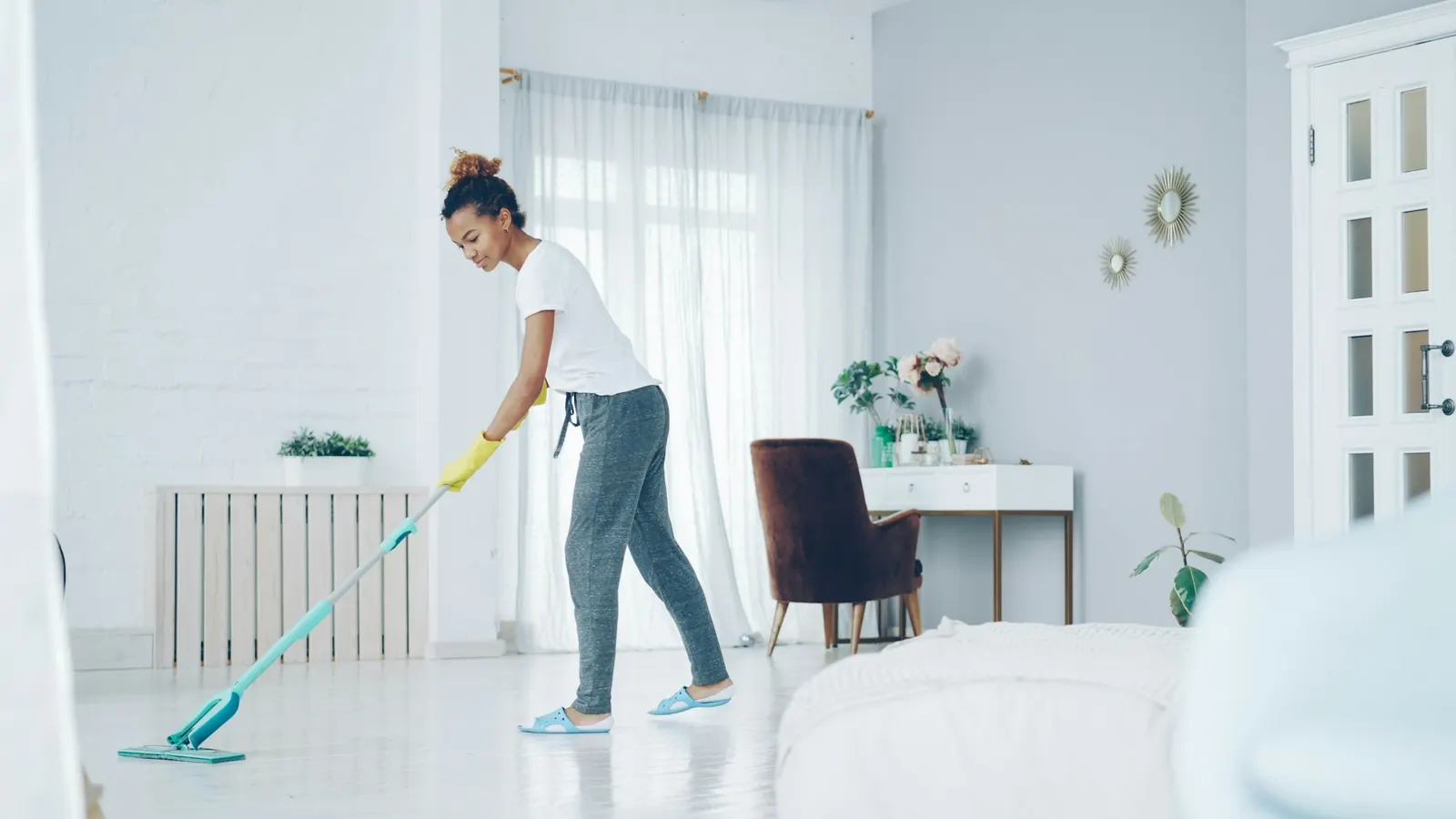
Residential cleaning is a daytime job with a rhythm: arrive at 8:30, clean a 2,000-square-foot home in two to three hours, drive twenty minutes, do it again, finish by 3. You work alone in someone’s home, often with a dog watching. The work is physical in a repetitive way and it wears on wrists and knees first.
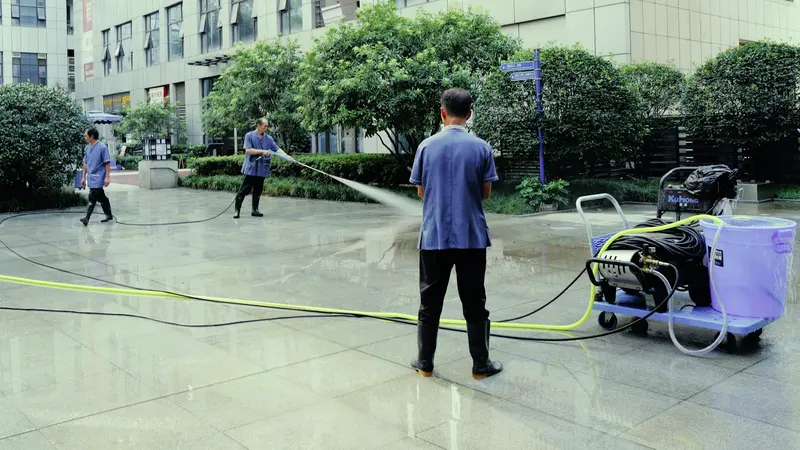
Commercial cleaning inverts the day. Offices, clinics, gyms and daycares want you after 6 p.m. or before 6 a.m., and they want the same thing every night: trash, restrooms, floors, touch points. A single 10,000-square-foot office can pay $1,500 to $3,000 a month. The trade-off is that a facilities manager makes the decision, and they will ask about your insurance certificate and janitorial bond before they ask your price.
Two market signals worth knowing. A $150 to $220 biweekly clean is now a normal household line item in most metros, and a good recurring client stays for years, which is why established cleaning companies sell for real money. What kills new cleaning businesses is not demand. It is underpricing by 30 percent, no-showing a client once, and running out of cash between doing commercial work and getting paid net-30.
The people who thrive are dependable to a degree most people are not: same day, same time, same quality, every two weeks for years.
Step 1: Choose residential, commercial, or a specialty
Pick one lane to start. Each needs different hours, equipment and selling.
- Recurring residential. Weekly or biweekly cleans of homes. Fastest to start, simplest to sell, daytime hours, paid the same day. Solo ceiling is about 30 to 35 active clients.
- Deep cleans and move-outs. One-time jobs at $300 to $600 from realtors, landlords and property managers. Higher ticket, no recurring revenue, feast-and-famine without referral partners.
- Commercial janitorial. Nightly or three-times-weekly service for offices, clinics, gyms and churches. Bigger contracts, longer sales cycle, net-30 payments, higher insurance requirements.
- Post-construction cleanup. Dust, paint splatter and stickers in newly built spaces, at $0.25 to $0.60 per square foot from builders. Filthy, irregular, well paid.
- Short-term rental turnovers. Same-day cleans between Airbnb guests at $90 to $180 with laundry. Steady volume from a few hosts, tight windows, weekend-heavy.
Most people should begin with recurring residential plus move-outs, because both use the same kit and the move-outs feed you realtor relationships. Add a small office once your days are full and you want night revenue you can hand to a first employee.
Step 2: Set up the legal side (LLC, EIN, licenses, sales tax)
Form an LLC. You are working alone inside other people’s homes, and a sole proprietorship means a broken heirloom or a slip-and-fall claim is aimed at your personal savings. State filing fees run $50 to $500; most states are $100 to $200. File directly on your Secretary of State’s website rather than paying a formation service $300 for the same form.
Then get an EIN from the IRS (free, ten minutes online), open a business checking account, and check three local requirements:
- City or county business license. Most municipalities require one or a home-occupation permit, typically $25 to $150 a year.
- Sales tax on cleaning services. Cleaning is taxable in Texas, Ohio, New Mexico, Iowa, Pennsylvania (building cleaning), West Virginia, Hawaii and several other states. There you need a sales tax permit and you add tax to every invoice. Search your state name plus taxability of janitorial services, or call your Department of Revenue.
- DBA / trade name. If you operate under a name other than your LLC’s legal name, register it with the state or county.
You do not need a contractor’s license or any cleaning certification; ISSA and IICRC credentials help only when pitching medical clients.
Tip: Open the business bank account and card before your first job. Mixing money is the fastest way to make your LLC useless in a lawsuit and your taxes miserable in April.
Step 3: Get insured and bonded
Homeowners rarely ask about insurance until something breaks; commercial clients ask before the walkthrough.
| Coverage | What it covers | Typical annual premium |
|---|---|---|
| General liability ($1M/$2M) | Damage to client property, injuries to third parties | $400–$900 solo; $1,200–$3,000 with a crew |
| Janitorial bond ($10,000–$25,000) | Theft of client property by you or an employee | $100–$300 |
| Commercial auto or hired/non-owned auto | Accidents while driving for work; personal policies often exclude business use | $1,200–$2,500 commercial; $150–$400 HNOA |
| Inland marine / equipment | Stolen or damaged vacuums, floor machines | $150–$400 |
| Workers’ compensation | Required in nearly every state once you have a W-2 employee | $1,500–$4,000 per $100,000 of payroll |
General liability is not optional. Quote Next, Thimble, Hiscox and a local independent agent; monthly billing means the first month costs $35 to $80. Ask for a certificate of insurance once bound, and for a “care, custody and control” endorsement, which covers damage to the item you were actually handling (the TV you dropped while dusting behind it). Base policies often exclude exactly that, and it is the claim that happens most in this business. The endorsement adds $100 to $300.
A janitorial bond is cheap credibility: it pays a client if someone on your team steals from them, and “licensed, bonded and insured” is language homeowners look for.
Step 4: Buy your equipment (with real 2026 prices)
You do not need a van or commercial machines. You need a kit that fits in a car trunk and looks professional coming through the door.
| Item | Lean start (residential) | Full setup (residential + small commercial) |
|---|---|---|
| Vacuum | $150–$300 (Shark, Bissell commercial) | $500–$900 (ProTeam backpack) |
| Microfiber (60+ cloths), mop system, color-coded caddies | $120–$180 | $250–$400 |
| Professional concentrates (all-purpose, glass, bathroom, degreaser, disinfectant, wood/stone-safe) | $80–$150 | $250–$400 |
| Extension duster, scrubbers, grout brush, razor scraper, knee pads | $60–$100 | $100–$150 |
| Floor machine or auto-scrubber (used) | — | $1,000–$3,000 |
| Uniform shirts, shoe covers, gloves, first-aid kit | $80–$150 | $200–$400 |
| Vehicle magnets or lettering | $60–$120 | $300–$800 |
| Scheduling, invoicing, card payments | $0–$40/mo | $50–$150/mo |
| LLC, license, EIN, first-month insurance | $200–$500 | $300–$700 |
| Website, Google Business Profile, flyers/first ads | $100–$400 | $500–$1,500 |
| Total | $850–$1,900 | $3,450–$8,400 |
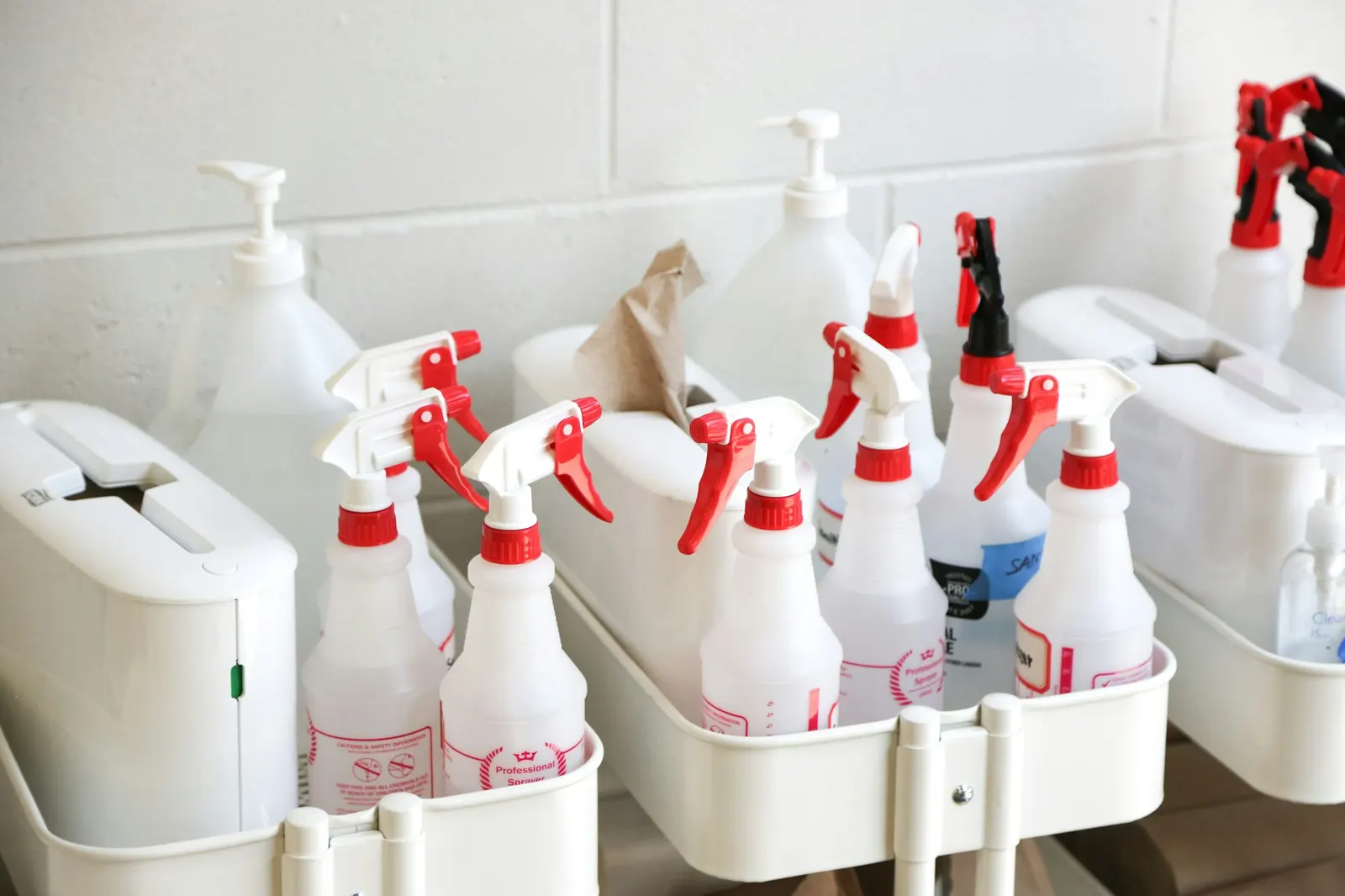
Buy concentrates from a janitorial supplier rather than retail sprays; a $30 gallon makes 60 bottles. Color-code everything: red cloths for toilets, blue for glass, green for kitchens, yellow for general surfaces, which prevents the relationship-ending mistake of a toilet cloth on a kitchen counter. And never use the client’s vacuum; bring your own so pet hair from house A never lands in house B.
Step 5: Price so you actually make money
Beginners price by the hour and lose twice: clients resent watching the clock, and you get punished for being efficient. Price per job, based on a target labor rate you keep to yourself.
Decide what an hour of your labor must earn. For a solo cleaner in 2026 that is $45 to $70 depending on your metro. Multiply by the time a home takes you, add 10 to 15 percent for drive time and supplies, and quote a flat price. Revisit after the second clean, because the first clean always runs long.
| Service | Typical 2026 price | Time (solo) |
|---|---|---|
| Recurring biweekly clean, 2 bed / 2 bath | $120–$170 | 2–2.5 hours |
| Recurring biweekly clean, 3–4 bed / 2.5 bath | $160–$240 | 2.5–3.5 hours |
| First-time deep clean, 3 bed | $300–$450 | 5–7 hours |
| Move-out clean (empty, inside appliances and cabinets) | $350–$600 | 5–8 hours |
| Airbnb turnover with laundry, 2 bed | $100–$170 | 1.5–2.5 hours |
| Small office, 3,000 sq ft, 3 nights/week | $600–$1,000/month | 1.5 hours per visit |
| Medical or dental suite, 5 nights/week | $1,200–$2,500/month | 2 hours per visit |
Three rules separate profitable cleaners from busy ones. Charge a first-clean premium of 1.5 to 2 times your recurring rate, because getting a house to your baseline takes twice as long as maintaining it. Give the best rate to weekly clients, then biweekly, then monthly; monthly clients are nearly a deep clean every time. And add $15 to $30 per extra for ovens, fridges, inside windows and laundry rather than absorbing them.
Commercial pricing is per square foot per visit, converted to a monthly figure: $0.08 to $0.15 for general office, $0.15 to $0.25 for medical. Walk the space, count restrooms (each is 15 to 20 minutes), and say whether consumables like paper and soap are included.
Watch out: Never quote a home you have not seen, at least on a video call. “Three bedrooms” ranges from 1,400 square feet of laminate to 3,200 square feet with three dogs and white grout.
Step 6: Get online and look like a real company
Homeowners choosing a cleaner do one thing: search “house cleaning near me” or ask a Facebook group, then look you up. What they find in that thirty-second check decides whether they call.
You need a Google Business Profile with a real service area, hours, a number that is answered or texted back within the hour, and five reviews in the first month (ask every early client the same day, by text, with the direct link). You need a website that says what you clean, where, roughly what it costs (“recurring cleans from $140”), shows real before-and-after photos of bathrooms and kitchens, states that you are insured and bonded, and lets someone request a quote in under a minute.
You can have Restart build the website: describe the business (services, service area, starting-at pricing, how you want people to reach you) and it builds the pages, writes the copy, designs the site and publishes it to a real URL. When you add commercial cleaning or raise prices, change it by asking. Pair it with a dedicated business number and a scheduling and invoicing tool (Jobber, ZenMaid and Housecall Pro have starter tiers under $50 a month) that sends reminders and takes cards. More examples of what small service businesses need online are on that page.
Step 7: Land your first ten clients
Cleaning is a trust purchase, so first clients come from people who can vouch for you or who see you vouched for.
Week one: warm network and launch pricing
Ask three people you know to be paying clients at a launch rate (say $120 for a biweekly clean instead of your eventual $160) in exchange for a Google review and photos. Do not clean for free; free clients do not refer paying ones. Post in three to five local Facebook groups and on Nextdoor with a before-and-after and a plain offer: “New locally owned cleaning company, insured and bonded, taking on 10 recurring clients in [neighborhood] this month. Biweekly cleans from $130. Text for a quote.”
Weeks two to four: referral partners
Visit or email ten real estate agents and five small property management companies with a move-out price sheet and a 48-hour turnaround promise. One good agent sends two to four move-outs a month, each a $400 job and a chance to pitch the buyer on recurring service. Approach Airbnb hosts through local host groups; three hosts with two properties each is a steady $1,500 a month.
Paid channels and what they cost
Thumbtack and Angi leads cost $15 to $60 each and convert at 10 to 25 percent, so a client costs $100 to $300 to acquire: fine for a recurring client worth $4,000 a year, terrible for a one-time clean. Google Local Services Ads require a background check and proof of insurance, then charge $20 to $50 per lead and convert better because the client called you. Door hangers cost about $0.10 each and return roughly one call per 200 to 400. Yard signs at clients’ homes, with permission, are nearly free and work in dense neighborhoods.
For the first five jobs: launch rate for recurring clients, full price for deep cleans and move-outs. Text when you are on the way and ask for the review before you leave the driveway.
Step 8: Operate like a company, then hire
At fifteen recurring clients the business stops being about cleaning and starts being about systems.
Checklists and a client sheet. A room-by-room checklist for standard and deep cleans, plus a one-page sheet per client: alarm code, pets, products they refuse, quirks. This is what lets a second cleaner deliver your standard.
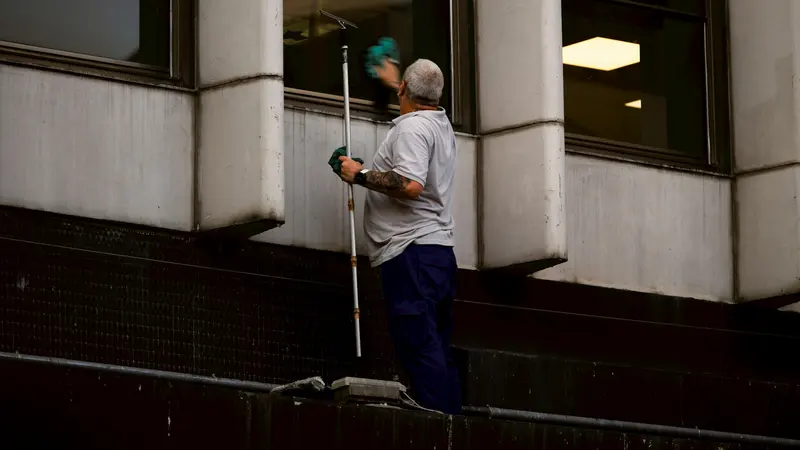
Route density. Group clients by neighborhood and day. Two homes twenty minutes apart cost you 40 minutes every visit. Turn down clients outside your zone or add a $15 to $25 travel surcharge. Once routes are tight, window cleaning is the natural add-on: same clients, same neighborhoods, higher ticket.
Contracts and payment. Residential: a short service agreement, card on file charged after each clean, 48-hour cancellation policy with a 50 percent fee. Commercial: a written contract with scope, frequency, monthly price and a 30-day termination clause; net-30 is standard, so keep two months of expenses in the bank before you take one.
The first hire. Hire when you are turning down work. A W-2 cleaner in 2026 costs $17 to $24 an hour plus 12 to 18 percent for payroll taxes and workers’ comp, so a $180 clean that takes 2.5 hours costs about $55 in labor and $15 in supplies and fuel, leaving $110 before your overhead. Resist the 1099 shortcut: cleaners you schedule, supply and direct are employees under IRS and most state tests, and state labor departments audit cleaning companies specifically. Payroll through Gusto or a local service is about $50 a month.
What breaks at 2x. Around 30 clients or $12,000 a month you will be cleaning all day and quoting, scheduling and chasing payments all night. Take yourself off the schedule one day a week, then two, and spend it selling and training. Revenue dips for a month and then climbs past where it was.
How much can you make?
Numbers for a mid-cost US metro in 2026. Costs include supplies, insurance, fuel, software and marketing, and exclude your own income taxes.
| Level | Volume | Monthly revenue | Monthly costs | Monthly profit |
|---|---|---|---|---|
| Side income (evenings + Saturdays) | 8 biweekly clients + 2 move-outs/mo | $2,300–$3,200 | $350–$500 | $1,900–$2,800 |
| Full-time solo | 28 biweekly clients + 3 move-outs/mo | $10,500–$13,500 | $1,100–$1,600 | $9,000–$12,000 |
| Small team (you + 3 cleaners, 2 offices) | 70 residential clients + 2 commercial contracts | $32,000–$42,000 | $21,000–$28,000 | $9,000–$14,000 |
The small team does not out-earn the solo operator by much at first, and that is the phase where most owners stop growing. Profit at the team level arrives at six to eight cleaners with tight routes, where owner income of $150,000 to $250,000 is realistic and the business sells for roughly one times annual revenue. A solo operator’s ceiling is your own body: about $110,000 to $140,000 a year in expensive metros, half that in cheaper ones.
Mistakes that sink new cleaning business owners
- Pricing to win every quote. If nobody says you are too expensive, you are 25 percent too cheap. Fix: raise new-client prices every ten clients until one in four declines.
- No first-clean premium. The first visit takes twice as long and you eat the difference forever. Fix: quote a deep clean first, then the recurring rate.
- Using the client’s vacuum and products. Inconsistent results, cross-contamination, and you look like a helper rather than a company. Fix: bring your own kit, every time.
- Missing or moving appointments. One no-show ends a $4,000-a-year relationship. Fix: confirm by text the day before, never overbook, and arrange a backup cleaner you trade favors with before you need one.
- Skipping the care, custody and control endorsement. Base liability often excludes damage to the item you were cleaning. Fix: ask your agent for it by name.
- Taking a big commercial contract too early. A $3,000-a-month office paid net-30 with nightly hours can swallow your schedule and your cash. Fix: take commercial work only with someone to staff it and two months of expenses saved.
Your first 30 days
Week 1
- Pick your lane: recurring residential plus move-outs, or commercial if you already have a contact.
- File the LLC; apply for an EIN; open a business bank account.
- Check your city business license and whether your state taxes cleaning services.
- Bind general liability with the care, custody and control endorsement; request a certificate of insurance.
- Build the website on Restart with services, area, starting prices and a quote form; claim your Google Business Profile.
Week 2
- Buy the lean kit: vacuum, color-coded microfiber, concentrates, caddy, knee pads, shirts.
- Write your standard and deep-clean checklists and a quote script; set prices.
- Set up a business phone number and a scheduling and invoicing tool with card payments.
- Line up three launch clients from your own network in exchange for reviews.
Week 3
- Clean the three launch homes; photograph bathrooms and kitchens; collect three Google reviews.
- Post in five local Facebook groups and Nextdoor with photos and the launch offer.
- Email or visit ten realtors and five property managers with a move-out price sheet.
- Order door hangers or yard signs for your target neighborhood.
Week 4
- Follow up every lead within an hour; quote from photos or a walkthrough, never blind.
- Aim for eight to ten recurring clients booked and two move-outs completed.
- Add the janitorial bond.
- Review the month: hours per home, revenue per hour, which channel brought each client. Raise prices for the next ten.