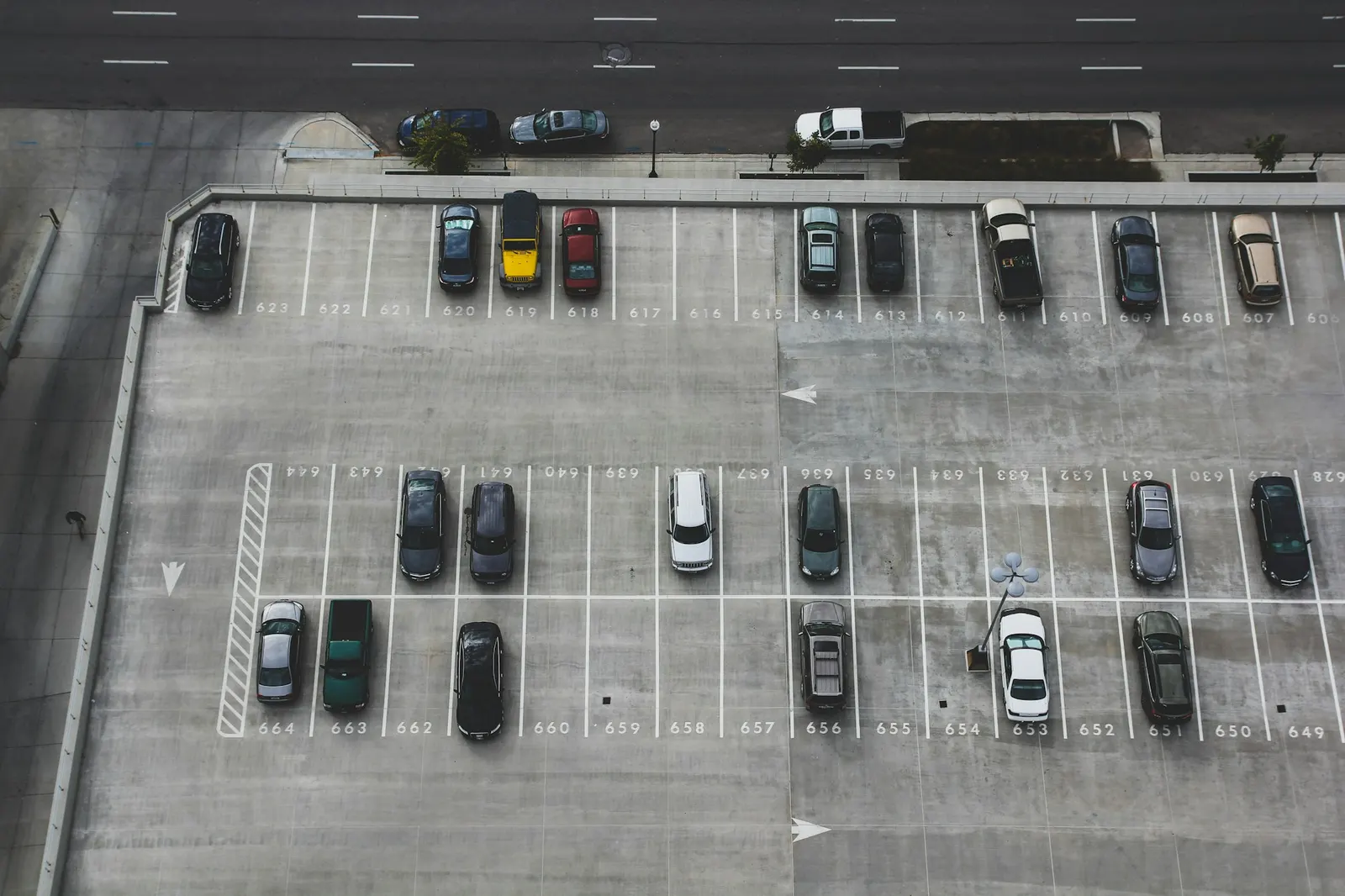
A 40-space surface lot three blocks from a downtown courthouse, leased for $2,500 a month, can gross $8,000 to $12,000 a month with no employees and a payment kiosk. The same 40 spaces six blocks out will sit at 15 percent occupancy and cost you the lease every month. Nearly everything about how to start a parking lot business comes down to that location math, and the people who do well are the ones who spend their first month walking blocks and counting cars rather than shopping for equipment.
This guide covers the real path: leasing land versus buying it, the permits and parking taxes cities impose, garage keepers insurance, pay-by-plate and gate equipment with 2026 prices, how hourly, monthly, and event pricing work together, and how to find your first lot and fill it. It is written for someone in the US starting with one lot, with a path toward a small portfolio or a parking management company that operates lots for property owners.
What a parking lot business actually looks like day to day
Once a lot is set up, the daily work is short. You check occupancy and revenue in the payment dashboard, drive by to look for trash, broken lights, and unpaid plates, and answer a few calls from monthly customers. Two or three times a month something real happens: a towing dispute, a car left for a week, a light pole that needs a contractor. Events are the exception: game days and concerts mean four to eight hours of directing traffic and, if you take cash, watching the money.
The economics look like real estate, not a service business. Revenue is spaces times rate times occupancy times turnover. Costs are the lease or mortgage, insurance, payment processing (3 to 6 percent plus a per-transaction fee), lighting, cleaning, snow removal, and parking tax where it applies. Labor is near zero for a self-pay lot. Margins on a well-located lot run 60 to 80 percent; on a bad one they run negative.
Two signals to check before you sign anything. First, what do the nearest garages charge, and are they full by 9 a.m.? If a garage two blocks away has open spaces at noon, your lot will too. Second, what is the demand mix: commuters (steady, want monthly permits), visitors (hourly, turnover), evening and event traffic (spiky, high-rate)? A lot that serves only one has empty hours you cannot fill.
People who thrive here enjoy negotiating with property owners and reading a neighborhood. What kills these businesses is leasing a lot because it was available rather than needed, underestimating city requirements, and running cash with no controls.
Step 1: Choose your model
There are four ways into parking, and they need very different amounts of capital.
Lease and operate. You lease an existing paved lot (or underused portion of one) from the owner at a fixed rent or a revenue share and run it as public parking. Lowest capital, fastest start, and how most independent operators begin. Risk: the owner can sell or develop the land, so negotiate the longest term with the most exits you can get.
Buy and operate. You purchase land and run it as a lot, usually as a land-banking play where parking covers the carry until the land is worth developing. This is real estate investing with parking as the tenant; it takes $200,000 or more and is a second or third move.
Event and pop-up parking. You arrange short-term use of lots near stadiums, arenas, fairgrounds, festivals, and downtown districts on event days, often from churches, schools, and businesses that are closed at those times. Revenue share with the owner (typically 30 to 50 percent), cash or app payment, staff for traffic. Very low capital, very high per-day revenue, and an excellent way to learn the business and build cash for a lease.
Parking management. You operate lots owned by others (office buildings, hospitals, hotels, HOAs, municipalities) for a management fee or a percentage of revenue. Zero real estate risk, requires a track record and insurance, and is how one-lot operators become companies. It also overlaps with property management, where parking is often an unmanaged line item.
Most owners start with event parking or one leased lot, use the data and cash to lease a second, then pitch management contracts to owners who have seen their lots run well.
Step 2: Find and evaluate a lot
This is the step that decides the business. Spend two to four weeks on it.
Where the lots are
Walk the blocks within a quarter mile of the demand generators in your city: courthouse, hospital, arena, university, transit station, entertainment district, dense office cluster. Look for paved land that sits empty part of the day: church lots (empty weekdays), office lots (empty evenings), closed retail and bank branches, fenced land with “future site of” signs, and lots with hand-painted signs and a cash box. Pull ownership from the county assessor’s website; out-of-town owners are the most receptive to a letter.
How to evaluate one
Count cars in nearby lots and garages at 9 a.m., noon, 3 p.m., and 7 p.m. on a weekday and again on a Saturday. Note the posted rates within two blocks. Estimate the space count (a standard space is about 9 by 18 feet; a well-laid-out acre holds roughly 100 to 130 spaces). Then run the revenue math: spaces times achievable daily rate times realistic weekday occupancy times 21 weekdays, plus monthly permits, plus event days. A lot that does not clear its lease at 50 percent weekday occupancy is not a lot you want.
Check paving, drainage, lighting, fencing, curb cuts, and whether the parcel already has zoning approval for commercial parking. Repaving costs $2 to $5 per square foot; a new light pole is $3,000 to $8,000 installed. Those numbers belong in your negotiation.
Negotiating the lease
Offer either fixed monthly rent (owners like certainty; you keep the upside) or a revenue share of 30 to 50 percent (owners share risk; you keep less). Ask for a three-year term with renewals, an exit if permits are denied, and clarity on who pays property taxes, lighting electricity, and capital repairs. Owners holding land for development often accept month-to-month with 90-day termination, fine for an event lot and risky for one you spend $20,000 to equip.
Step 3: Handle permits, zoning, and parking tax
Parking is a regulated land use almost everywhere, and the requirements are local. Budget two to eight weeks for approvals and start before you sign a lease, or make the lease contingent on them.
- Entity. Form an LLC ($50 to $500 by state), ideally one per lot as you grow so a claim at one location does not reach the others.
- EIN and a business bank account.
- Commercial parking operator license. Most cities of any size require one, often through the finance, transportation, or business licensing department. Fees range from $100 to over $1,000 a year and may require a surety bond ($5,000 to $25,000 in some cities). Search “[your city] commercial parking lot license.”
- Zoning and certificate of occupancy. The parcel must be zoned to allow commercial parking (or have a conditional use permit). If the lot has never been used as public parking, expect a zoning application and possibly a site plan review covering lighting, landscaping, and stormwater.
- ADA compliance. Federal accessibility standards set a minimum number of accessible spaces (for example, one accessible space for lots up to 25 spaces, two for 26 to 50, and so on, with at least one van-accessible space) with specific dimensions, access aisles, and signage.
- Parking tax. Many large cities and some counties tax parking receipts, commonly 10 to 25 percent, with monthly returns. Chicago, Pittsburgh, New York, Los Angeles, San Francisco, Miami-Dade, and others have well-known versions; confirm yours with the city finance department. Add state and local sales tax where parking is taxable.
- Signage and towing. Rates, hours, towing policy, and the operator’s name and phone number typically must be posted at each entrance. Most states regulate private-property towing (posted signs, licensed tow operator, notice); get the statute and follow it exactly, because illegal tows generate lawsuits and news stories.
Watch out: A lot that has operated as informal parking for years may have no permit at all. If you take it over, the city will treat you as a new operator and apply current lighting, ADA, and stormwater standards. Price that into the lease.
Step 4: Get insured
Parking has a specific insurance profile because you are custodian of other people’s cars and host to the public at all hours.
| Coverage | What it covers | Realistic annual premium |
|---|---|---|
| General liability ($1M/$2M) | Slip-and-fall, assaults, injuries on the lot | $1,500–$4,000 per lot |
| Garage keepers legal liability | Damage to or theft of customer vehicles in your care | $1,500–$5,000 |
| Property / equipment | Kiosks, gates, lighting, signage against vandalism and theft | $300–$1,000 |
| Crime / cash handling | Employee theft and robbery, if you take cash at events | $300–$800 |
| Workers’ compensation | Required in most states for attendants | $2,000–$5,000 per $100,000 of payroll |
| Umbrella ($1M–$5M) | Excess over the primary limits; often required by landlords and management clients | $800–$2,500 |
Garage keepers coverage comes in “legal liability” form (you pay only if you are negligent) and “direct primary” form (you pay regardless of fault). Self-pay lots with clear “park at your own risk” signage usually carry legal liability form; valet and attended lots should carry direct primary. Landlords will require you to name them as additional insured.
Step 5: Equip the lot
The good news is that modern pay-by-plate technology has made gates, arms, and attendants optional for most surface lots. The bad news is that lighting and paving are where the real money goes.
| Item | Lean (event or small leased lot) | Full setup (50–100 space daily lot) |
|---|---|---|
| Lease deposit and first month | $2,000–$5,000 | $5,000–$12,000 |
| Pay-by-plate kiosk (solar, cellular) | $0 (app-only with QR signage) | $6,000–$12,000 per kiosk |
| Mobile payment app setup (ParkMobile, Passport, Flowbird, or similar) | $0–$500 setup; 10–20% revenue share or per-transaction fee | same |
| Signage: rates, hours, towing, entrance, wayfinding | $600 | $2,500 |
| Line striping, wheel stops, numbering | $800 | $3,000–$6,000 |
| ADA spaces, signs, access aisles | $400 | $1,500 |
| Lighting repair or LED retrofit | $0–$1,500 | $5,000–$20,000 |
| Fencing, bollards, chains for closure | $500 | $3,000–$8,000 |
| Security cameras (cellular, solar) | $300 | $2,000–$5,000 |
| License plate recognition camera for enforcement | — | $4,000–$10,000 |
| Cones, vests, flashlights, cash boxes (event) | $300 | $600 |
| Permits, license, surety bond, zoning application | $500 | $2,000–$5,000 |
| Insurance down payment | $800 | $2,500 |
| Total | $6,200–$11,200 | $37,000–$88,000 |
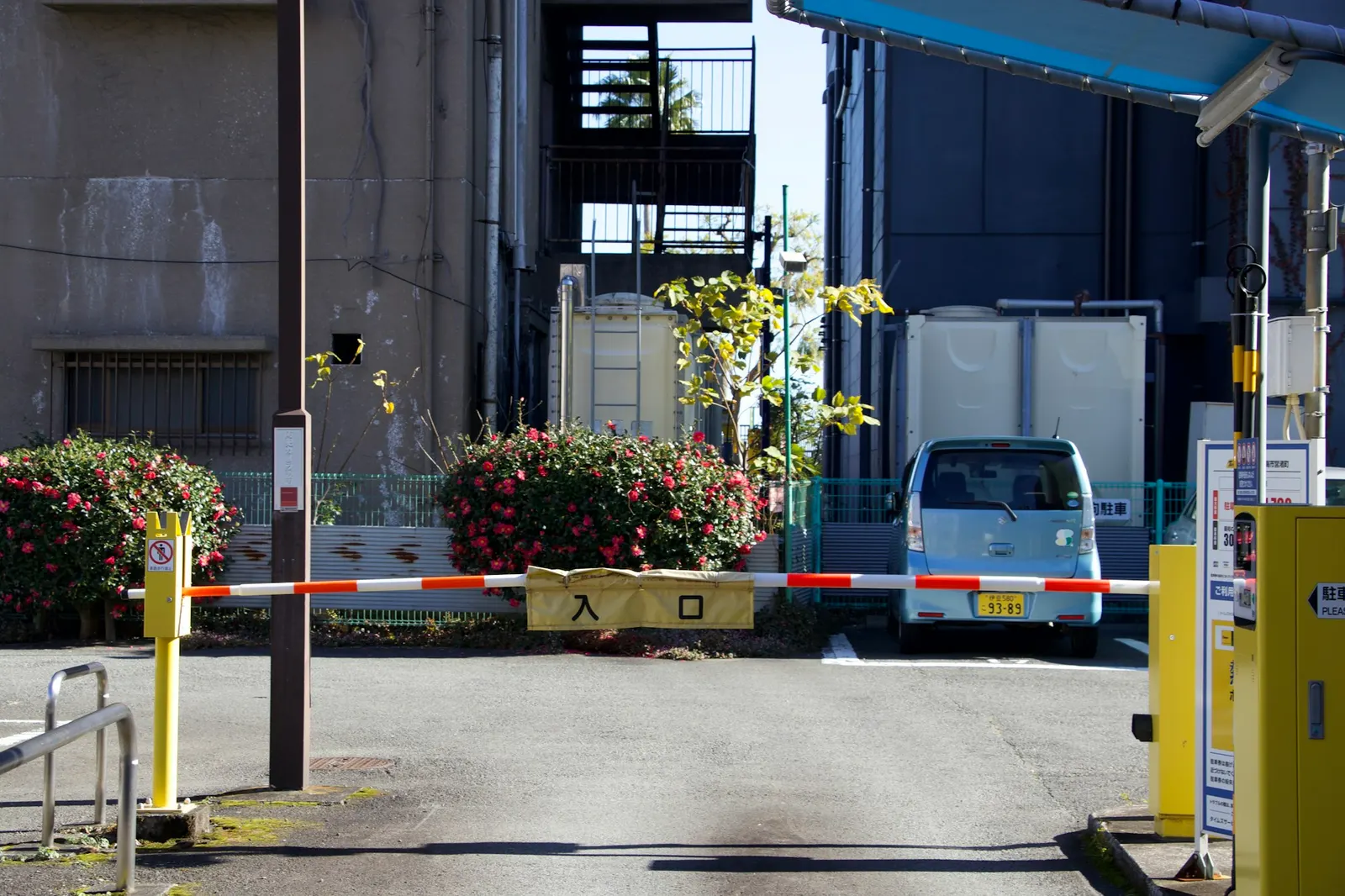
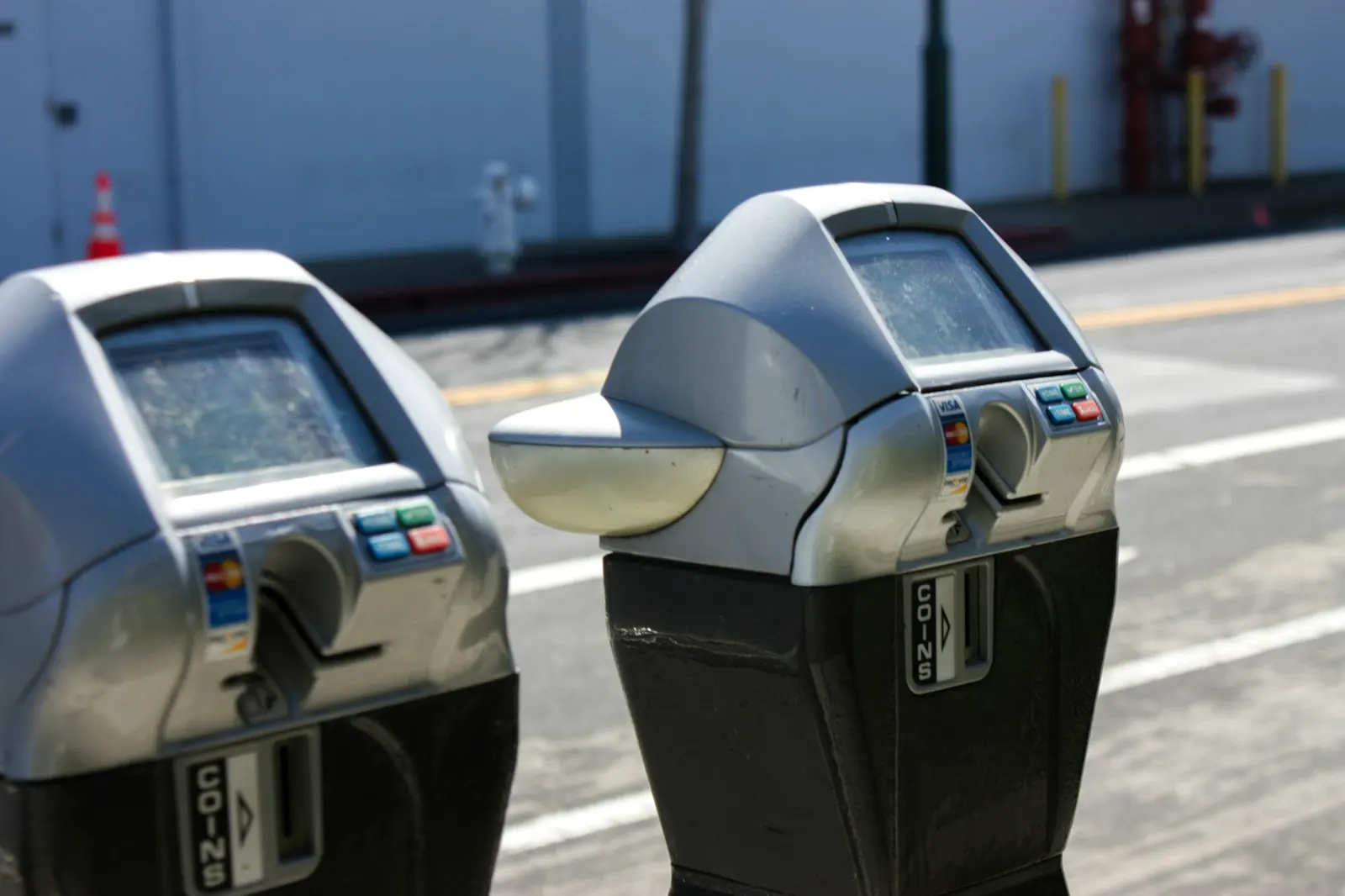
Start app-only if the city allows it: a QR code sign at each entrance pointing to a mobile payment zone, with enforcement by plate check. Add a kiosk when a meaningful share of customers (older visitors, event crowds) will not download an app. Gates belong in garages and high-volume lots; they cost $15,000 to $40,000 per lane installed and break often.
Step 6: Set your pricing
A lot has three revenue streams, and the skill is filling every hour with the highest-paying customer who wants it. Weekday commuters want monthly permits and will leave if you raise rates; visitors pay hourly and care about proximity; event parkers pay whatever the block charges.
| Product | Typical price (2026, mid-size downtown) | Notes |
|---|---|---|
| Hourly | $2–$5 per hour | First hour often priced higher to discourage short stays in daily lots |
| Daily maximum | $8–$20 | Early-bird rate ($6–$12 in by 9 a.m.) fills weekday mornings |
| Evening flat rate | $5–$12 after 5 p.m. | For restaurant and nightlife districts |
| Monthly unreserved permit | $75–$250 | Sell no more than 110–120% of spaces if commuters churn during the day |
| Monthly reserved | $150–$400 | Signed space; sells to executives and small businesses nearby |
| Event flat rate | $15–$50 | Set by distance to the venue; check what the closest lots post |
| Oversize or overnight | +$5–$15 |
Rates in New York, San Francisco, Boston, and Chicago cores run two to four times these figures; small cities run below them. Price a surface lot slightly under the nearest garage and above the city meters, and change rates by day and time; the payment apps make this simple.
The monthly math
Take a 50-space lot leased at $3,000 a month. Sell 20 monthly permits at $140 ($2,800). Fill the remaining 30 spaces at 60 percent weekday occupancy at an average of $11 a day for 21 weekdays ($4,160). Add four evening or weekend event days at 45 cars times $20 ($3,600). Gross is about $10,560. Subtract lease ($3,000), payment processing and app fees at roughly 12 percent ($1,270), parking tax if applicable at 15 percent ($1,580), insurance ($450), lighting, cleaning, and snow ($400). Net is around $3,860 a month with no employees. Without the parking tax, closer to $5,400.

Step 7: Get online and look legitimate
Drivers decide where to park before they leave home, and property owners decide whether to lease you land after a search. Both need to find a real company. The website should list every location with its address, rates by time and day, hours, how to pay, and monthly permit information (price, how to sign up, waitlist if full); an events page listing upcoming venue dates and the flat rate; a page for property owners explaining that you lease or manage lots and what you pay; and a phone number that reaches a person during business hours and a voicemail that gets returned that day. Photos of each lot, lit at night, with clear signage, do more than any copy.
You can have Restart build it: describe the company, your lots, rates, monthly permits, event days, and how you want drivers and owners to reach you, and it builds the pages, writes the copy, designs the site, and publishes it to a real URL. When you add a second lot or change event rates, change the pages by asking. Other local businesses with multiple locations get the most from a locations page that a driver can read in the car and a landowner page that sells the next lease.
List each lot on Google Maps as a “Parking lot” or “Parking garage” with hours and rate photos, and on the parking aggregator apps (SpotHero, ParkWhiz, and the payment provider’s own map), which sell daily and event reservations for a 15 to 25 percent commission and are often where half of a new lot’s visitor demand comes from.
Step 8: Fill the lot and win your first customers
Monthly permits come first. They are predictable and they fill weekday hours. Walk into every business within three blocks, ask the office manager where employees park and what they pay, and offer a permit at $10 to $20 under the nearest garage, with a company rate for five or more.
Daily and hourly demand comes from visibility. Big, clean rate signs facing traffic, a lit lot at night, and listings on the aggregator apps. A sign that says “Courthouse parking $12” outperforms one that says “Public parking.”
Events are the cash days. Ask the venue’s operations office to list you on their parking page. Post the event rate on your sign and the apps the day the event is announced. Staff two people in vests for anything over 60 cars; pre-sell reserved spots on the apps at a premium.
Property owners come from proof. After three months of clean operations, print a one-page summary (occupancy, revenue, what you paid the owner) and mail it to the owners of the ten most underused lots from Step 2 with a specific offer. A striping or pressure washing contractor who works downtown lots is a referral source in both directions.
For your first five monthly customers, price at your posted rate but waive the first month’s setup or give the first month at half; for your first event, take the block’s going rate and do not undercut, because the venue’s regulars will notice and expect it forever.
Tip: Enforce from week one. A lot where nobody checks plates becomes a free lot within a month, and the paying customers leave. Two plate checks a day, a warning notice on the first offense, and a tow on the third teaches the block quickly.
Step 9: Operate and scale
Weekly routine. Reconcile app and kiosk revenue against bank deposits; drive the lot twice a day (or contract a patrol at $150 to $400 a month); log any incident; check every light. Sweep monthly, restripe every two to three years, sealcoat every three to five. In snow climates, sign a plow contract in September.
Cash controls for events. Numbered tickets, two people per entrance, a cash count at close with both signatures, and a deposit the next morning. Better: push everyone to the app or a card reader and take cash only as a fallback.
Hiring. The first hire is usually a part-time event attendant at $18 to $25 an hour, then a lot supervisor at four or five locations. Attendants only make sense when they cover their cost in added revenue or prevented loss.
The second lot and beyond. Each added lot repeats the first lot’s math with less learning cost, and shared insurance, patrol, and software spread overhead. What breaks at four or five lots: your time (each lot is a phone call a day), cash controls at events, and parking-tax bookkeeping across jurisdictions. That is when you hire an operations manager and start taking third-party management contracts at a 15 to 25 percent fee.
How much can you make?
Parking income is location-bound and lumpy, so the scenarios below assume a mid-size downtown with moderate demand and a 15 percent parking tax where applicable. Remove the tax in cities without one and the profits rise accordingly.
| Scenario | Work volume | Monthly revenue | Monthly costs | Monthly profit |
|---|---|---|---|---|
| Event-only side income | 8 event days a month, 70 cars at $20, 40% share to landowner | $11,200 | $7,700 (owner share $4,480, two attendants, insurance, app fees, supplies) | $3,500 |
| One leased 50-space daily lot | 20 monthly permits, 60% weekday occupancy, 4 events | $10,600 | $6,700 (lease, processing, parking tax, insurance, maintenance) | $3,900 |
| Small portfolio (3 leased lots, 1 managed) | 3 daily lots as above plus a management fee | $36,000 | $23,500 (leases, processing, tax, insurance, part-time supervisor, patrol) | $12,500 |
A single well-located leased lot nets $35,000 to $70,000 a year for a few hours of weekly work; a bad one loses $1,000 a month for the length of the lease. A three-to-five lot portfolio produces $120,000 to $200,000 in owner profit and is where most independent operators plateau, because the next step, buying land or bidding on municipal garages, takes capital and a track record built over years.
Mistakes that sink new parking lot owners
- Leasing the lot that was available instead of the lot that was needed. Fix: count cars at four times of day for a week and refuse any lot that does not clear its rent at 50 percent occupancy.
- Skipping the permit check before signing. Zoning denies parking use and you are stuck with a lease. Fix: make the lease contingent on permits and certificate of occupancy.
- Ignoring parking tax. A 15 to 25 percent tax on gross receipts turns a profitable lot into a loss. Fix: confirm with the city finance department and build it into the rate.
- No enforcement. Free riders take over and paying customers leave. Fix: plate checks twice daily from day one and a posted, statute-compliant towing policy.
- Cash at events without controls. Attendants pocket a third of the take. Fix: numbered tickets, two-person counts, and card or app payment as the default.
- Under-insuring. A stolen car or an assault on an unlit lot becomes a lawsuit. Fix: garage keepers plus general liability plus an umbrella, and lights that work.
- Overselling monthly permits. Permit holders arrive at 10 a.m. to a full lot and cancel. Fix: cap permits at 110 to 120 percent of spaces.
Your first 30 days
Week 1
- Form the LLC, get the EIN, open the business bank account
- Identify the demand generators in your city and walk the blocks around them; list every underused paved lot
- Pull ownership records from the county assessor for the ten best candidates
- Call the city’s business licensing and zoning offices to learn the commercial parking license, zoning, ADA, and parking tax requirements
- Build the website on Restart: locations, rates, monthly permits, event parking, landowner page
Week 2
- Count cars at nearby lots and garages at four times of day, weekday and Saturday; note posted rates
- Send lease-or-revenue-share letters to the ten owners; follow up by phone
- Get insurance quotes for general liability, garage keepers, and an umbrella
- Open an account with a mobile payment provider and a parking aggregator app
Week 3
- Negotiate a lease on the best lot with a permit contingency, three-year term, and clear cost allocation
- Submit the commercial parking license application and any zoning or certificate of occupancy paperwork
- Get quotes for signage, striping, ADA spaces, lighting repairs, and cameras
- Line up an event lot arrangement with a church or business near a venue for cash flow while permits process
Week 4
- Bind insurance; order signs and schedule striping for the day permits are approved
- Set rates from your market survey and load them into the payment app
- Walk every business within three blocks and pre-sell monthly permits at a launch rate
- Run your first event day with two attendants, numbered tickets, and a two-person cash count