A Bambu Lab P1S costs about $600, runs unattended for eighteen hours a day, and can produce roughly 20 to 30 dollars of sellable product an hour if you know what to print. That “if” is the entire business. Most people researching how to start a 3D-printing business buy the printer first and look for customers second, then discover that printing strangers’ STL files at $0.10 a gram competes with every hobbyist in a fifty-mile radius. The owners who make real money pick a market and treat the printers as machines that serve it.
This guide explains how to start a 3D-printing business that actually earns: the four business models and which ones work for a small operator, the legal and product-safety questions nobody warns you about, real 2026 equipment costs, how to price prints and products, and where the first paying orders come from. It is written for someone in the US with a garage, spare bedroom, or small shop, starting with one to four printers.
What a 3D-printing business actually looks like day to day
The romantic version is designing things on a laptop while printers hum. The real version is a manufacturing job at small scale. A typical morning: clear the beds, inspect overnight prints for layer shifts or warping, remove supports, pack orders, load fresh spools, start the next batch. The afternoon goes to the work that pays: designing a new product, quoting a fixture for a local machine shop, photographing items for a listing.
The economics are unusual. A spool of PLA costs $15 to $25 and yields 30 to 60 small products, so material is rarely above 10 to 20 percent of price. The scarce resources are printer hours and your attention. A single fast FDM printer produces 2 to 4 kilograms of parts a week; four printers get you to a point where a good product listing or one repeat B2B account can generate $3,000 to $6,000 a month.
Two demand signals. Etsy’s 3D-printed category is crowded, but the sellers who win have a design nobody else has, typically small functional items (organizers, mounts, adapters, hobby accessories) at $15 to $60. On the B2B side, small manufacturers, dental labs, sign shops, and event companies need low-volume parts, jigs, and displays that would cost $500 to $5,000 to machine and that you can print for $80 to $400.
People who thrive here already tinker: they enjoy CAD and treat a failed print as data. What kills these businesses is buying printers before finding a market, pricing labor at zero, and spending months on a product nobody searched for.
Step 1: Pick your business model
There are four ways to make money with printers. Choose one as your main line and one as a secondary; trying to do all four on day one spreads you across four different customer types.
Your own products (print-to-sell). You design or license products and sell them on Etsy, your own site, Amazon Handmade, at markets, or wholesale to local shops. Highest margins (often 5 to 10 times material cost), fully in your control, and scalable because good listings sell while you sleep. Requires design skill or a licensing budget and patience while listings gain traction, typically two to four months.
Service bureau (print-on-demand for customers). Customers upload files, you quote and print. Easy to start, low margins, brutal competition from online bureaus (Craftcloud, Xometry, JLC3DP) that quote instantly. Works locally when you sell speed (“printed by tomorrow, pick up at the shop”) and consultation.
B2B production and prototyping. Repeat work for businesses: jigs and fixtures for machine shops, replacement parts for old equipment, architectural models, dental or orthodontic models, custom displays for retail, enclosures for electronics startups. Fewer customers, bigger tickets ($150 to $2,000 per order), predictable repeat business. Requires networking and the ability to talk about tolerances and materials.
Design plus print. You charge for CAD and engineering time ($60 to $120 an hour) on top of printing. This is where “I need a part that does X but it doesn’t exist” becomes a $400 job. Requires real CAD skill in Fusion 360, Onshape, or SolidWorks.
Most profitable small operators combine own products (steady, passive-ish) with B2B work (lumpy, high-ticket). Pure service-bureau work is the model people quit.
Step 2: Handle the legal and product-safety side
There is no 3D-printing license. What you have instead is normal small-business paperwork plus a set of product rules that most hobbyists have never heard of.
- Entity. A single-member LLC ($50 to $500 depending on the state) is the right default because you are selling physical products that people could misuse, and because B2B customers prefer to invoice a company.
- EIN from the IRS, free and immediate; needed for the bank account and for wholesale accounts.
- Sales tax permit. You are selling tangible goods, so register with your state department of revenue before your first sale. Etsy and Amazon collect and remit for marketplace sales in most states; you are responsible on your own website and at markets.
- Local zoning and home-occupation rules. Most cities allow a home-based business with no customer traffic and no signage. A dozen printers pulling 3 kilowatts with a resin wash station is where a landlord or HOA might object; check your lease and your city’s home-occupation ordinance.
Intellectual property
You cannot sell prints of Pokémon, Baby Yoda, or a Ford logo without a license, and rights holders do send takedowns and occasionally lawsuits. Design your own models, or buy files with an explicit commercial license (many designers on MyMiniFactory, Cults3D, and Patreon sell “merchant tiers” that allow selling physical prints, usually $10 to $50 a month). Read the license; “free for personal use” means you cannot sell it.
Product safety
If you sell anything marketed to children under 12, the Consumer Product Safety Improvement Act applies, including third-party lab testing and a Children’s Product Certificate for many items. Most small shops simply do not sell children’s products. If you print anything that touches food, know that FDM layer lines harbor bacteria and most filaments are not certified food-safe; label such items as decorative or avoid the category. Anything structural or safety-related (mounts holding weight, vehicle parts, medical devices) should carry clear limitations in writing.
Watch out: Resin printing produces fumes and uncured resin is a skin sensitizer. Ventilate to the outside, wear nitrile gloves and eye protection, and dispose of resin waste as hazardous, not in the trash. Your city or county will have a household hazardous waste program.
Step 3: Get insured
Product liability is the coverage that matters. A phone mount that fails on a highway or a resin miniature a toddler swallows is a lawsuit that names you.
| Coverage | What it covers | Realistic annual premium |
|---|---|---|
| General liability with products-completed operations ($1M/$2M) | Injury or damage caused by something you sold | $500–$1,500 |
| Business personal property / inland marine | Printers, computers, and inventory against fire and theft | $200–$600 |
| Professional liability (E&O) | Design work that fails to meet spec on B2B jobs | $600–$1,500 |
| Workers’ compensation | Required in most states once you hire | $1,500–$4,000 per $100,000 of payroll |
Buy the general liability policy that explicitly includes products coverage; some cheap “maker” policies exclude it. Tell your homeowner’s or renter’s insurer about the business; a fire started by a printer running unattended is a classic denied claim on a personal policy that does not know about the business.
Step 4: Buy equipment and set up the workspace
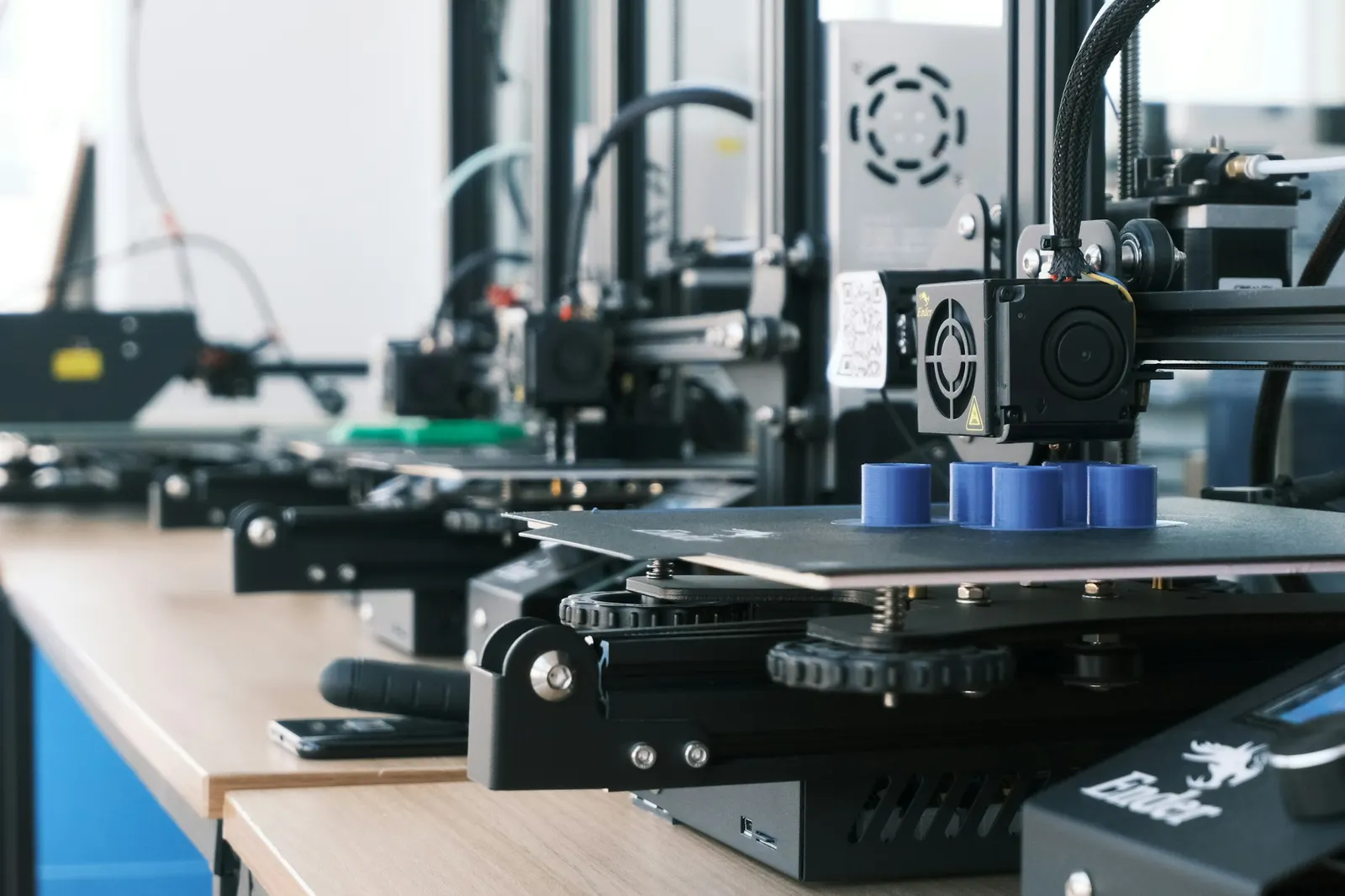
Buy one machine and learn it to the point where you can print unattended overnight with a 95 percent success rate. Then buy more of the same model. Mixed fleets mean mixed profiles, mixed spare parts, and mixed problems.
| Item | Lean start | Full setup (small farm) |
|---|---|---|
| FDM printers (Bambu P1S/X1C, Prusa Core One) | $600 (1 printer) | $3,500–$6,000 (4–6 printers) |
| Multi-material units (AMS or equivalent) | — | $800–$1,500 |
| Resin printer, wash-and-cure station | — | $500–$1,200 |
| Filament inventory (PLA, PETG, TPU, ASA) | $200 (10 spools) | $800–$1,500 (40–80 spools) |
| Filament dryer and dry storage | $60 | $300 |
| Tools: deburring, flush cutters, calipers, hand files, sanding, glue | $80 | $250 |
| Shelving, racks, and a work table | $150 | $600 |
| Ventilation (enclosure fans, ducted exhaust for resin) | $50 | $400–$800 |
| Smoke detector, fire extinguisher, smart plugs for remote shutoff | $80 | $200 |
| Computer capable of slicing and CAD | existing | $1,200 |
| Photography setup (light box, backdrop) | $60 | $250 |
| Shipping supplies and label printer | $80 | $300 |
| LLC, sales tax permit, insurance down payment | $300 | $800 |
| Total | $1,660 | $10,900–$14,900 |
A modern enclosed FDM printer draws 100 to 350 watts while printing; six of them plus a resin station on one 15-amp circuit is fine, but check what else is on it. Buy a filament dryer early: damp PETG and TPU cause half of all “my prints look terrible” problems. A garage bay or a 10-by-12 room holds a six-printer farm with room to pack orders.
Step 5: Set your pricing
Bad pricing is the top reason 3D-printing businesses stay hobbies. The formula that works for custom and B2B work is machine time, plus material, plus labor, plus margin. For your own products, ignore cost and price to the market.
Service and B2B pricing
| Component | Typical rate (2026) |
|---|---|
| FDM machine time | $2–$6 per printer-hour |
| Resin machine time | $5–$12 per printer-hour |
| Material | 2–3× your spool cost (about $0.05–$0.10 per gram of PLA/PETG) |
| Labor (file prep, post-processing, packing) | $30–$60 per hour, minimum 15 minutes |
| Design/CAD time | $60–$120 per hour |
| Rush (under 48 hours) | +50–100% |
| Order minimum | $25–$50 |
A bracket that takes three hours and 45 grams: $12 machine time, $4 material, $10 labor, plus 40 percent margin lands around $36. That feels high next to a hobbyist quoting $8, and it should; you are pricing reliability, deadlines, and the fact that the part will be right the first time. B2B customers do not blink at $36 for a part that replaces a $400 machined one.
Product pricing
Price your products at what comparable items sell for, not at cost-plus. A well-designed desk organizer that uses $2.50 of filament and 4 hours of printer time can sell for $28 on Etsy and $22 wholesale to a local shop. Typical small-product retail points cluster at $12 to $18 (impulse), $25 to $45 (gift), and $60 to $150 (large or multi-part functional items). A product that sells 40 units a month at $28 is $1,120 of monthly revenue from about 160 printer-hours, roughly one printer’s output, at 70 percent gross margin after Etsy fees.
The monthly math
Four printers at 70 percent utilization is about 2,000 printer-hours a month; filled with products at $6 to $8 of revenue per printer-hour, that is $12,000 to $16,000 of gross sales. Nobody hits that in month three. A realistic first year is one or two products that sell, one or two B2B accounts, and $2,000 to $5,000 a month by month nine.
Step 6: Get online and look legitimate
Three kinds of people will look you up: a shopper deciding whether to trust an Etsy seller, a purchasing manager deciding whether you are a real vendor, and a local person searching “3D printing near me.” Your website has to serve all three in ten seconds.
It needs: what you print and in which materials (PLA, PETG, ASA, TPU, resin) with a plain explanation of when to use each; pricing that is honest about how quotes work, with starting prices (“small parts from $25, design from $75 an hour”); a portfolio gallery with photos of real parts and products, including a few B2B pieces; a quote request form that accepts a file upload and asks for quantity, material, and deadline; and a shop page or a link to your Etsy listings. Add your business name, address or city, and a phone number or email that gets a reply within a day.
You can have Restart build it: describe the business, the services and materials, your pricing approach, the products you sell, and how you want people to reach you, and it builds the pages, writes the copy, designs the site, and publishes it to a real URL. When you add resin printing or a new product line, change the pages by asking. Small local businesses that sell both services and products tend to get the most from a clear quote form and a portfolio page that a purchasing manager can forward to a boss.
Set up a Google Business Profile as “3D printing service” even if you work from home (choose “service area business” to hide your address). Upload photos of finished parts, not printers. Local B2B leads come from the map pack more than anywhere else.
Step 7: Get your first customers
Where the first orders come from depends on the model you picked in Step 1. Do both tracks in the first month; the one that gets traction tells you what your business is.
For your own products:
- Design or license five to ten small functional items in one niche you know (a hobby, a sport, a profession, a specific car or console). Niche listings rank; generic “phone stand” listings do not.
- List on Etsy with six or more photos on a clean background, one lifestyle shot, and a title written the way buyers search (“Wall mount for Xbox controller, screwless”).
- Take products to two local markets or craft fairs ($40 to $150 a table). You will learn in one afternoon which items people pick up and what price makes them put it down.
- Approach three local shops (game stores, hobby shops, gift boutiques, garden centers) with a wholesale sheet at 50 percent of retail and a $150 minimum order.
For B2B and service work:
- Walk into ten small manufacturers, machine shops, sign shops, and repair businesses with a sample part in hand and one sentence: “I print custom jigs, fixtures, and replacement parts locally in one to three days; here is what a $60 part looks like.” Leave a card and a sample.
- Post in your city’s maker, small-business, and engineering LinkedIn and Facebook groups with a photo of a real problem you solved.
- Ask the local makerspace, library, and community college engineering department to refer overflow and rush jobs.
- Offer a free first print (under $30 of value) to any business that gives you a real file.
For your first five paid jobs, quote at the low end of Step 5 but never below your minimum, deliver a day early, and include a handwritten note asking for a Google review or an Etsy review. Photograph every part before it ships; the portfolio you build in month one sells the jobs in month six. If you are weighing this against other maker businesses, embroidery has a similar startup cost and a faster path to local B2B orders, and the two pair well for branded merchandise.
Tip: Keep a “problems I’ve been asked to solve” list. Three different people asking for the same odd adapter is a product; that is how most profitable small print-shop products are found.
Step 8: Run the farm and scale it
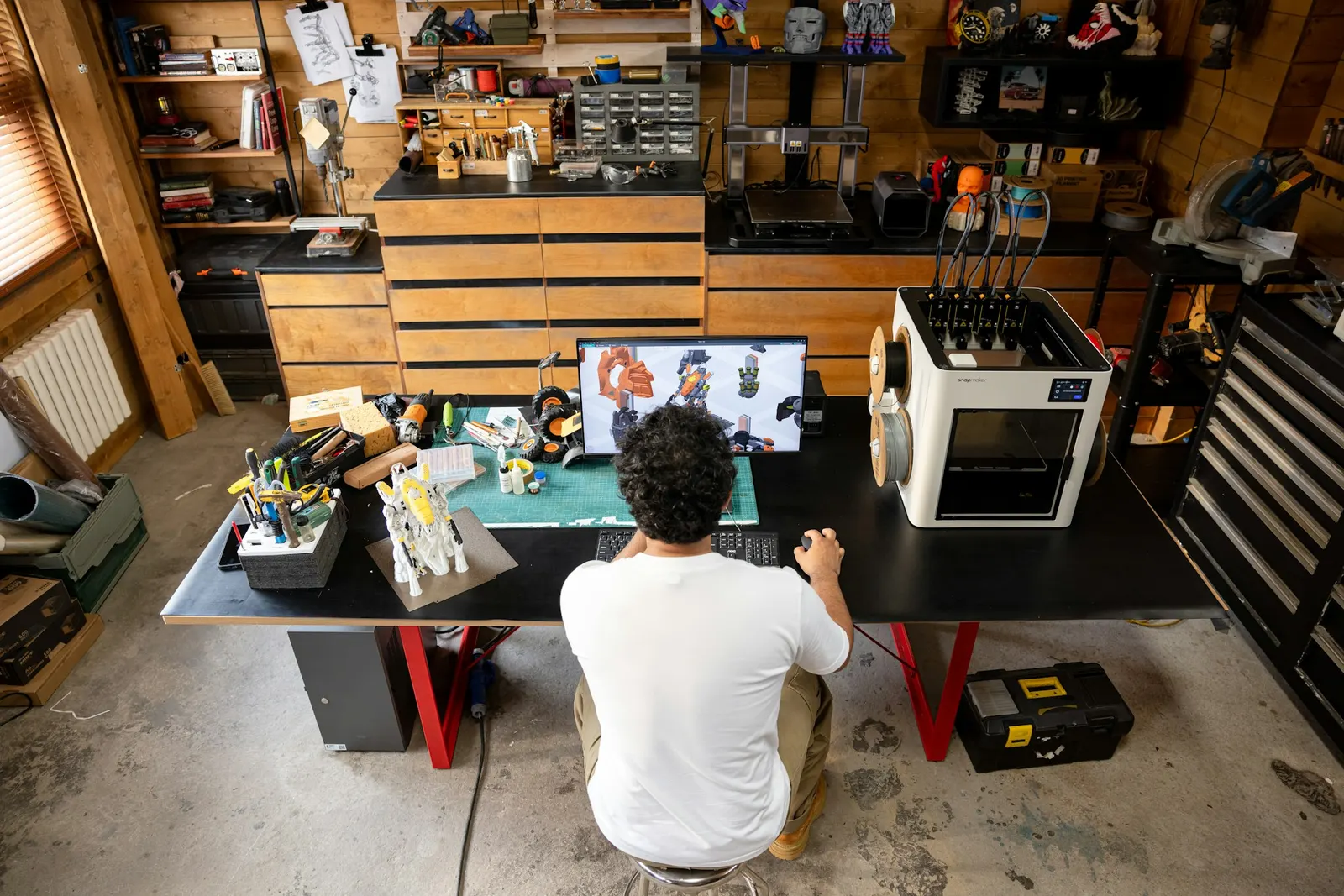
Workflow. Print in batches, not one-offs. Plate as many parts as fit, run long jobs overnight and short ones during the day, and keep a spreadsheet (or a farm-management tool like Bambu Farm Manager, OctoFarm, or Simplyprint) that tracks each printer’s hours, failures, and maintenance. Replace nozzles on a schedule, not when prints start failing. Track failure rate by material; above 5 percent means dry your filament or fix a profile.
Orders and terms. Retail orders are paid upfront by the platform. B2B jobs above $200 get a 50 percent deposit and a written quote stating material, quantity, tolerance (“typically within 0.2 mm; not for load-bearing use unless specified”), and lead time. Send a proof photo before shipping a new customer’s first order.
Hiring. The first hire is a part-time person for post-processing and packing at $16 to $22 an hour, which frees you for design and sales. That happens around $6,000 to $8,000 a month in revenue. Buy workers’ comp first.
Second phase. Going from four printers to twelve triples output but not profit unless demand is queued. Costs that appear at scale: a dedicated 20-amp circuit or two, real ventilation, a shelf of spare hotends and belts, and one printer down at any given time. Farms above ten machines succeed on a product selling hundreds of units a month or a B2B contract with a schedule; farms that scale on hope end up on Facebook Marketplace as “lightly used P1S, 12 available.”
How much can you make?
Material costs are low; printer time and your hours are the limits. These scenarios assume PLA and PETG products plus some B2B work and include marketplace fees (Etsy takes roughly 9 to 10 percent including payment processing), filament, shipping supplies, electricity, insurance, and software.
| Scenario | Work volume | Monthly revenue | Monthly costs | Monthly profit |
|---|---|---|---|---|
| Side income (1–2 printers, evenings) | 60 product sales at $24 + 2 small B2B jobs | $1,700 | $550 (fees, filament, shipping, insurance share) | $1,150 |
| Full-time solo (4–6 printers) | 250 product sales at $26 + $2,500 B2B | $9,000 | $2,900 (fees, filament, shipping, ads, software, insurance, electricity) | $6,100 |
| Small team (10–12 printers, one part-timer) | 600 product sales at $26 + $6,000 B2B | $21,600 | $10,400 (payroll $3,500, fees, filament, ads, rent share, spares) | $11,200 |
Full-time solo owners who make it past the first year commonly net $50,000 to $80,000; the ones who break $100,000 have a product that took off or a B2B contract with predictable volume. The ceiling on a home-based farm is real: around twelve to fifteen machines you need commercial space, staff, and a sales function, and the business becomes a small factory with the risks of one.
Mistakes that sink new 3D-printing owners
- Buying the farm before finding the market. Six printers and no orders. Fix: one printer, one niche, ten listings, and reinvest profit into machine two.
- Selling licensed characters. Fast sales, then a takedown and a closed shop. Fix: own designs or files with an explicit commercial license, and nothing trademarked.
- Pricing labor at zero. “It’s just $2 of filament” thinking produces $8 prints that take an hour of handling. Fix: a $25 to $50 minimum and a labor line on every quote.
- Competing with online bureaus on price. You lose. Fix: sell speed, local pickup, consultation, and design, which they cannot offer.
- Ignoring humidity and maintenance. Failure rates climb to 20 percent and nobody knows why. Fix: dry storage, scheduled nozzle and belt replacement, and a failure log per printer.
- One channel only. An Etsy algorithm change halves revenue overnight. Fix: your own site, a wholesale account or two, and local B2B by month six.
- No product photography. Great parts, gray photos, no sales. Fix: a $60 light box and a phone on a tripod.
Your first 30 days
Week 1
- Form the LLC, get the EIN, open the business bank account, register for a sales tax permit
- Order one printer, a filament dryer, ten spools across PLA and PETG, and basic post-processing tools
- Bind a general liability policy with products coverage
- Pick a niche and sketch or model five to ten small functional products; check that nothing infringes
- Build the website on Restart: services and materials, pricing approach, portfolio, file-upload quote form, shop link
Week 2
- Calibrate the printer and print all prototypes; iterate until each prints unattended without failures
- Set up the light box and photograph every finished item on white
- Open the Etsy shop and list five items with search-style titles
- Claim Google Business Profile as a service-area business and upload part photos
Week 3
- Print ten sample parts and visit ten local manufacturers, sign shops, and repair businesses with a card and a sample
- Post real-part photos in two local business groups and one maker community
- Book a table at a market or craft fair for the coming month
- Write your one-page B2B quote template with tolerance and lead-time language
Week 4
- Aim for your first ten product sales and one paid B2B job
- Ask every customer for a review; photograph every shipped part for the portfolio
- Review printer hours against revenue; if the machine is idle more than half the day, the problem is demand, not capacity
- Decide on printer two only if the first is running more than twelve hours a day