A 1960s Lane dresser listed at $75 on Facebook Marketplace, stripped and oiled over two weekends with about $60 in materials, sells for $850 in most mid-size cities. The same weekend, someone else buys a $40 particleboard dresser, spends $80 on chalk paint, and cannot get $120 for it. The difference is not painting skill. It is knowing what to buy, what to leave on the curb, and how long each piece will actually take.
This guide covers how to start a furniture-flipping business in 2026 as a business rather than a hobby that occasionally makes money: what to source and where, the two main finishing styles and their economics, tools and real startup costs, sales tax and the other paperwork that catches sellers by surprise, pricing, and where finished pieces sell fastest. It is for someone with a garage or covered patio, a vehicle that fits a dresser, and $500 to $6,000 to start.
What furniture flipping actually looks like week to week
A week for a full-time flipper splits into roughly a third sourcing and hauling (scrolling Marketplace at 7 a.m., driving to estate sales on their final half-price day, loading a 180-pound dresser alone with a dolly and straps), half on the work itself (cleaning, repairing drawers, sanding, priming, spraying or brushing two or three coats, topcoat, hardware), and the rest on photography, listings, messages, and meeting buyers or delivering.
Two market signals matter. First, price spread: solid wood dressers sell unfinished for $40 to $150 and finished for $400 to $1,200, a spread wide enough to pay you $30 to $60 an hour if you keep hours per piece under 12. Second, seasonality: sales peak January through May (tax refunds, spring moves, new apartments) and again in August and September, and slump from mid-November to New Year, when nobody wants a dresser in the living room before guests arrive. Buy cheap in December; sell in March.
People who thrive here are patient with tedious prep, good at photography, and disciplined about tracking hours. The people who quit within a year bought pieces that needed too much work, tried to sell $700 dressers in a market that supports $400, or had no place to store the eight pieces waiting their turn.
Step 1: Pick your style and the pieces you will flip
There are three ways to make money on a piece, and they need different skills.
Painted refinish. Clean, scuff-sand, prime, two or three coats of a furniture-grade paint (Fusion Mineral, General Finishes Milk Paint, Dixie Belle, Wise Owl, or Benjamin Moore Advance through a sprayer), topcoat where needed, new hardware. Six to ten hours a dresser. Sells $350 to $800. The biggest market and the most competition; color choice and hardware make or break the price.
Wood restoration. Strip old finish, sand through the grits, repair veneer, stain or oil, and a hardwearing topcoat. Ten to sixteen hours a dresser. Sells $700 to $1,500 and up for recognized mid-century pieces (Lane Acclaim, Broyhill Brasilia, Kent Coffey Perspecta, Heywood-Wakefield, Drexel Declaration, Dixie, Stanley). Fewer people do it well, and buyers pay for it.
Clean-and-flip. Buy underpriced solid pieces, clean and wax, fix a drawer, take great photos, resell at market. One to three hours. Profit $75 to $250 per piece. Low margin per piece but excellent hourly rate, and how many full-time flippers fill slow weeks.
Most successful shops do painted work for volume and wood restoration for the pieces that deserve it. Start with painted dressers and nightstands: forgiving, in demand, and quick to learn.
What to buy and what to leave
Buy: solid wood or wood with real veneer over solid, dovetailed drawers that glide, dressers, nightstands (pairs sell for a premium), buffets, sideboards, desks, dining tables, hutches, bookcases. Turn over drawers and look for a maker’s stamp. Structural soundness matters more than surface condition; scratches and bad paint are your profit.
Leave: particleboard and MDF (paint peels, edges swell, no resale), upholstered pieces unless you reupholster, anything with a cracked frame or missing structural parts, mass-market flat-pack, and pieces with active pest damage or a strong smoke smell you cannot remove. Never flip cribs (federal rules effectively ban resale of older ones) and check recall lists on dressers meant for children’s rooms.

Step 2: Legal setup, sales tax and the rules nobody mentions
Entity. A sole proprietorship is legal, but an LLC ($50 to $500 depending on the state) is worth forming once you deliver into homes or sell pieces over $500. Get a free EIN at IRS.gov and a separate bank account either way; mixing furniture cash with personal spending is how flippers lose track of whether they are profitable.
Sales tax permit. You are selling tangible goods, so in the 45 states with sales tax you need a seller’s permit from the state Department of Revenue, and you collect tax on every sale (yes, including Facebook Marketplace pickups paid in cash). The permit also gives you a resale certificate, which lets you buy paint, hardware and supplies from wholesale suppliers tax-free. Search “[your state] seller’s permit”; it is free or under $50 in most states.
Income tax. Marketplaces may issue a 1099-K depending on the year’s thresholds, but the income is taxable whether or not a form arrives. Track every purchase, material and mileage. Mileage alone (estate sales, deliveries) is often the largest deduction.
Home occupation and HOA rules. Spraying in the driveway and a steady stream of buyers at the curb violate some city codes and most HOA covenants. Read your city’s home occupation rules; spray inside a garage with the door partly down and a fan, and meet buyers at the end of the driveway or a public spot.
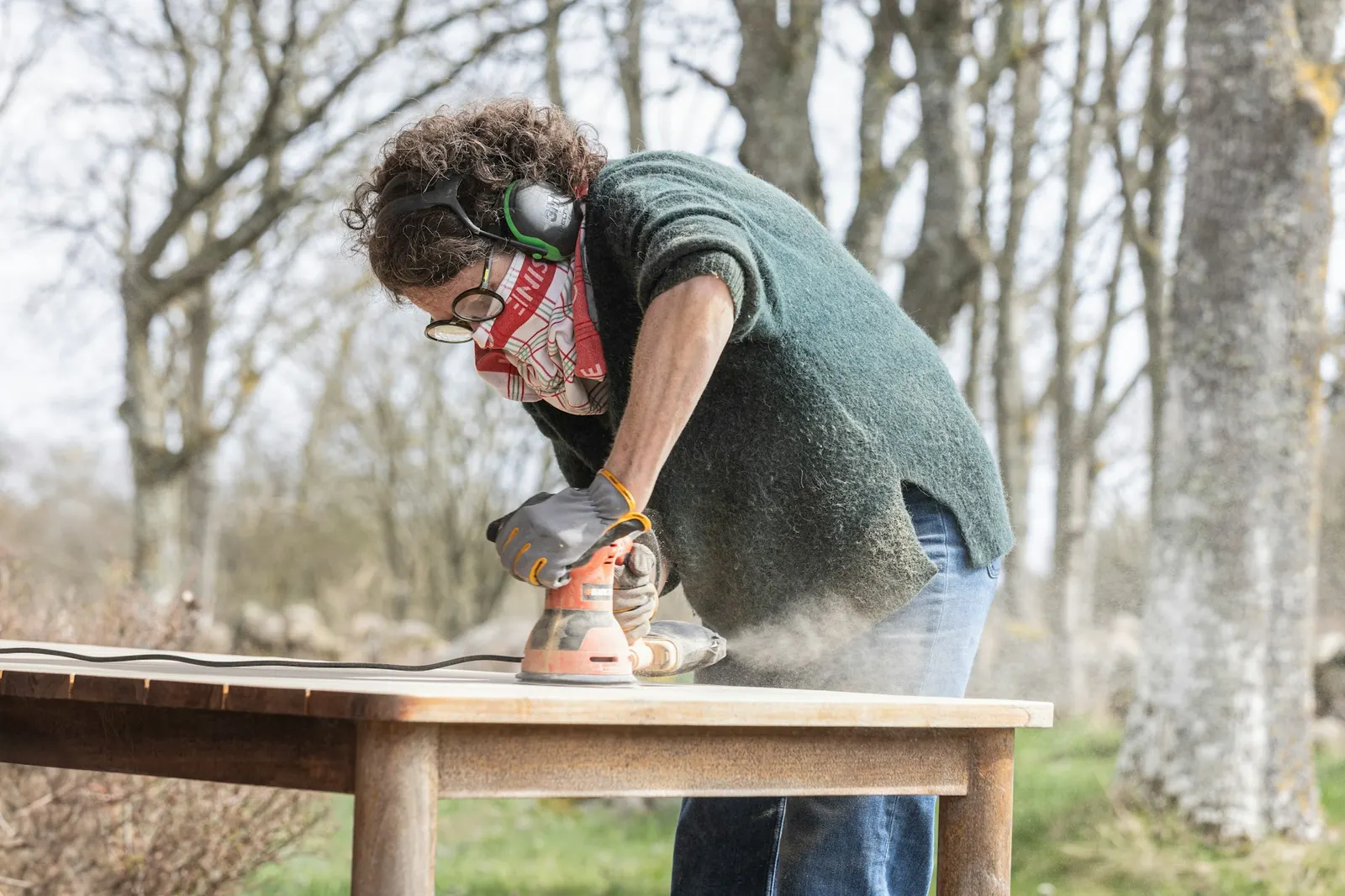
Lead paint and safety. Furniture painted before 1978 may have lead paint. Test with a $10 swab kit before sanding; if positive, strip chemically rather than sand, wear a P100 respirator, and bag the waste. Dispose of solvent and stripper waste at your county’s household hazardous waste site, not in the trash.
Consumer product rules. Do not resell recalled items (search CPSC.gov by brand). Avoid cribs entirely.
Watch out: Sales tax is the piece most flippers skip until a state audit or a marketplace’s reporting catches up. Register in week one and set aside the tax on every sale.
Step 3: Insurance
Flipping is low-risk until you carry a 200-pound buffet into a stranger’s house.
- General liability, $1M, including products-completed operations: $300 to $700 a year. Covers a scratched hardwood floor on delivery, or a claim that a dresser you sold tipped.
- Business personal property / inland marine for tools and inventory in the garage: $150 to $400 a year. Homeowner’s policies typically exclude or cap business inventory.
- Auto. Your personal policy may exclude business use; ask your agent about a business-use endorsement ($100 to $400 a year) or, if you buy a cargo van or trailer, commercial auto at $1,200 to $2,500.
- Business owner’s policy (BOP) bundles liability and property for $400 to $900 a year for a home-based operation.
Step 4: Tools, supplies and startup costs
| Item | Lean start | Full setup |
|---|---|---|
| Random orbital sander (5-inch) and sanding discs, 80–220 grit | $70–$150 | $150–$300 (plus a detail sander) |
| Shop vac with HEPA filter, dust extraction hose | $0–$100 | $150–$400 |
| HVLP sprayer | $0 (brush and roller) | $120–$250 (Wagner Flexio class) to $500–$750 (Fuji Semi-PRO 2, Graco) |
| Respirator (P100), safety glasses, gloves, lead test kits | $50–$90 | $90–$150 |
| Cleaner/degreaser, stain-blocking primer (BIN shellac), stripper (Citristrip) | $60–$120 | $120–$250 |
| Paint, stain, topcoat starter stock (6–10 quarts) | $150–$300 | $400–$800 |
| Wood filler, Bondo, glue, veneer repair kit, clamps | $60–$150 | $200–$450 |
| Hardware assortment (knobs, pulls, screws) | $50–$150 | $200–$500 |
| Furniture dolly, moving straps, blankets, ratchet straps | $80–$200 | $250–$500 |
| Vehicle | Existing SUV / minivan | $1,500–$4,000 utility trailer, or a used cargo van |
| Photo backdrop, lights, staging props | $0–$100 | $200–$600 |
| First 3–5 pieces to flip | $150–$400 | $500–$1,200 |
| LLC, seller’s permit, insurance, first year | $0–$700 | $700–$1,500 |
| Website and Google Business Profile | $0–$200 | $200–$600 |
| Total | $700–$2,700 | $4,000–$11,500 |
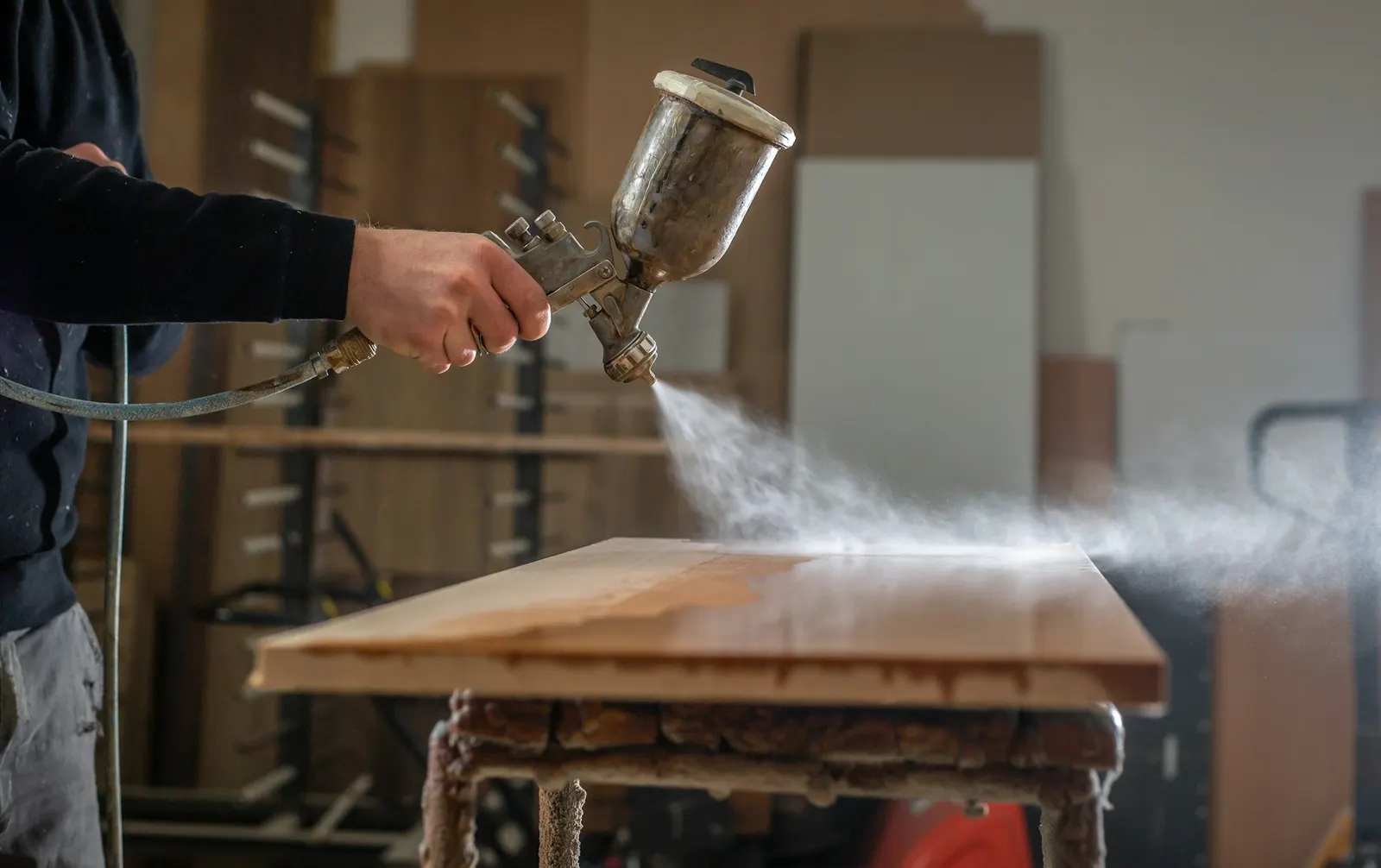
The sprayer is the upgrade that pays back fastest. A brushed dresser takes three coats and shows strokes; a sprayed one takes two thinner coats in a third of the time and looks like factory furniture, which is what lets you charge $650 instead of $450.
Step 5: Pricing refinished furniture
Price from the market down, then check it against your costs. Search Facebook Marketplace, Chairish and local consignment shops for sold or long-listed pieces of the same type, size and finish in your metro. That tells you the ceiling. Then make sure the number covers purchase price, materials and at least $30 an hour, with a floor of $250 profit per piece; anything under that is not worth the garage space.
| Piece (finished) | Typical purchase price | Materials | Hours | Sale price range |
|---|---|---|---|---|
| Nightstand (single) | $10–$40 | $20–$35 | 2–4 | $120–$250 |
| Nightstands (matched pair) | $30–$80 | $40–$70 | 4–7 | $300–$550 |
| 6–9 drawer dresser, painted | $40–$120 | $50–$90 | 6–10 | $400–$800 |
| Mid-century dresser, wood restored | $60–$200 | $50–$100 | 10–16 | $750–$1,500 |
| Buffet / sideboard | $50–$200 | $60–$110 | 8–14 | $600–$1,400 |
| Dining table (6-seat) | $40–$150 | $50–$100 | 8–14 | $500–$1,200 |
| Desk or secretary | $30–$120 | $40–$80 | 5–9 | $350–$750 |
| Bookcase / china cabinet | $30–$150 | $50–$100 | 6–12 | $400–$1,100 |
| Delivery within 20 miles | 1–2 | $60–$150 |
A pricing rule that holds up: finished price should be at least four times your purchase price plus materials, and the piece should sell within three weeks at that number. If a piece sits past three weeks with 50 or more views and no messages, the price is 15 percent too high for your market; if it sells in under 24 hours with five people competing, it was 15 percent too low.
The math on a month
A painted dresser bought for $80, with $70 in materials, sold for $600 with $100 delivery: $550 gross profit for 8 hours of work plus 2 hours sourcing and delivering, about $55 an hour. Four of those a month plus two nightstand pairs at $400 each ($300 profit each) is roughly $2,800 a month in profit for about 60 hours of work. That is the realistic part-time picture; full-time flippers do 8 to 12 pieces a month.
Step 6: Get online and look like a studio, not a garage sale
Marketplace listings sell the piece in front of you. A website sells the next one: it is where someone who saw your dresser on Instagram goes to ask if you can do their grandmother’s buffet in the same color, and where a designer checks whether you are a real business. It needs: an “available now” page with each piece’s price, dimensions and finish, a sold gallery (proof of range and quality), a commission request form that asks for photos, dimensions, desired finish and deadline, your delivery area and fee, and how to contact you.
You can have Restart build it: describe the studio, the kinds of pieces you do, your delivery area and pricing, and how you want people to reach you, and it builds the pages, writes the copy, designs the site and publishes it to a real URL. When you sell a piece or add a new finish, change it by asking. It fits a local business like this one, where a few good photos and a working contact form do most of the selling.
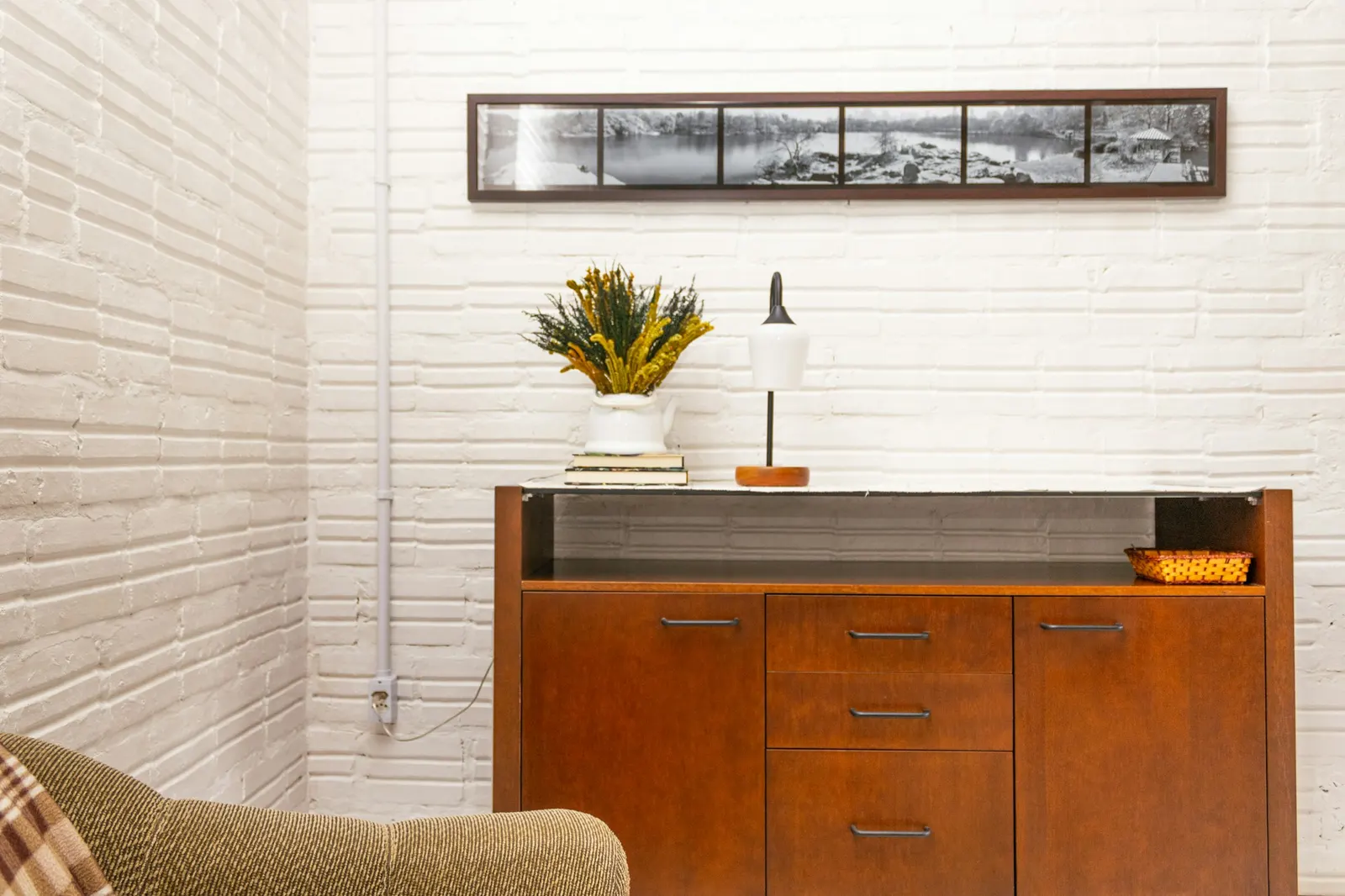
Set up a Google Business Profile as a service-area business (category “Furniture refinishing service” or “Furniture store”), and an Instagram account where you post every piece before and after. Photography is the whole game online: shoot finished pieces in daylight against a plain wall, styled with one lamp or plant, straight on and at a three-quarter angle, plus one open-drawer shot showing the dovetails.
Tip: Photograph the piece in the same spot every time. A consistent backdrop makes your Marketplace listings recognizable at a glance and makes your Instagram grid look like a shop rather than a garage.
Step 7: Sell the first ten pieces
Facebook Marketplace is where almost every flipper sells most of their work. List with 8 to 10 photos, dimensions in the first line, the maker if known, the finish products used (buyers ask), and pickup or delivery terms. Answer messages within an hour; the second responder rarely gets the sale. Renew the listing weekly and never accept “is this available?” as a conversation; ask when they would like to pick it up.
Local vintage and consignment shops take 40 to 50 percent but move mid-century pieces fast to buyers who never scroll Marketplace. Good for your first restored wood pieces while you build a following.
Chairish and Etsy reach national buyers who pay $700 to $1,500 for the right mid-century dresser and $200 to $600 for freight through uShip or a blanket-wrap carrier. Commission is 20 to 30 percent on Chairish. Worth it once you have a signature look.
Interior designers and home stagers. They need finished pieces on a deadline and pay closer to retail. Email five with your sold gallery and offer a trade discount of 10 to 15 percent.
Referral partners. People running junk removal haul solid wood furniture to the dump every week and will text you photos for $20 a piece. Home organizers constantly help clients get rid of good furniture.
What to charge on the first ten. Market price. Your first pieces should be simpler and cheaper pieces (nightstands, small dressers), not discounted versions of expensive ones. Price the piece, not your confidence.
Step 8: Operate, then scale
Track every piece. A spreadsheet row per piece: purchase price, materials, hours, list date, sale price, days to sell, channel. After 20 pieces, this tells you which types earn the most per hour in your market, and that is what you buy more of.
Batching. Prep three pieces, prime three pieces, spray three pieces. Cleanup and dry time are the same for one piece or three, so batching cuts hours per piece by 20 to 30 percent.
Inventory limits. Cap work-in-progress at what fits with room to move: usually 4 to 6 pieces in a two-car garage. More than that and you stop finishing things.
Commissions. Refinishing a customer’s own piece pays $350 to $900 with no purchase risk and no unsold inventory. Take a 50 percent deposit, agree on the color from a physical sample, and photograph the piece at intake.
When to scale. At 8 to 12 pieces a month you are full time and out of space. The next moves are a rented 400- to 800-square-foot shop ($500 to $1,200 a month), a part-time helper at $15 to $20 an hour for prep and sanding, and a cargo van or trailer so you can buy and deliver anything. At 2x volume, revenue roughly doubles but margins fall from about 60 percent to 40 to 45 percent because of rent and wages, and the owner’s job shifts from sanding to sourcing, selling and photography.
How much can you make?
| Scenario | Pieces / month | Avg sale price | Monthly revenue | Purchases + materials | Overhead | Monthly profit |
|---|---|---|---|---|---|---|
| Side income, weekends, garage | 3 | $450 | $1,350 | $400 | $80 | ~$870 |
| Full-time solo, garage, sprayer | 10 | $600 | $6,000 | $1,500 | $350 | ~$4,150 |
| Small shop, one helper, van, commissions | 22 | $650 | $14,300 | $3,300 | $4,200 (rent, wages, insurance, fuel) | ~$6,800 |
Full-time solo flippers in a decent metro realistically net $40,000 to $60,000 a year; the best, doing wood restoration on recognizable mid-century pieces with a strong Instagram following, reach $75,000 to $100,000. The ceiling is hours: every piece needs 6 to 16 hours of someone’s hands, and hiring cuts margins fast. Local price ceilings matter too; a dresser that brings $900 in Denver brings $550 in a small city.
Mistakes that sink new furniture-flipping business owners
- Buying the wrong pieces. Particleboard, damaged frames, or a $200 dresser that will sell for $400. Fix: solid wood only, a maximum purchase price of 20 percent of the expected sale price, and walk away from anything that needs structural repair.
- Not tracking hours. A $600 sale feels great until you realize it took 18 hours. Fix: a timer on the bench and a spreadsheet row per piece.
- Skipping prep. Paint over grease and old finish and it peels in a month, and the buyer tells everyone. Fix: degrease, scuff-sand, and use a stain-blocking primer on anything with knots or old cherry or mahogany, which bleed through.
- Sanding pre-1978 paint without testing. Lead dust in your garage and lungs. Fix: $10 swab kit on every old painted piece; strip chemically if positive.
- Pricing from cost instead of market. “I have $200 in it, so $500” in a market where the ceiling is $400. Fix: research sold comps first, buy only what leaves room.
- Ignoring sales tax. Fix: register in week one, collect on every sale, and keep the tax in a separate account.
- Bad photos. A great piece photographed in a dim garage with a lawn mower behind it sells for garage prices. Fix: daylight, plain wall, styled, 8 to 10 shots.
Your first 30 days
Week 1
- Register for the state seller’s permit and check your city’s home occupation rules. Decide on an LLC and file if yes; get the EIN and a business bank account.
- Buy the sander, respirator, lead test kits, cleaner, primer, two quarts of a quality furniture paint and a topcoat.
- Set up a Facebook Marketplace seller profile and an Instagram account. Build the website on Restart with an available-now page, a sold gallery placeholder and a commission form.
- Spend 20 minutes a day on Marketplace, estate sale listings and curb alerts learning local prices.
Week 2
- Buy your first two pieces: a solid wood nightstand pair and a small dresser, under $100 total.
- Clean, repair, sand, prime and paint the first piece start to finish; time every stage.
- Set up a photo spot: plain wall, daylight, one prop.
- Get a BOP quote and bind it before your first delivery.
Week 3
- Finish and photograph both pieces. List on Marketplace with dimensions, maker and finish in the description.
- Buy two more pieces, including one candidate for wood restoration if you find a mid-century maker.
- Email five interior designers and stagers with your first photos. Text two junk haulers and offer $20 a lead.
Week 4
- Deliver or hand off the first sales; ask each buyer for a Google review and a tag on Instagram.
- Fill in the spreadsheet: purchase, materials, hours, sale price, days to sell. Adjust your buying rules based on what the numbers say.
- Post before-and-after photos of every piece; update the website’s available-now and sold pages.
- Set a target for month two: pieces to finish, maximum hours per piece, minimum profit per piece.