A left-chest logo on a polo takes about 6,000 stitches, runs 8 to 12 minutes on a commercial machine, and sells for $28 to $38 with the shirt included. The blank costs you $8 to $14. That spread, repeated across a 36-piece order for a landscaping company, is the whole business. What surprises new owners is that the money is in boring, repeat corporate orders, and almost none of it is in the personalized gifts most people picture when they think about embroidery.
This guide is for anyone seriously working out how to start an embroidery business in 2026: which machine to buy first, what digitizing costs, how to quote by stitch count without losing money, which licenses and insurance you really need, and how to get your first five orders from businesses in your own zip code. It assumes you have a spare room or garage corner and roughly $3,000 to $18,000 to commit.
What an embroidery business actually looks like day to day
Most of your hours are not spent embroidering. A typical day splits into quoting (checking blank prices, counting stitches, sending a written quote), sourcing (ordering blanks from SanMar, S&S Activewear or Alphabroder, which ship next-day to most of the US), hooping (loading each garment into a frame with the right stabilizer, the most skill-dependent part of the job), and running the machine, which mostly means watching for thread breaks while you hoop the next piece.
The economics work because the customer buys in multiples. A dental office does not order one scrub top. Typical orders in a healthy small shop run 12 to 48 pieces at $25 to $45 each, so a $700 to $1,500 order is routine, and those customers reorder every time they hire someone. Demand is steady with two bumps: August through October (fall sports, corporate holiday gifts) and February through April (spring teams, trade shows, uniform refreshes).
The people who thrive are patient and fussy. Embroidery punishes rushing: a mis-hooped shirt is a $12 blank in the trash, and a badly digitized logo puckers on all 48 pieces. What kills these businesses is underpricing, buying a machine before having a single customer, and competing on Etsy against sellers with lower costs and the same equipment.
Step 1: Pick your lane
Embroidery is one craft with three very different businesses attached. Lead with one; add the others later.
Corporate and uniform work. Logo polos, quarter-zips, hats, scrubs and work jackets for local businesses. Orders of 12 to 100 pieces, repeat business, and customers rarely haggle. Margins run 45 to 60 percent on garment plus embroidery. This is the most reliable lane for a new shop and the one this guide leans toward.
Team and school apparel. Spirit wear, booster club orders, coach jackets. Bigger volumes but seasonal, with lots of individual names and payment collected from 40 parents through an online store.
Personalized and gift items. Monogrammed towels, baby blankets, bridesmaid robes. Highest per-stitch price but one piece at a time, with 10 to 15 percent marketplace fees. Good for filling gaps; bad as the core.
A fourth option is contract embroidery: running blanks for screen printers and promo distributors who do not own a machine. Prices are low ($3 to $6 per left chest) but there is no selling and no blanks to buy.
Whichever lane, start at home. A 10-by-12 room holds a multi-needle machine, a hooping station and shelving. A storefront at $1,500 to $3,500 a month only pays off past $8,000 a month in sales.
Step 2: Legal setup, licenses and sales tax
The paperwork is light, but one piece of it, sales tax, catches people out.
Entity. Form an LLC ($50 to $500 depending on the state, plus an annual report fee in most). It separates your personal assets from a dispute over a botched 200-piece order, and corporate customers expect one when they ask for a W-9.
EIN. Free at IRS.gov, needed for the bank account and the wholesale accounts below.
Sales tax permit (seller’s permit). You are selling tangible goods, so in the 45 states with sales tax you must register with the state Department of Revenue, collect tax on retail sales, and file monthly or quarterly. This permit also gets you a resale certificate, which lets you buy blanks from SanMar, S&S and Alphabroder tax-free. Those distributors will not open an account without it. Search “[your state] seller’s permit” and apply online; it is free in most states.
Local business license and home occupation permit. Most cities require a general business license ($25 to $150 a year). If you work from home, check your city’s zoning page for home occupation rules: typically no signage, a cap on daily customer visits, no non-resident employees.
Trademarks. You cannot legally embroider a Nike swoosh, a university logo or an NFL mark for resale without a license, and colleges do send letters. Turn down the “just put the Cowboys star on it” jobs.
Watch out: Do not order a machine before the seller’s permit is in hand. Distributors can take one to two weeks to approve a wholesale account, and you will want blanks for test runs the week the machine arrives.
Step 3: Insurance
Embroidery is low-risk compared with most trades, so premiums are modest.
- General liability, $1M per occurrence: $400 to $800 a year. Every school district and some corporate customers will ask for a certificate.
- Business personal property / inland marine for the machine and heat press: $200 to $500 a year for $15,000 to $25,000 of equipment. Your homeowner’s policy will not cover business equipment beyond a small limit.
- Business owner’s policy (BOP) bundles the two above, usually for $500 to $1,100 a year for a home-based shop.
- Workers’ compensation once you hire, required in almost every state: roughly $1.50 to $3 per $100 of payroll.
Step 4: Equipment and startup costs
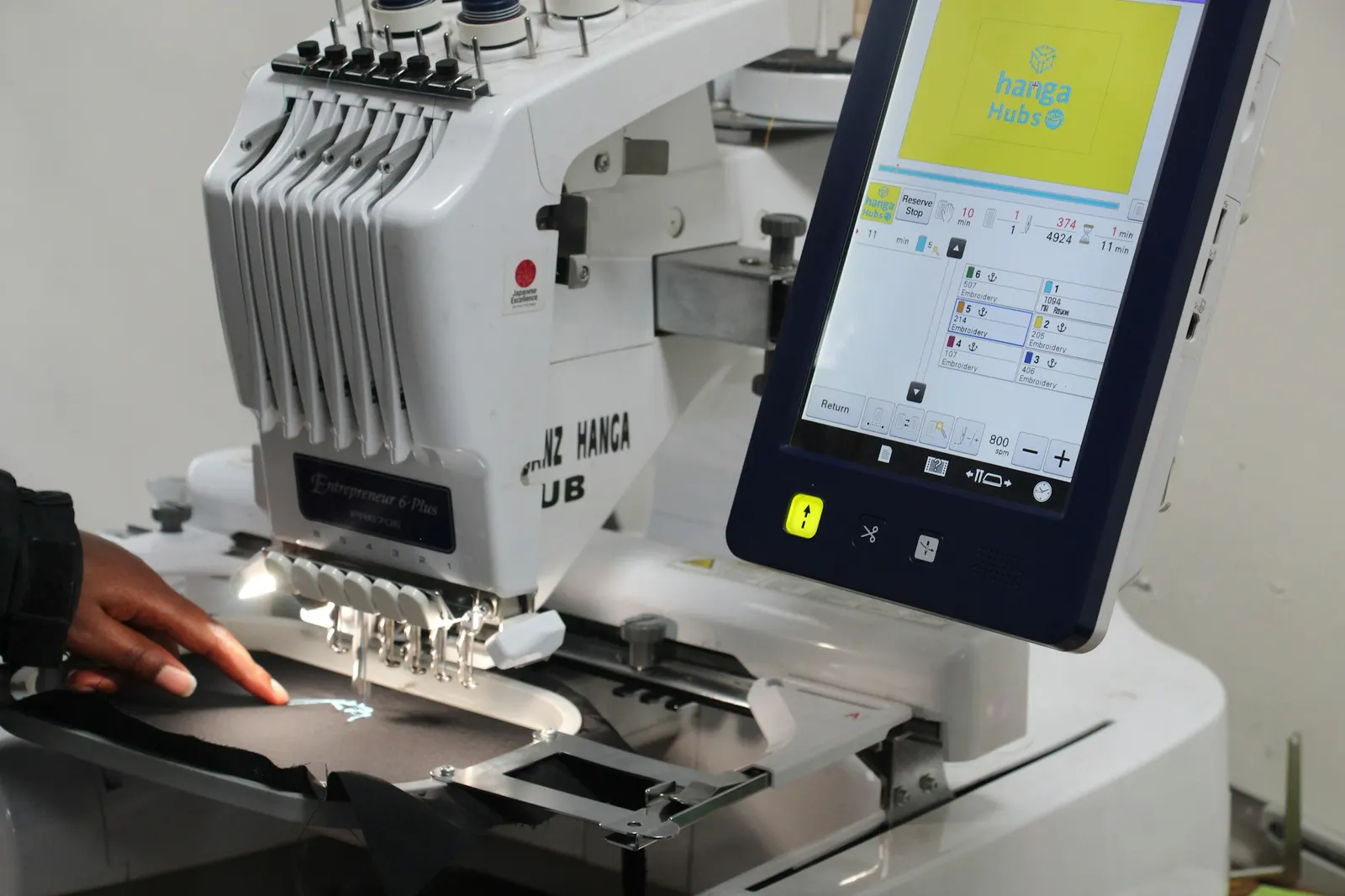
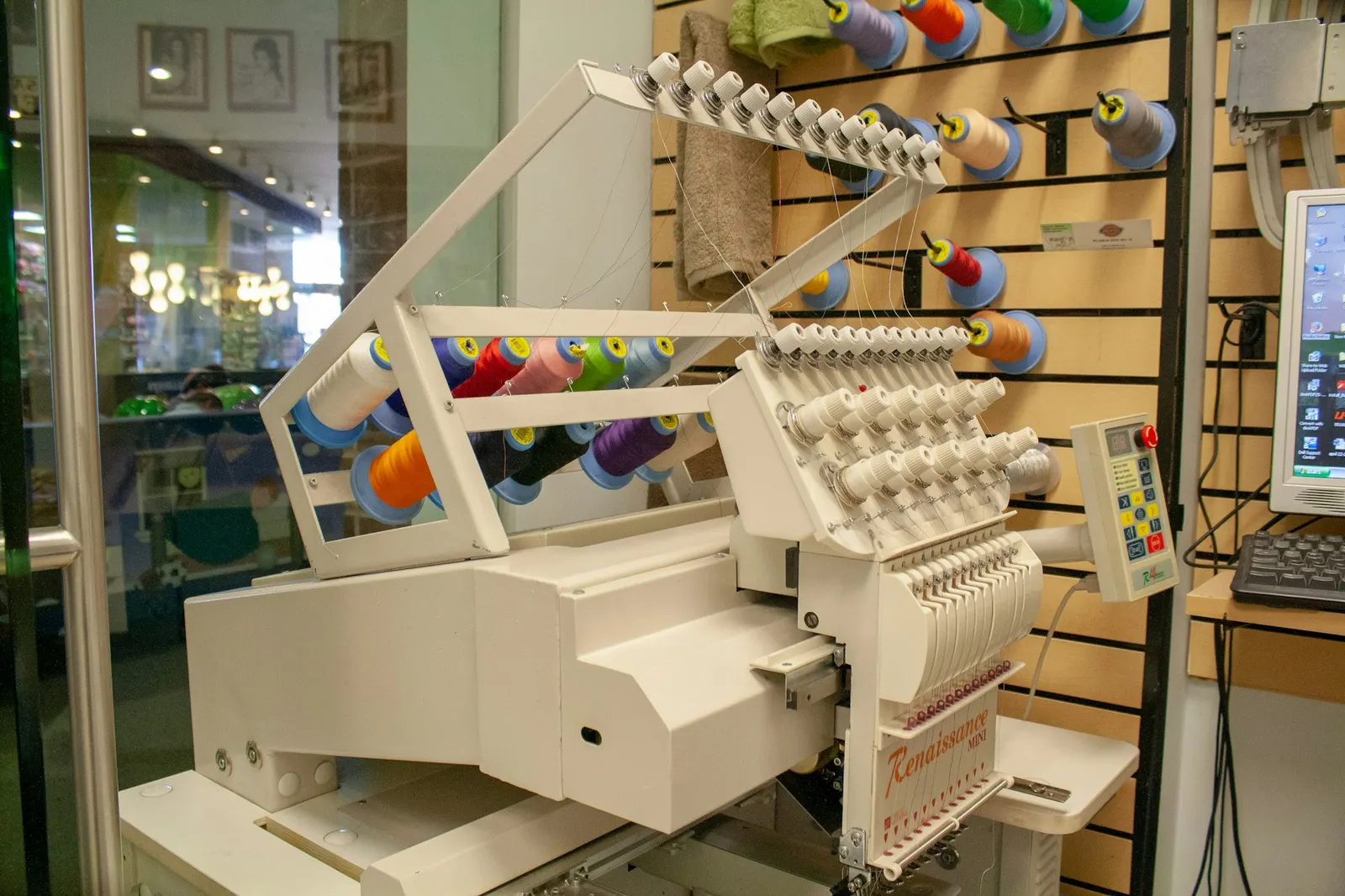
The machine is the decision that shapes everything else. A single-needle home machine (Brother PE800, SE1900, Bernette b79) costs $600 to $1,500 and can embroider a logo, but you stop it for every color change, the hoop area is small, and it cannot do structured caps. A multi-needle machine (Brother PR1055X, Ricoma MT-1501, Melco EMT16X, Tajima SAI, Barudan Elite) changes colors on its own, runs 800 to 1,200 stitches per minute, takes a cap driver, and runs while you hoop the next piece. That is the difference between a hobby and a business.
| Item | Lean start (single-needle) | Full setup (multi-needle) |
|---|---|---|
| Embroidery machine | $900–$1,500 (Brother SE1900 / PE800 class) | $7,000–$16,000 new, $4,000–$9,000 used commercial |
| Cap driver / cap hoops | Not available | $600–$1,500 (often bundled) |
| Hoops and hooping station | $150–$300 | $400–$1,200 (Hoopmaster or Mighty Hoop set) |
| Digitizing software | $0–$600 (Hatch Composer, Embrilliance) | $1,000–$3,500 (Hatch Digitizer, Wilcom, Pulse) |
| Heat press (patches, names, mixed decoration) | $0 | $350–$1,200 |
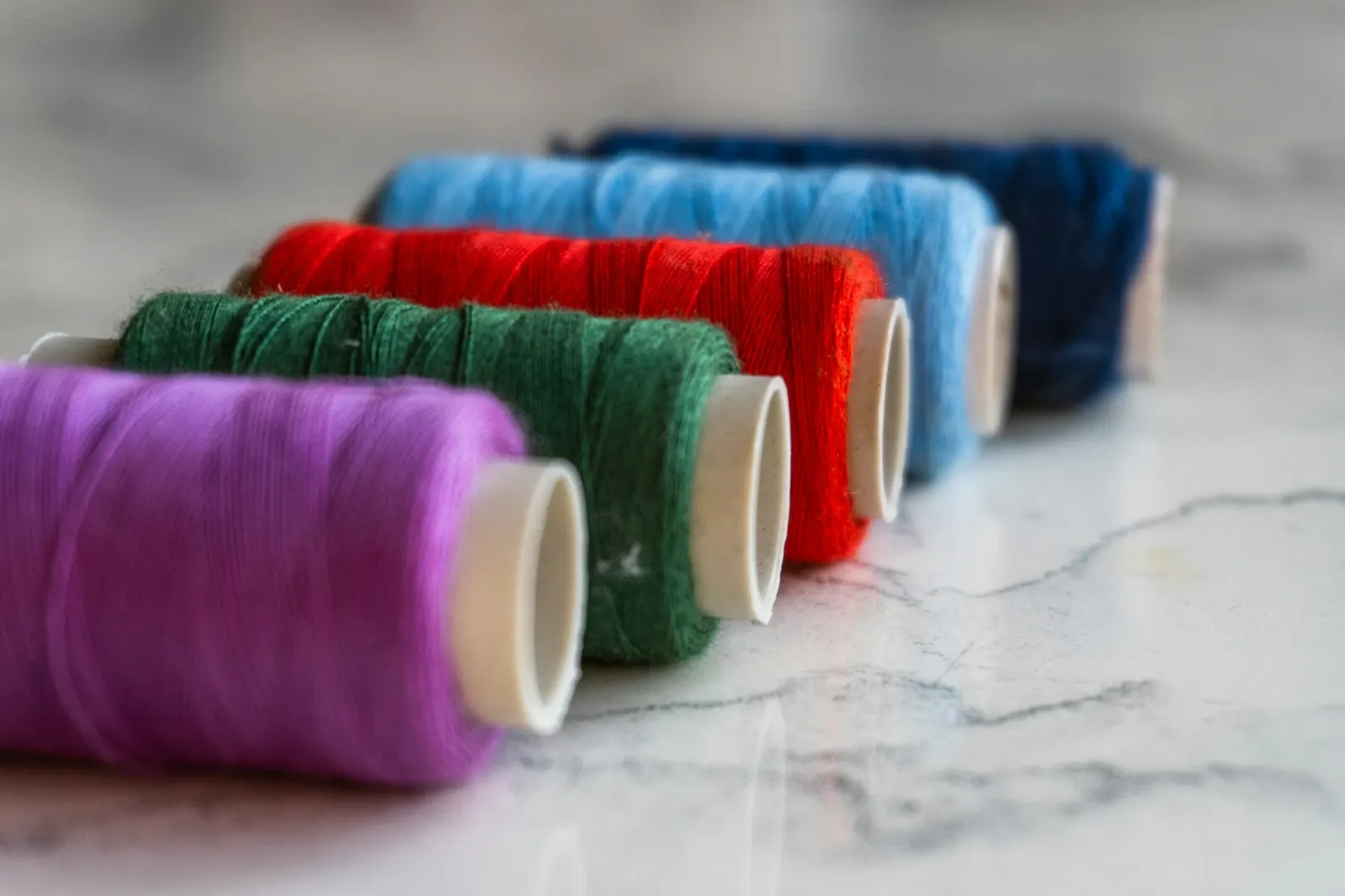
| Thread starter set (60–120 cones, Madeira / Isacord) | $250–$450 | $500–$900 |
| Stabilizer, bobbins, needles, topping, scissors | $200–$350 | $400–$700 |
| Steamer, folding table, lighting, shelving | $150–$400 | $500–$1,200 |
| Sample blanks for portfolio | $150–$300 | $400–$800 |
| LLC, permits, insurance first year | $300–$900 | $700–$1,500 |
| Website, business cards, Google Business Profile | $0–$400 | $100–$600 |
| Total | $2,100–$5,200 | $9,000–$18,000 with used machine / $16,000–$38,000 new |
Buy the multi-needle machine used if the budget is tight. Commercial heads last 20 years with basic maintenance, and a five-year-old Tajima or Barudan single-head at $6,000 will outperform a new $8,000 machine from a lesser brand. Buy from a dealer who installs and trains, or from a closing shop where you can watch it run. Manufacturer financing at $200 to $350 a month is covered by two orders.
Digitizing: buy it or learn it
Every logo has to be converted into a stitch file (DST or the machine’s native format) that tells the needle where to go. That conversion, digitizing, is a separate skill from running the machine. Dozens of services do it for $10 to $30 in 24 hours. Most new shops outsource for the first year, charge the customer a $25 to $75 digitizing fee, and pocket the difference. Learn it in Hatch or Wilcom once you are doing 10 or more new logos a month.
Step 5: Pricing that covers the blank, the stitches and your time
Embroidery pricing has three parts: the garment, the embroidery, and setup fees. Underpricing usually comes from forgetting one of them or guessing at stitch counts.
The garment. You buy a Port Authority K500 polo at $9 to $13 wholesale and sell it at $18 to $24 before decoration. Roughly double wholesale is standard, with a smaller markup on premium brands (Nike, Carhartt, Patagonia) where wholesale is already $30 to $60.
The embroidery. Price on stitch count, since stitches are time. A common grid for a single location:
| Stitch count | 1–11 pieces | 12–23 pieces | 24–47 pieces | 48+ pieces |
|---|---|---|---|---|
| Up to 5,000 (small left chest) | $8.00 | $6.50 | $5.50 | $4.75 |
| 5,001–8,000 (typical logo) | $9.50 | $7.75 | $6.50 | $5.50 |
| 8,001–12,000 (detailed logo) | $12.00 | $9.75 | $8.25 | $7.00 |
| 12,001–20,000 (large or full back) | $17.00 | $14.00 | $12.00 | $10.50 |
| Each additional 1,000 stitches | +$1.00 | +$0.85 | +$0.75 | +$0.65 |
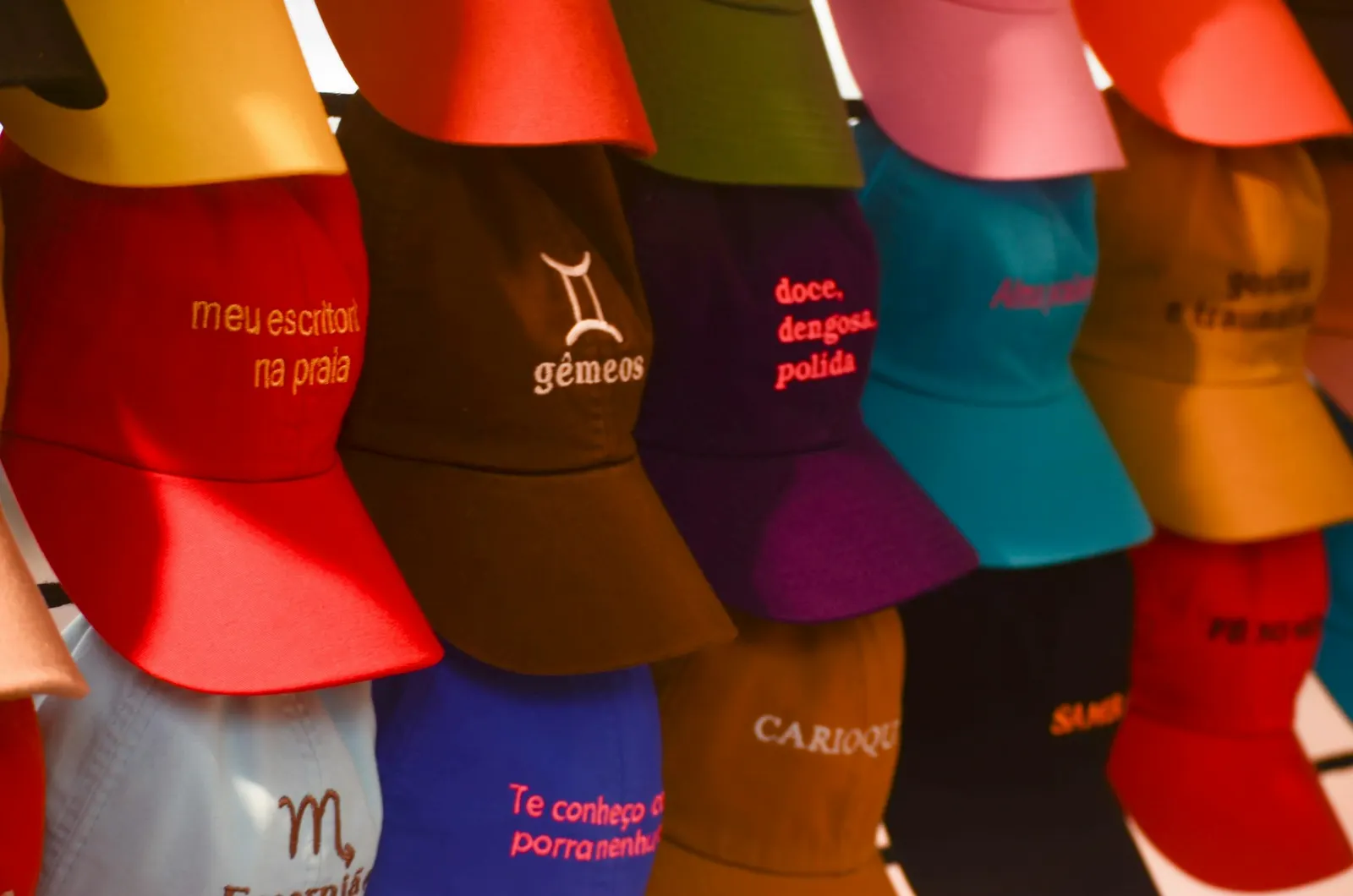
Add $2 to $4 per piece for caps (slower to hoop, more thread breaks), $3 to $6 for individual names, and a minimum charge on orders under 6 pieces so a single shirt never nets you less than $15 in labor.
Setup fees. $25 to $75 digitizing per new logo, charged once. Rush (under 5 business days) adds 25 to 50 percent. Customer-supplied garments carry a $1 to $3 handling fee.
The math on a typical order
A 24-piece polo order with a 7,000-stitch left-chest logo: 24 polos at $22 ($528) plus 24 embroideries at $6.50 ($156) plus $40 digitizing equals $724. Your cost: 24 blanks at $11 ($264), thread and stabilizer about $0.60 a piece ($14), outsourced digitizing $15. Gross profit about $430 for roughly 4.5 hours of hooping, running and finishing, or about $95 an hour. Three of those a week and the shop grosses $8,700 a month.
Step 6: Get online and look like a real shop
Corporate buyers vet you in about 90 seconds. An office manager with 30 polos to order will Google “embroidery near me,” look at three websites, and email the one that looks like it will deliver on time. Your site needs: a services page, starting-at prices or a clear “24 polos from $X” example, a gallery of at least 10 real pieces shot in daylight, your turnaround time and service area, and a request-a-quote form that asks for quantity, garment type, logo upload and deadline. A phone number you answer during business hours matters more than any design choice.
You can have Restart build it: describe the business, the services, your area, your pricing tiers and how you want people to reach you, and it builds the pages, writes the copy, designs the site and publishes it to a real URL. When you add hats or raise prices, change it by asking. It is built for exactly this kind of local business that needs a credible web presence in a day rather than a month.
Then set up a Google Business Profile, pick the “Embroidery shop” category, upload the same 10 photos, and ask every customer for a review at delivery. Twenty reviews at 4.8 stars will outrank a 15-year-old shop with four reviews within a year.
Tip: Photograph every order before it leaves. Twelve months of finished-work photos becomes the gallery, the Instagram feed and the proof you attach to quotes.
Step 7: Land your first five orders
Your first customers are within three miles of your house, and they already buy embroidered apparel from someone. Your job is to be more convenient.
Walk the strip centers. Dentists, vets, real estate offices, HVAC and plumbing companies, gyms, breweries, daycares. Bring two sample polos and a hat with a plausible made-up logo, ask for the office manager, and offer to do their next uniform order at a set price with a one-week turnaround. Twenty visits usually yields two or three quotes.
Youth sports and booster clubs. Coaches’ jackets and caps are the entry point: 10 to 20 pieces, needed every season, and the uniform coordinator knows every other club.
Screen printers. Many local printers send embroidery out of town. Offer contract work at $4 to $6 per left chest with a 5-day turnaround. One printer partnership can be worth 200 pieces a month.
Facebook groups and Nextdoor. Post finished work, not offers. “Just finished 36 quarter-zips for a landscaping crew in [town]” with a good photo brings inquiries for weeks.
What to charge. Full price on garment and embroidery, but waive the digitizing fee and say so on the quote. Discounting the per-piece price trains customers to expect it forever; waiving a one-time fee costs you $15 and gets the order.
Adjacent makers are a referral source too. People running permanent jewelry pop-ups, boutiques and 3D printing shops all get asked for custom apparel and are happy to hand it to someone local.
Step 8: Operate, then scale
Written quotes and deposits. Every order gets a written quote listing garment, color, sizes, logo, location, thread colors and delivery date, plus a 50 percent deposit before blanks are ordered. This one habit eliminates the classic disaster: 48 hoodies embroidered for a customer who changed their mind.
Approval samples. Sew the logo on a scrap, photograph it, and get a written “approved” before running the order.
Maintenance. Oil the hook every eight running hours, change needles every 8 to 10 hours, clean the bobbin case daily, and keep spare needles and a rotary hook on hand.
When to add the second head. A single-head multi-needle machine tops out around 150 to 300 pieces a week with one person. When you turn work away two weeks running, add a second single-head (not a bigger multi-head; two singles run two different jobs). Output roughly doubles for the same owner-hours because both run while you hoop. That is where a part-time hooper at $16 to $20 an hour makes sense, and where sales pass $15,000 a month. Beyond four heads you have a production shop with a lease, employees and a sales problem rather than a production problem.
How much can you make?
Real numbers for a shop pricing at the grid above, mostly corporate and team work.
| Scenario | Orders / month | Monthly sales | Materials (~42%) | Overhead | Monthly profit |
|---|---|---|---|---|---|
| Side income, single-needle, evenings | 4 at ~$450 | $1,800 | $760 | $150 | ~$890 |
| Full-time solo, one multi-needle head | 16 at ~$700 | $11,200 | $4,700 | $900 | ~$5,600 |
| Small team, 2–3 heads, part-time hooper | 34 at ~$850 | $28,900 | $12,100 | $5,500 (wages, small lease) | ~$11,300 |
The full-time solo line is the sweet spot: $60,000 to $70,000 a year of profit from a spare room with a machine you paid off in year one. The ceiling for an owner-operator is real, though. One person cannot hoop more than about 40 pieces an hour, and past $30,000 a month you are managing people and a lease, with net margins falling from 50 percent toward 25 to 30 percent.
Mistakes that sink new embroidery business owners
- Buying the machine first. A $12,000 machine in the garage without a customer is a monthly payment, not a business. Fix: get three verbal commitments from local businesses, selling from samples a contract shop made for you, then buy.
- Quoting from the hip. Guessing “about $20 a shirt” without counting stitches or checking today’s blank price. Fix: the grid above taped to the wall, and a five-minute distributor price check on every quote.
- Skipping the approval sample. Running 48 pieces in the wrong blue. Fix: a photographed sew-out and written approval every time, including for repeat customers with a “small tweak.”
- Cheap stabilizer and thread. Puckering, thread breaks and faded logos after five washes come from $5 bargain cones and thin backing. Fix: Madeira or Isacord polyester, cutaway for knits, tearaway for wovens and caps.
- Chasing Etsy. Competing on $14 monogrammed items against sellers with thousands of reviews. Fix: use marketplaces to fill idle hours if at all; sell to businesses in your town.
- Taking customer-supplied garments without a waiver. One ruined $90 Carhartt jacket erases the order’s profit. Fix: a signed line accepting a 2 to 3 percent spoilage allowance and no liability for replacements.
Your first 30 days
Week 1
- Decide your lane (corporate uniform work is the default recommendation).
- File the LLC, get the EIN, open a business checking account.
- Apply for the state seller’s permit and city business license; check home occupation rules on your city’s zoning page.
- Build the website on Restart: services, starting-at prices, service area, quote form. Claim the Google Business Profile.
- Visit two machine dealers; test-run a used single-head if one is for sale locally.
Week 2
- Open wholesale accounts with SanMar, S&S Activewear and Alphabroder using the resale certificate.
- Order the machine (or finalize financing), hoops, a hooping station, 60 to 120 thread cones, cutaway and tearaway stabilizer, needles and a steamer.
- Pick a digitizing service and get two test logos digitized: yours, and a made-up “Sunrise Landscaping” for samples.
- Get quotes on a BOP with $1M general liability and equipment coverage; bind it the day the machine ships.
Week 3
- Install the machine, run the dealer training, and sew 20 to 30 test pieces: polos, tees, hoodies and at least six caps. Learn where each fabric puckers.
- Photograph the best 10 pieces in daylight for the website gallery and Google profile.
- Print the pricing grid and a one-page quote template with deposit and approval terms.
Week 4
- Walk 20 local businesses with samples; follow up by text two days later.
- Contact three youth leagues and two screen printers about coach apparel and contract embroidery.
- Post finished samples in two local Facebook groups and on Nextdoor, as work, not ads.
- Send at least five written quotes with the digitizing fee waived.
- Collect the first deposit, order blanks, sew the approval sample, and deliver on time with a review request attached.