A gutter-cleaning job on a typical two-story house takes about 90 minutes, bills $250–$400, and uses almost no consumables. That is a better hourly return than most trades, and the same customer needs you again in six months. The reason more people do not do it is the ladder: this is real physical work at height, mostly in November and April, in weather that is rarely pleasant.
This guide covers how to start a gutter-cleaning business from a standing start: the ladder-and-blower kit that gets you working for under $2,000, the insurance that makes property managers return your calls, how to price per linear foot without underquoting a steep roof, and how to turn two frantic seasons into year-round income by adding guards, roof debris removal and washing services. It is written for a US operator starting solo with a pickup, SUV or van. If you have been researching pressure washing or window cleaning, read this alongside those: the three services share customers, equipment and a calendar.
What a gutter-cleaning business actually looks like day to day
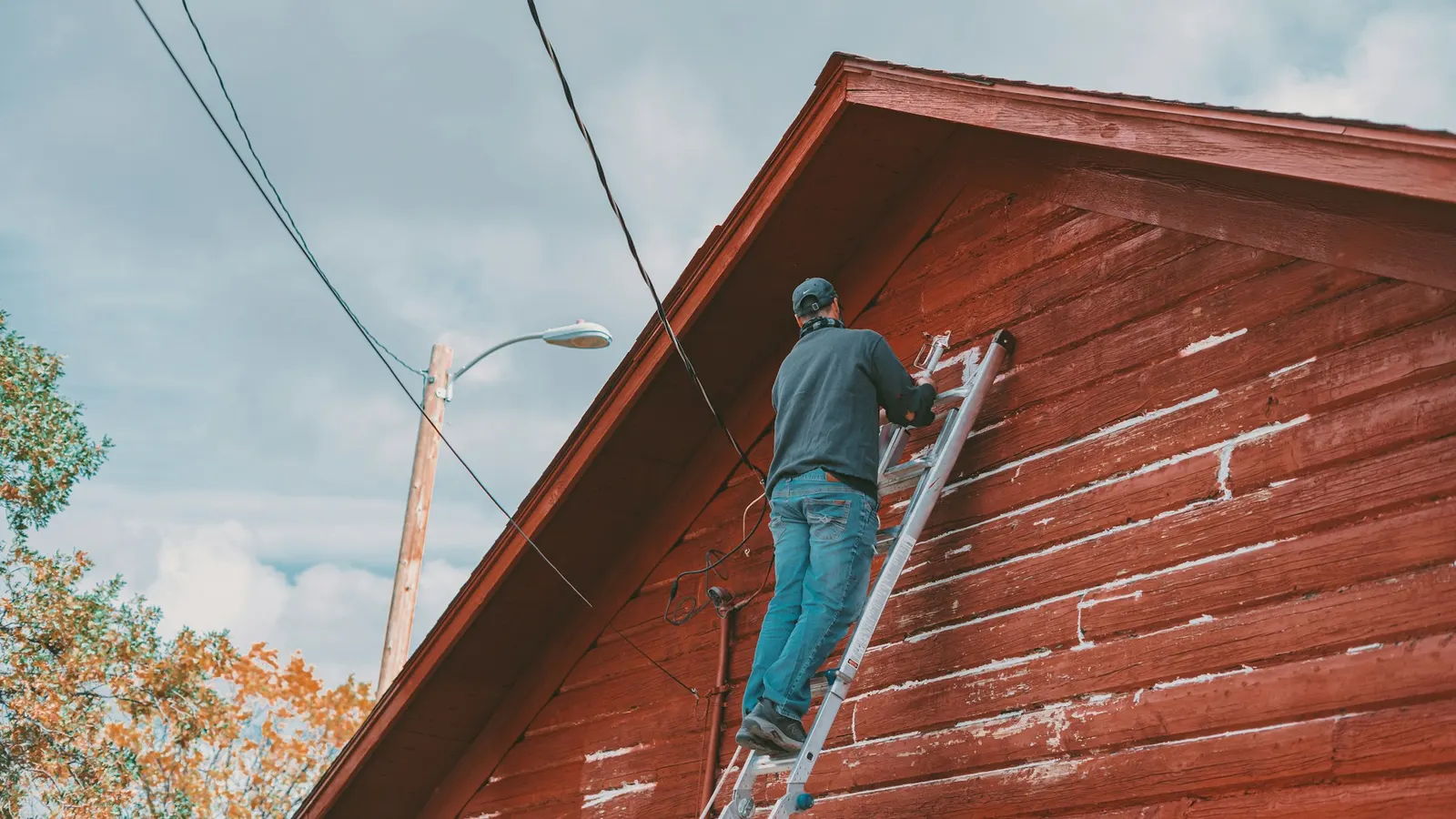
A working day in peak season is four to six houses. At each one you set the ladder, walk the gutter line scooping or blowing debris onto tarps below, flush the runs and downspouts, clear clogs with a plumber’s snake or a blast of water from the bottom, bag the debris, and photograph the clean gutters. The photos matter: customers cannot see the work from the ground, so before-and-after shots are how you prove it happened and how you win the next customer.
Two seasonal peaks drive the year. Fall (late October through early December in most of the country) is the big one. Spring (March through May) is the second, driven by seed pods, blossoms and winter debris. Between them, demand drops to a trickle unless you sell other services. In the Pacific Northwest and the Southeast the season is longer, and moss and pine needles add year-round work.
Market signals: a typical single-story home bills $150–$250 and a two-story home $250–$450, and in a leafy suburb you can fill a day within a mile of your first job. Repeat rates are high, often 50–70 percent of customers rebook within a year if you remind them. What kills these businesses is a fall from a ladder, underpricing two-story work, and failing to build a second revenue line for the slow months.
People who thrive are fit, unbothered by heights and damp weather, disciplined about ladder safety, and good at simple systems: reminder texts, route planning, photo documentation. If you hate cold hands, November will be hard.
Step 1: Choose what you sell and to whom
Gutter cleaning alone is a good entry point but a hard year-round business. Decide early which of these shapes you are building.
Residential cleaning only
The classic start. Homeowners, one-off and recurring, $150–$450 a job. Low equipment cost, quick to launch, brutally seasonal. Works as a side business or as the first year of something bigger.
Cleaning plus gutter guards
Gutter guard installation (mesh, micro-mesh, reverse-curve) is where the margins are. Installed guards run $8–$25 per linear foot depending on product, so a 180-foot house is a $1,500–$4,000 ticket, with material costs of $3–$10 a foot. Every cleaning job is a chance to quote guards. Some states treat installation as home improvement contracting and require registration (see Step 2).
Exterior services bundle
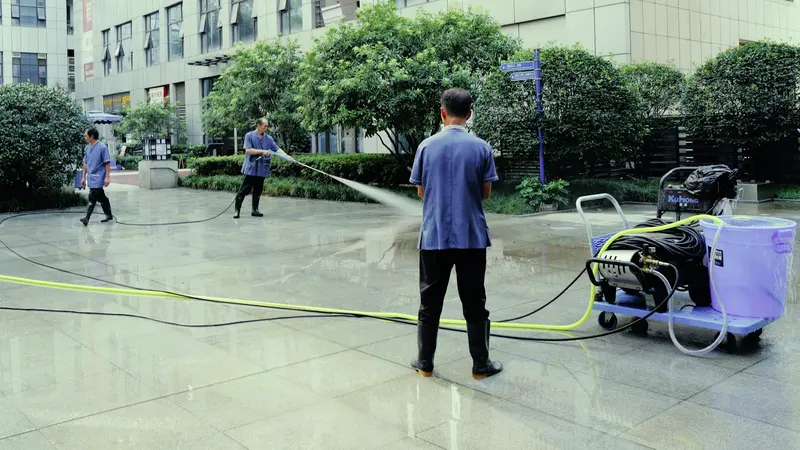
Gutter cleaning, roof debris blow-off, moss treatment, window cleaning, house washing and pressure washing, sold as a spring and fall exterior package. This is how solo operators get to $100,000 in revenue: the customer books one visit and you bill $500–$900 for two or three services.
Commercial and property management
Apartment complexes, HOAs, retail strips, medical offices. Jobs are $500–$5,000, scheduled annually, and require a certificate of insurance, a W-9 and net-30 patience. Steady and less seasonal, but slower to break into.
Start with residential cleaning, quote guards from your first month, and add washing services before your first summer. Chase commercial accounts once you have a full season of photos and reviews.
Tip: Every cleaning job should end with a two-minute conversation about what you saw: sagging sections, loose hangers, a downspout that drains against the foundation. Fixing minor gutter problems (hangers, sealant, downspout extensions) at $75–$200 adds 20–30 percent to your average ticket and builds trust.
Step 2: Set up the business legally
Form an LLC. You will be working at height next to other people’s windows, cars and landscaping; separate the business from your personal assets. It costs $50–$500 depending on the state and takes an afternoon on the Secretary of State’s website. Get a free EIN from the IRS the same day and open a business checking account.
Then handle these:
- Business license. Many cities and some counties require a general business license ($25–$150 a year). Check the city’s finance or licensing page.
- Contractor or home improvement registration. Gutter cleaning alone rarely needs one. Installing guards or replacing gutter sections can: Maryland (MHIC), New Jersey (HIC registration), Pennsylvania (HICPA registration), California (a C-39 or B license above $500 per job), Washington (general contractor registration) and others. Search “[your state] home improvement contractor registration” and read the dollar threshold before you sell installation.
- Sales tax. Cleaning services are taxable in some states (Texas, for example, taxes residential cleaning services in many cases) and not in others. Ask your state department of revenue directly.
- Waste disposal. Gutter debris is usually yard waste. Know whether your municipality takes it in curbside yard bags, or budget $20–$40 a load at a transfer station.
- A simple service agreement. One page: scope (clean gutters and downspouts, flush, bag debris, photos), exclusions (roof repairs, guards not removed unless quoted), access needs, pre-existing damage disclaimer, payment terms. Have a local attorney review it once for $200–$400.

Step 3: Get the right insurance
Nobody with authority over a property, from a property manager to a careful homeowner, will hire an uninsured person to climb a ladder against their house. Insurance is what makes you hireable.
| Coverage | What it does | Typical annual cost (solo) |
|---|---|---|
| General liability, $1M/$2M | Damage to the property (broken window, dented gutter, trampled landscaping) and injury to others | $600–$1,800 |
| Commercial auto or hired/non-owned | Your truck or van while working, including the ladder rack | $1,200–$2,800 |
| Inland marine / tools and equipment | Ladders, vacuum, blower, pressure washer, stolen or damaged | $200–$500 |
| Workers’ comp | Required in most states once you hire; ladder work is rated high | $3,000–$6,000 per employee |
| Occupational accident (for yourself, optional) | Pays your medical bills and lost income if you fall | $600–$1,500 |
Solo owners are often excluded from their own state’s workers’ comp, which means a fall is on your health insurance and your savings. An occupational accident or disability policy is the honest fix and is worth budgeting for from day one.
When a property manager asks for a certificate of insurance, they usually want to be listed as additional insured and want the certificate within a day or two. Set that up with your agent early so you can send one from your phone.
Step 4: Equipment and startup costs
The lean column gets you working. The full column is what a busy solo operator looks like after one season.
| Item | Lean start | Full setup |
|---|---|---|
| Fiberglass extension ladder, 24–28 ft, Type IA (300 lb) | $350–$550 | $350–$550 |
| Second ladder (32 ft or a 6–8 ft step for single story) | — | $300–$700 |
| Ladder stabilizer / standoff | $50–$90 | $50–$90 |
| Ladder levelers, mitts or gutter guards for the rails | $60–$150 | $60–$150 |
| Gutter scoops, hand tools, bucket with hook, plumber’s snake | $60–$120 | $100–$200 |
| Cordless or gas leaf blower with gutter attachment kit | $200–$400 | $300–$600 |
| Tarps, drop cloths, contractor bags | $60–$120 | $120–$200 |
| Hose, nozzles, 100 ft, plus a downspout flushing ball | $60–$120 | $100–$200 |
| Gutter vacuum system with carbon fiber poles (30–40 ft reach) | — | $1,500–$4,000 |
| Pressure washer, 3,000–4,000 PSI, with surface and downspout attachments | — | $800–$2,500 |
| Ladder rack for pickup or van | $250–$700 | $400–$1,200 |
| Safety: harness and anchor kit, gloves, eye protection, non-slip boots | $150–$300 | $300–$600 |
| Insurance (first year, financed) | $700–$1,500 | $2,500–$5,000 |
| LLC, business license, contract review | $150–$700 | $300–$1,200 |
| Website, domain, Google Business Profile, door hangers | $100–$400 | $300–$800 |
| Total | $1,500–$3,500 | $8,000–$12,000+ |
Two purchases matter more than they look. The ladder stabilizer keeps the rails off the gutter (bent gutters are the most common damage claim) and widens your footing. And buy fiberglass, not aluminum, because fiberglass does not conduct electricity when you are working near a service drop.
On the gutter vacuum: systems that pull debris through carbon fiber poles into a drum let you clean many two-story homes from the ground, but they struggle with compacted wet debris and you cannot see what you are cleaning without a pole camera. Most operators add one after their first fall season, when the cash is there and they know their local debris.
Step 5: Price per job, think per linear foot
Homeowners want one number. You should quote one number, but derive it from linear feet, stories, roof pitch and debris load so you do not lose money on the hard houses.
| Job | Typical 2026 price | Notes |
|---|---|---|
| Single-story home, up to 150 linear ft | $125–$200 | Your quickest jobs, 30–45 minutes |
| Single-story, 150–250 linear ft | $175–$275 | Ranch homes with wraparound gutters |
| Two-story home, up to 200 linear ft | $225–$375 | Most of your fall calendar |
| Two-story, 200–300 ft or complex rooflines | $325–$500 | Multiple ladder moves, dormers |
| Three-story or steep pitch (10/12+) | $450–$800 | Quote in person; consider a vacuum system |
| Downspout clog clearing | $25–$60 each | Beyond the first two, or underground drains |
| Gutter guard removal and reinstall | $1–$2 per ft | Snap-in guards; screwed-in cost more |
| Heavy debris surcharge (sapling growth, roofing grit) | +$50–$150 | Photograph and show the customer |
| Roof debris blow-off (valleys, behind chimneys) | $75–$200 | Sells easily on the same visit |
| Minor repairs: rehang sagging section, reseal seams | $75–$200 | Materials $10–$30 |
| Gutter guard installation | $8–$25 per linear ft | Product dependent; quote after cleaning |
Per linear foot, that works out to about $1.00–$1.50 for single-story and $1.50–$2.50 for two-story homes. Measure from satellite imagery when you quote by phone (most mapping tools have a measurement feature), then confirm on site. A real quote sounds like: “Two-story, about 190 feet of gutter, four downspouts, moderate leaf load: $295, includes flushing, downspout check, bagging and photos.”
The income math is straightforward. Four two-story jobs a day at $300 is $1,200; fuel, dumping and card fees run $60–$90, so you clear $1,100 or so. Work five days a week for the ten peak weeks of fall and eight of spring and you have banked roughly $90,000 before insurance and vehicle costs, from about 18 weeks of work. The other 34 weeks are the problem to solve, which is why guards and washing services exist.
Take payment on completion by card or bank transfer; do not invoice residential customers. For commercial and property management work, deposits are rare but net-30 invoicing is standard, so keep a cash cushion.
Step 6: Get online and look like a professional, not a guy with a ladder
Gutter customers find you three ways: they search “gutter cleaning near me” the week the gutters overflow, they ask a neighborhood Facebook group or Nextdoor, or they see your truck or door hanger. In all three cases they check your website and Google reviews before they call, and compare you against three others.
Your site needs a services page with starting-at prices by home size (customers who can see prices call; those who cannot, move on), before-and-after photos, your service area town by town, your insurance status stated plainly, reviews, and a quote form that asks for the address and number of stories so you can quote from satellite imagery. If you install guards or offer washing, each gets its own page.
You can have Restart build it: describe the business, the services and prices, the towns you cover and how you want people to reach you, and it builds the pages, writes the copy, designs the site and publishes it to a real URL. When you add gutter guard installation in your second month or change your fall pricing, you ask for the change and it is live. It is the fastest route to a site that makes a service business look established before it has a single review.
Then set up a Google Business Profile with the service-area option, upload photos from every job, and ask for a review while you are still in the driveway. Ten reviews in your first season is the target. Return calls within an hour during peak season, because the customer with an overflowing gutter is calling the next name on the list five minutes later.
Watch out: Do not list a price on your site that you are not willing to honor on the phone. “Starting at $149” is fine if single-story homes really start there; it is a trust killer if every quote comes in at $250.
Step 7: Win the first 20 customers
The first season is a hustle. These channels reliably fill a new gutter cleaner’s calendar:
- Door hangers timed to leaf drop. Two weeks before peak fall, walk 300–500 homes in leafy neighborhoods with a hanger showing a price (“Two-story from $249”), a photo and a phone number. Expect 1–3 percent to call.
- Nextdoor and neighborhood Facebook groups. Post a before-and-after photo and a price during the first rainy week of fall. Reply to every “anyone know a gutter cleaner?” thread within minutes.
- Your first customer’s neighbors. Knock on the three houses on either side while your ladder is up: “I’m doing the Johnsons’ gutters, I can do yours today for $225 since I’m already here.” Same-day neighbor jobs are the most profitable jobs you will ever do.
- Lawn care and landscaping companies. Most do not want to climb ladders. Offer a 10 percent referral fee to two or three lawn care operators.
- Property managers and HOA boards. Email a one-page capability sheet with your certificate of insurance and a per-unit price for a sample complex. They bid annual cleanings in late summer.
- Realtors and home inspectors. Both flag clogged gutters during sales; quick turnaround gets you the pre-listing and post-inspection jobs.
- Thumbtack, Angi and similar lead sites. Leads cost $15–$60 each and close 20–40 percent of the time if you respond within five minutes. Useful in your first season; expensive as a permanent strategy.
For your first five jobs, charge 10–15 percent under target, not half. Ask each customer for a Google review and permission to use the photos, and schedule their spring cleaning before you leave: “I’ll text you in March to get on the calendar.” That single habit is the foundation of a repeat business.

Step 8: Run the operation and grow beyond your own ladder
Routing. Book by neighborhood, not by request order. Four jobs within two miles of each other on a Tuesday beat six jobs scattered across the county. Set a two-hour arrival window and text when you are on the way.
Safety systems. Three points of contact on the ladder, always. Stabilizer on every setup. Reset the ladder rather than reaching; more than an arm’s length sideways is how people fall. Check for the electrical service drop before every setup. No ladder work in gusts over 20 mph or on ice, whatever the customer says. Write these down and make them the first thing any hire learns.
Recurring service. Keep a customer list with last cleaning date, gutter footage, stories and notes. Text every customer six weeks before their next season with a one-tap rebook. Offer a twice-a-year plan at 10 percent off; operators who do this see 60–70 percent of revenue coming from repeat customers by year three.
Hiring. The first hire is a ground person at $18–$25 an hour who moves the ladder, bags debris, flushes downspouts and talks to the customer while you stay up top. It roughly doubles your jobs per day. Add workers’ comp on day one; a ladder injury without it can end the business.
Second crew. When the calendar is full six weeks ahead in both seasons, a second truck with a lead and a helper doubles revenue for about $6,000–$10,000 in equipment plus wages. What breaks: quality control (you are no longer on every roofline), scheduling (someone needs to run the phone), and winter cash flow (two vehicles and two payrolls with no gutters to clean). Have the exterior bundle selling before you add the second crew, or you are funding an idle truck from January to March.
How much can you make?
These scenarios assume 2026 pricing, an 18-week core season for cleaning, and additional services in the shoulder months. Costs include fuel, dumping, card fees, insurance, vehicle, marketing and, where relevant, wages.
| Scenario | Jobs per week | Avg ticket | Season / year | Gross revenue | Costs | Profit before tax |
|---|---|---|---|---|---|---|
| Side income (weekends, fall and spring) | 6 | $240 | 18 weeks | $26,000 | $6,500 | $19,500 |
| Full-time solo, cleaning plus guards and washing | 18 (peak) / 8 (shoulder) | $310 | 42 weeks | $125,000 | $38,000 | $87,000 |
| Small team (2 crews, 3 employees) | 45 (peak) / 20 (shoulder) | $330 | 44 weeks | $340,000 | $225,000 | $115,000 |
The side income version is a genuinely good business: $19,500 for roughly 36 working days a year, from equipment that fits in a garage. The full-time solo version is achievable only if you sell guards and washing in the off-season; a cleaning-only solo operator lands closer to $50,000–$65,000 in profit with a quiet January. The small team is where the owner stops climbing and starts selling, and where margins compress as wages and workers’ comp bite. The ceiling for a regional exterior-services company with four or five crews is $1–2 million in revenue at 15–25 percent net margins; gutter cleaning is the door-opener, and guards, washing and roof work are where the money lands.
Mistakes that sink new gutter-cleaning owners
- Quoting two-story homes at single-story prices. A steep-pitch colonial takes twice as long and twice the ladder moves. Fix: quote from linear feet, stories and pitch, and add a surcharge line for heavy debris.
- Leaning the ladder on the gutter. It bends the gutter and becomes your first damage claim. Fix: use a stabilizer on every setup, no exceptions.
- Skipping the photos. Customers cannot see the work and will question the bill. Fix: before, after and downspout-flowing photos on every job, texted to the customer with the invoice.
- Ignoring the off-season until January. You cannot invent a spring customer base in a week. Fix: quote guards on every fall job and build the washing bundle before winter.
- Treating repeat customers as one-offs. The second cleaning costs nothing to acquire. Fix: keep a list and send a rebooking text six weeks before each season.
- Running uninsured to save $100 a month. One broken window or a fall through a skylight is a five-figure claim. Fix: bind general liability before your first job and carry the certificate on your phone.
- Working in wind, ice or on a wet steep roof because the schedule is tight. This is how the injuries happen. Fix: set weather limits in writing and reschedule; customers respect it more than you expect.
Your first 30 days
Week 1
- File the LLC, get an EIN, open a business bank account.
- Check your city business license and whether your state taxes cleaning services.
- Get two general liability quotes; ask about hired/non-owned auto and an occupational accident policy for yourself.
- Buy the lean kit: Type IA fiberglass ladder, stabilizer, scoops, bucket, blower with gutter kit, tarps, hose, safety gear, ladder rack.
- Build the website on Restart: services, starting-at prices by home size, service area, insurance statement, quote form.
Week 2
- Bind insurance and get a sample certificate of insurance.
- Set up Google Business Profile (service area), a Facebook page and a Nextdoor business page.
- Clean your own gutters, a relative’s and a friend’s; time each job, take before-and-after photos, and refine your quoting.
- Order 500 door hangers with a price, a photo and your number.
Week 3
- Walk the door hangers through two leafy neighborhoods, timed to leaf drop or spring bloom.
- Post a before-and-after and a price in three neighborhood groups.
- Email a capability sheet and certificate of insurance to five property managers and two HOA management companies.
- Introduce yourself to three lawn care or landscaping operators with a referral offer.
Week 4
- Complete the first paid jobs. Knock on neighbors while the ladder is up. Text photos with the invoice. Ask for a review and book the next-season cleaning before you leave.
- Start the customer list: address, footage, stories, debris notes, next-season date.
- Price a gutter guard product line from a supplier and add an installation page to the site.
- Review the numbers: minutes per job by house type, what you underquoted, and which channel produced the most calls.