A solo operator with one commercial mower and a dense route can gross $2,000 a week mowing 40 lawns. The same operator with 40 lawns scattered across three towns grosses the same money in twice the hours and burns the difference in fuel. Almost everything that determines whether a lawn business works comes down to that one idea, and it is the thing people researching how to start a lawn-care business tend to skip on the way to shopping for a zero-turn.
This guide is for someone who wants to build a real lawn-care company, not just mow a few neighbors’ yards for cash. It covers which services to offer first, the licenses that actually apply (and the one that trips people up), insurance, an honest equipment budget, how to price per lawn and per season, and how to fill a route with 40 recurring customers in your first spring.
What a lawn-care business actually looks like day to day
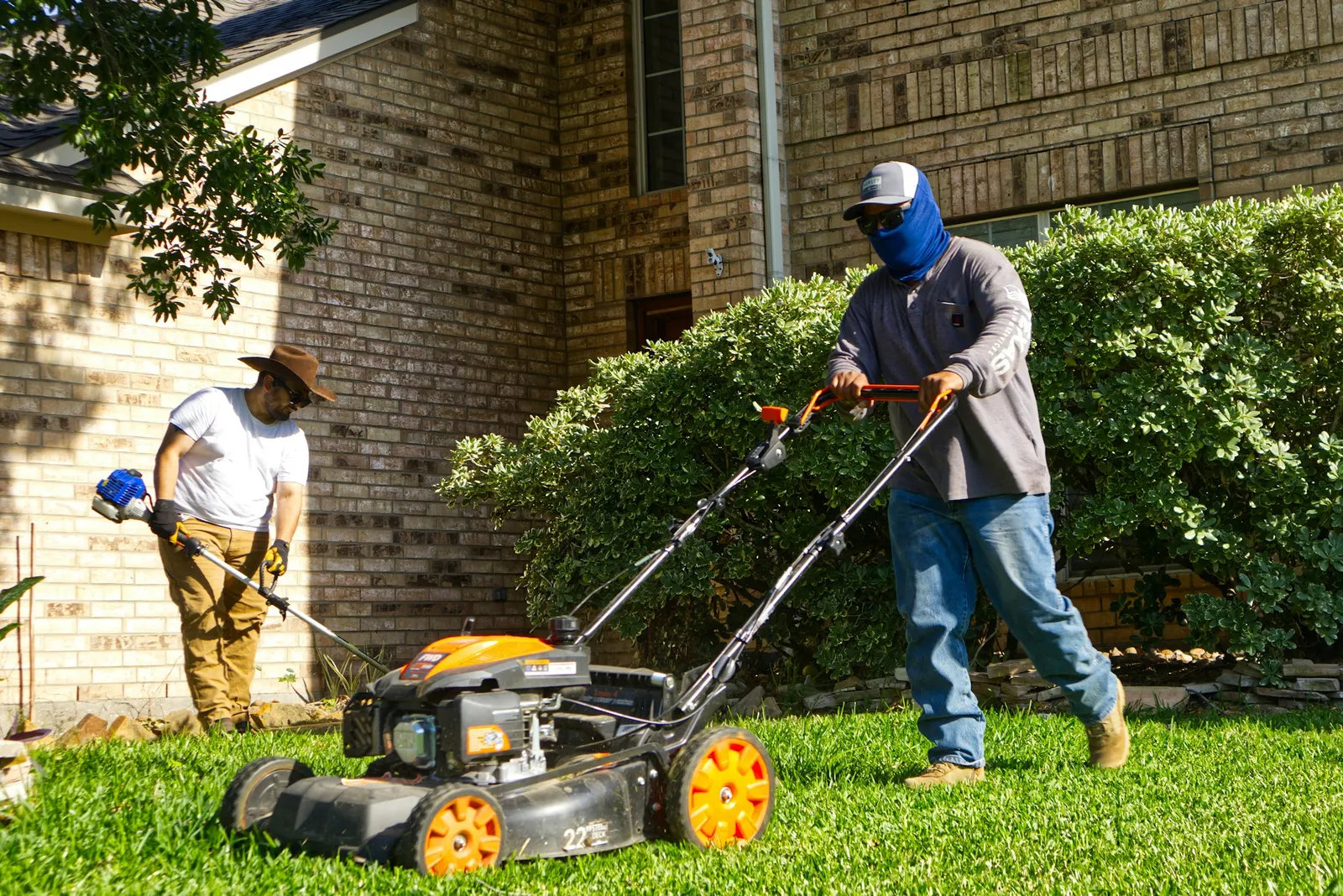
In season, the day starts at 6:30 a.m. loading the trailer and checking oil, string and blades. You mow, trim, edge and blow ten to fourteen properties, each taking 25 to 40 minutes plus the drive. Evenings are quoting, invoicing, sharpening blades and fixing whatever broke. A wet week means Saturday catch-up.
The market is enormous and fragmented: the dominant provider in any neighborhood is a guy with a truck, not a national brand. A weekly quarter-acre mow runs $45 to $65, so a homeowner who signs up in April is worth $1,300 to $1,900 over a 28-week season, and most stay for years if you show up on the same day every week.
Seasonality is the defining constraint outside the Sun Belt. Northern operators earn 80 percent of their income from April through October and either add fall and winter services (leaf removal, gutter cleaning, snow, holiday lights) or budget for a thin winter. Margins for a solo operator run 60 to 70 percent before paying yourself; with a crew and a second truck, closer to 35 to 45 percent.
The people who thrive like physical work, keep a schedule without being told to, and will knock on a door to ask for the job. What kills lawn businesses: underpricing the first customers and never raising rates, taking every job regardless of location, skipping insurance until a rock through a window forces the issue, and buying $15,000 of equipment before the route can pay for it.
Step 1: Choose your service mix and your route
The core service is the weekly maintenance visit: mow, string-trim around obstacles, edge the hard surfaces, blow off the driveway and walks. Everything else is an add-on sold to those same customers. Decide up front which of these you will offer in year one:
- Residential weekly maintenance. The backbone. Recurring, predictable, easy to quote from the curb. Aim for 40 to 60 of these on a route you can drive end to end in under 15 minutes.
- Bi-weekly service. Charge 20 to 30 percent more per visit or refuse it; tall grass takes longer, clumps, and makes your work look bad.
- Seasonal cleanups, mulch, hedge trimming. High-margin add-ons ($150 to $600 per job) sold to existing customers in spring and fall. This is where a $50 customer becomes a $2,500-a-year customer.
- Fertilization and weed control. Very profitable ($50 to $80 per application, five to seven a year) but requires a state pesticide applicator license. Plan for year two.
- Commercial properties. HOAs, office parks, churches. Larger checks and 12-month contracts, but they require a certificate of insurance, net-30 billing and usually a 48-inch mower. Better once you have a crew.
- Landscaping installs, irrigation, hardscape. Different business, different licensing, different equipment. Refer it out in year one.
Choose your territory before you choose your customers: two or three adjacent neighborhoods with quarter- to half-acre lots and homeowners who can afford $200 a month. Every quote outside that zone gets a $10 to $20 surcharge or a polite no.
Tip: Drive your target neighborhoods on a Thursday evening. Overgrown lawns with cars in the driveway are people who can pay and have not found a reliable provider.
Step 2: Set up the legal side
Form an LLC. Filing costs $50 to $500 depending on your state (search “[your state] Secretary of State LLC filing”), and it keeps a rock through a bay window from becoming a claim on your personal savings. Get a free EIN from the IRS the same day and open a business checking account. A sole proprietorship is legal, but you are running spinning blades on other people’s property.
The licensing that actually applies:
- Local business license. Most cities and counties require one, $25 to $150 a year. Some also require a registration for door-to-door solicitation if you plan to knock.
- Sales tax permit. Some states tax lawn maintenance services (Texas and Ohio among them; many do not). Search “[your state] department of revenue landscaping services taxable” and register before your first invoice if it applies.
- Pesticide applicator license. Required in essentially every state the moment you apply fertilizer with weed control, herbicide or insecticide for pay, even over-the-counter products. Issued by your state department of agriculture after a written exam (core plus an ornamental and turf category), costs $50 to $300, and needs continuing education to renew.
- Contractor licensing thresholds. Irrigation, retaining walls and landscape installs over a dollar threshold ($500 to $2,500 in many states) may require a contractor’s license. Stay under it or refer it out.
- Noise ordinances. Many cities prohibit power equipment before 7 or 8 a.m.
Watch out: Fertilizer plus weed control in one bag is a pesticide application. New operators get reported by competitors for spreading “weed and feed” without a license more often than you would think.
Step 3: Get insured before the first mow
A mower throws rocks at 200 miles per hour, and commercial customers will ask for a certificate before you start.
- General liability: $400 to $900 a year for $1 million per occurrence. Covers the broken window, the cracked sprinkler head, the dog that got out when you left the gate open.
- Commercial auto: $1,200 to $2,500 a year per truck, with the trailer listed. A personal policy will likely deny a claim if you are towing mowers to a paid job.
- Inland marine (equipment) coverage: $200 to $500 a year for $10,000 to $20,000 of equipment. Mowers get stolen off trailers in daylight.
- Workers’ compensation: required in most states once you hire, and landscaping is an expensive class code, roughly $6 to $12 per $100 of payroll.
- Pesticide coverage: if you add applications, your liability policy needs a herbicide or pollution endorsement; standard GL often excludes it.
Quote Next, Hiscox, Thimble or a local independent agent who writes landscapers, and ask specifically about equipment theft and the herbicide endorsement.
Step 4: Buy equipment the route can pay for
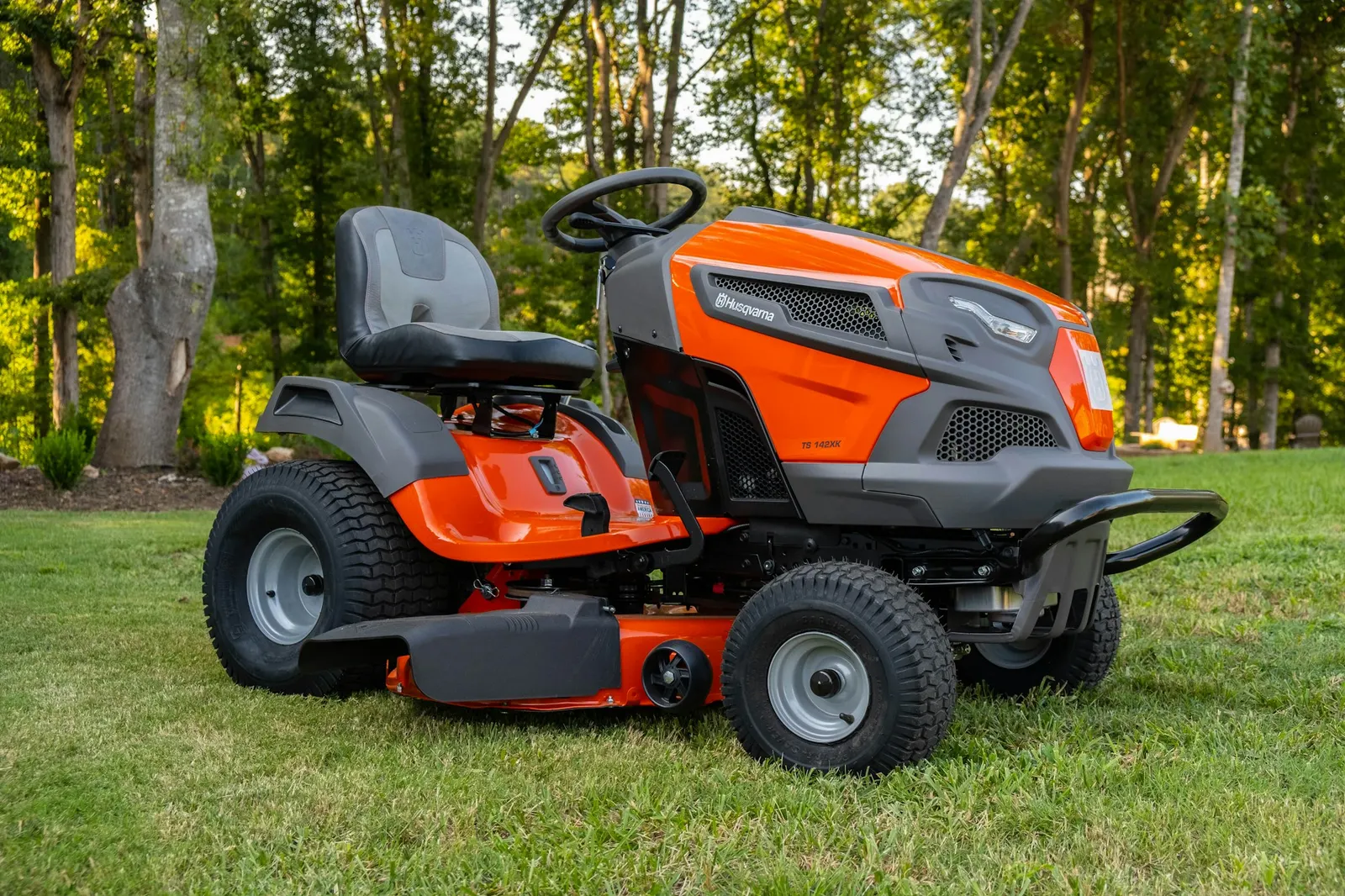
Commercial equipment costs two to three times what homeowner gear does and lasts five to ten times as long; a $400 big-box mower dies by July on a 40-lawn route. But you do not need a $12,000 zero-turn to start. A commercial 21-inch walk-behind handles quarter-acre lots, and the stand-on mower can come when the route is 50 lawns deep.
Prices below assume you already have a pickup or an SUV that can tow.
| Item | Lean setup | Full setup |
|---|---|---|
| Mower | $1,300–$1,800 (commercial 21” walk-behind) | $6,000–$12,000 (36”–52” stand-on or zero-turn) plus $1,300 21” for gated yards |
| String trimmer | $300–$450 (commercial gas or battery) | $600–$900 (two units) |
| Stick edger | $350–$500 | $350–$500 |
| Backpack blower | $350–$600 | $500–$700 |
| Hedge trimmer | $300–$450 | $500–$800 (including extended-reach) |
| Trailer | $1,200–$2,200 (5x8 or 5x10 utility) | $3,000–$5,000 (6x12 with racks, gate assist, lockbox) |
| Fuel cans, PPE, hand tools, spare blades and string | $200–$400 | $500–$800 |
| Insurance (first year) | $700–$1,500 | $2,000–$3,500 |
| LLC, licenses, bank account | $100–$500 | $300–$800 |
| Website, Google Business Profile, door hangers, yard signs | $200–$500 | $800–$1,500 |
| Total | $5,000–$8,900 | $14,900–$27,300 |
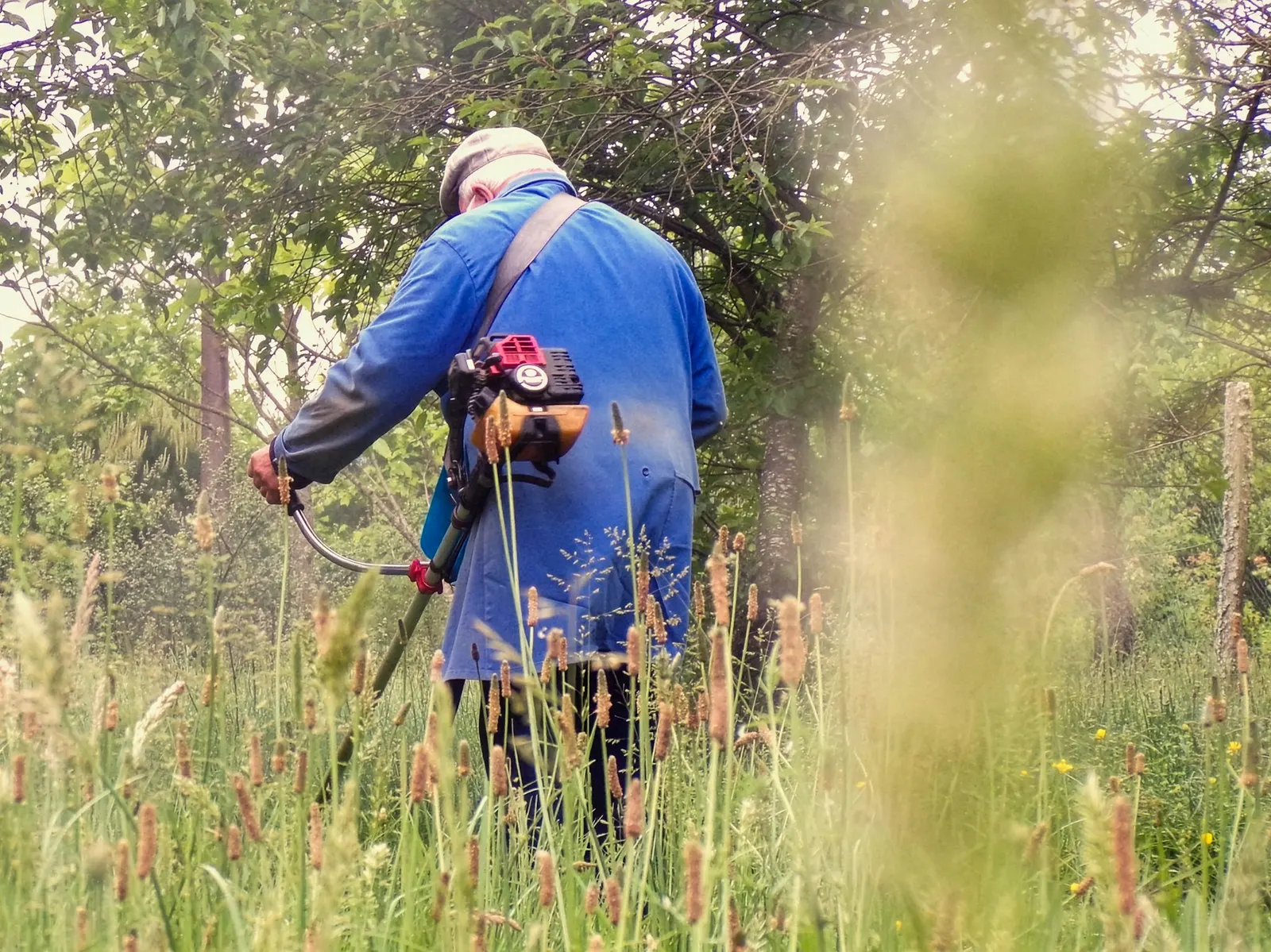
Buy the handhelds new: a commercial Stihl, Echo or Husqvarna trimmer and blower will run daily for years, and dealer service matters when one dies in June. Buy the mower used if you must, from a landscaper upgrading rather than an auction; ask for hours and check the deck for cracks. Battery handhelds are viable for residential routes and required in some cities, but budget $1,000 or more for enough batteries to last a day.
Step 5: Price per lawn, per visit, per season
Lawn care is priced per visit, quoted from lot size and complexity, and sold as a recurring weekly schedule. Most operators quote from the curb or a satellite view (Google Earth’s measure tool), then adjust for fences, slopes and heavy trimming.
Work backward from your hourly target. A solo operator with commercial equipment should aim for $60 to $90 an hour of on-site time to cover fuel, maintenance, insurance, depreciation and a real wage. A quarter-acre lot that takes 30 minutes plus a 5-minute drive needs to bring in at least $45. Anything under $40 is a stop you cannot afford, no matter how nice the customer is.
| Service | Typical price (2026, US suburban) | Notes |
|---|---|---|
| Weekly mow, trim, edge, blow (under 1/4 acre) | $40–$55 per visit | Minimum stop charge |
| Weekly maintenance, 1/4 to 1/2 acre | $50–$75 per visit | Most common ticket |
| Weekly maintenance, 1/2 to 1 acre | $75–$120 per visit | Needs a 48” or larger mower to be efficient |
| Bi-weekly maintenance | Weekly price plus 20–30% | Or decline it |
| Spring or fall cleanup | $150–$450 | Debris, bed edging, first cut |
| Mulch installed | $75–$110 per cubic yard | Material is $30–$45; a typical front yard takes 4–8 yards |
| Hedge and shrub trimming | $60–$90 per hour, or per shrub | Include haul-away |
| Core aeration (1/4 acre) | $100–$175 | Rent the machine at $90 a day and do six lawns |
| Aeration plus overseeding | $200–$350 | Fall upsell in cool-season regions |
| Leaf removal | $200–$500 per visit | Priced by volume; a huge fall revenue line |
| Fertilization and weed control (per application) | $50–$80 | Requires applicator license |
The monthly math for a solo operator in season: 40 weekly customers at an average $52 is $2,080 a week, about $9,000 a month over a 4.3-week month. Add one cleanup or mulch job a week at $300 and you are near $10,300. Fuel, string, blades, oil and repairs run $900 to $1,300 a month; insurance and software about $250. That leaves roughly $8,500 before taxes and before you set aside for equipment replacement, which should be 5 to 8 percent of revenue.
Sell annual agreements where you can: 28 mowing visits plus spring and fall cleanups, billed as twelve equal monthly payments, so you get paid in January.
Tip: Raise every customer $3 to $5 per visit each spring with a short, friendly letter in February. Almost nobody leaves over $4, and across 40 lawns it is $4,500 a season.
Step 6: Get online and look like the company people want to hire
New customers find you three ways: a neighbor’s referral, a Google search for “lawn care near me,” or a door hanger they kept on the fridge. All three end at your website and Google Business Profile, and if either looks like a hobby, they call the next name. A lawn-care site needs your services with starting-at prices, your service area with the neighborhoods named, before-and-after photos of lawns you actually cut, reviews, and a quote form that asks for the address so you can measure the lot before replying. Put your phone number in the header and answer it; a missed call in April is a customer who calls your competitor.
You can have Restart build it: describe the business, your services, your neighborhoods, your starting prices and how you want people to reach you, and it builds the pages, writes the copy, designs the site and publishes it to a real URL. Change anything afterwards by asking, such as adding a leaf removal page in September or updating prices in February. Restart’s notes on local businesses cover what a service-area business should put on each page.
How to start a lawn-care business that ranks locally
Set up a Google Business Profile as a service-area business with “Lawn care service” as the primary category, list your neighborhoods, and upload 15 to 20 real photos of striped lawns and clean edges. Then text every customer a direct review link after their third visit; ten reviews with photos will put a new company above established ones that never asked. Add the business to Nextdoor and the local Facebook groups where someone asks “anyone know a good lawn guy?” every week.
Step 7: Fill the route with your first 40 customers
Lawn care is one of the few businesses where the old methods still outperform ads, because the product is visible from the street and the buyer is at home.
- Door hangers. Print 2,000 ($150 to $250) and hang them in your target neighborhoods on a Saturday in late March and again in mid-April. Expect 1 to 2 percent response, so 20 to 40 calls. Include a price (“Weekly mowing from $45”) and your phone number in large type.
- Yard signs at every job. Ask each customer to let you leave a small sign for two weeks after the first cut. A striped lawn with your number next to it is the best ad you will run.
- Knock the neighbors. After each mow, knock on the houses on either side: “I just started mowing for the Garcias next door and I’m here every Tuesday. I can add you at $50 a week, same day.” Route density is built one neighbor at a time.
- Facebook groups and Nextdoor. Post a before-and-after photo with “Two spots open on my Tuesday route in Ballantyne, $45 to $60 weekly.”
- Realtors and property managers. Vacant listings need mowing every week and nobody wants to do it. One property manager with 20 rentals is a route in itself.
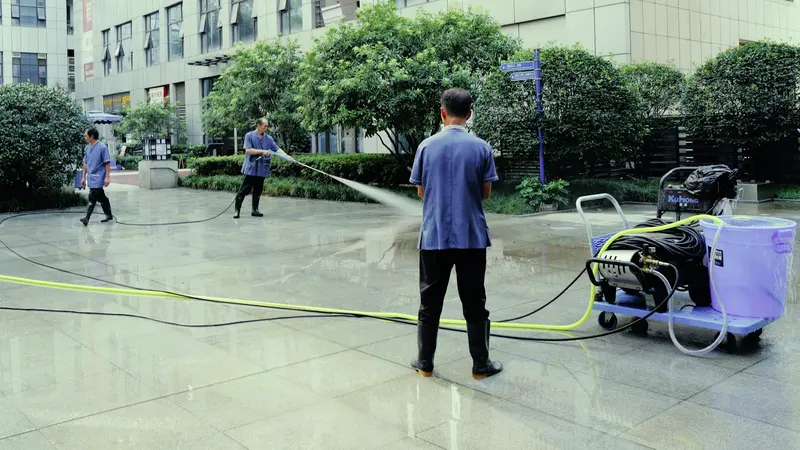
- Cross-referral with adjacent trades. Pressure washing and gutter cleaning operators see your customers and do not compete with you; swap referrals.
Charge the first five your real price, not a discount; offer the first cut free only if they sign up for the season. Under-pricing early customers means spending year two raising or replacing them.
Step 8: Run a tight route and scale on purpose
The habits that separate a business from a guy with a mower:
- Fixed service days by neighborhood. Tuesday is Ballantyne, Wednesday is Matthews. Customers know when you come, and you never cross town twice.
- Automatic payments. Card on file through Jobber, Yardbook or Square, charged after each visit. Chasing $50 checks from 40 people is a part-time job you do not want.
- One-page agreements. Services, price, schedule, what happens in rain and drought, two weeks’ notice to cancel, and a clause that price adjusts annually.
- Maintenance schedule. Blades sharpened weekly, oil every 50 hours. Downtime in June costs more than any part.
Scaling happens in order. Fill the solo route to 50 to 60 lawns, the limit for one person with a 21-inch mower. Buy the stand-on mower and a bigger trailer, which lets the same person handle 70 to 80 or take on half-acre lots. Then hire a helper at $16 to $22 an hour, which roughly doubles daily capacity but adds workers’ comp and payroll; a two-person crew on a good route runs 25 to 30 lawns a day.
At two crews (four people, two trucks), revenue can pass $300,000, but you are now a manager, not a mower. What breaks: quality on lawns you never see, a helper who no-shows in May, and cash flow when a $12,000 mower and a $30,000 truck both need replacing. Operators who scale successfully add one person per season and keep mowing themselves for at least two years.
How much can you make?
Scenarios below assume a 30-week mowing season with fall cleanups, typical suburban pricing, and costs covering fuel, maintenance, insurance, software, marketing and equipment reserve. Northern operators should add off-season services or expect the winter gap.
| Level | Volume | Annual revenue | Annual costs | Annual profit |
|---|---|---|---|---|
| Side income (Saturdays plus two evenings) | 15 weekly lawns at $50, a few cleanups | $26,000 | $7,000 | $19,000 |
| Full-time solo | 45 weekly lawns at $52, 30 cleanups and mulch jobs at $325 | $80,000 | $22,000 | $58,000 |
| Small team (you plus one helper, one truck) | 85 weekly lawns at $54, 60 add-on jobs, two small commercial accounts | $175,000 | $95,000 | $80,000 |
The ceiling for a solo operator is about $90,000 in revenue in a long-season market before the body gives out or quality slips. Beyond that, income comes from crews, fertilization programs or commercial contracts, each of which changes the business. A well-run solo operation in year two should expect $55,000 to $70,000 in profit for eight months of hard work and a slow winter.
Mistakes that sink new lawn-care business owners
- Taking every lawn regardless of location. A $50 stop 20 minutes away is a $30 stop. Fix: define a service zone before your first quote and surcharge or decline everything outside it.
- Pricing bi-weekly the same as weekly. Tall grass takes 50 percent longer and looks worse. Fix: weekly price plus 20 to 30 percent, or weekly only.
- Never raising prices. Customers signed at $40 in 2022 are still at $40 in 2026 while fuel doubled. Fix: a $3 to $5 increase every February, announced by letter.
- Homeowner-grade equipment. The $400 mower dies in July and you lose a week of income waiting on a replacement. Fix: buy commercial handhelds new and a commercial mower used if you have to.
- Applying weed and feed without a license. Fines, and competitors do report it. Fix: mow-only in year one, or get the applicator license before your first application.
- Chasing payments by hand. Forty people paying by check, cash and Venmo on their own schedule. Fix: card on file, auto-charged after each visit, from customer number one.
Your first 30 days
Week 1
- Pick your two or three target neighborhoods and drive them on a weekday evening.
- File the LLC, get your EIN, open a business bank account.
- Check your state’s sales tax rule for lawn services and your city’s noise ordinance and solicitation rules.
- Build the website on Restart with services, starting prices, service area and a quote form; create your Google Business Profile.
Week 2
- Bind general liability, commercial auto with the trailer listed, and equipment coverage.
- Buy the lean equipment kit; register the trailer.
- Set up Jobber, Yardbook or Square for scheduling, invoicing and card-on-file payments.
- Order 2,000 door hangers and 10 yard signs with your phone number and a starting price.
Week 3
- Mow three lawns for friends or family at full price in exchange for review-ready photos and a Google review each.
- Hang door hangers across the target neighborhoods on Saturday morning.
- Post before-and-after photos in two local Facebook groups and on Nextdoor with the service days you have open.
Week 4
- Sign your first 10 to 15 weekly customers on one-page agreements with card on file.
- Assign each to a fixed service day by neighborhood.
- Knock the neighbors on either side of every new customer after each first cut.
- Visit two property managers with a price sheet for vacant-property mowing.