A 10-by-20-inch tray of sunflower microgreens costs about $3 in seed and soil, takes ten days, and yields around a pound that a restaurant will pay $25 for. That is the number that sells everyone on this business. The number nobody mentions is that the same tray needs roughly 15 minutes of your labor across its life, has to be sold before you cut it, and will be compost if the chef who ordered it changes the menu on Thursday.
This guide is how to start a microgreens business the way growers who are still in business after two years did it: pick five to seven varieties that chefs actually reorder, build a rack setup that fits a spare room, understand the produce-safety rules that do and do not apply, price for restaurants and farmers markets, and land the first six accounts before you have 40 trays of greens you cannot sell. It is written for a solo grower starting indoors with under $2,000 and a car.
Expect to spend $900 to $2,000 to launch lean and $4,000 to $7,500 for a climate-controlled grow room, and 5 to 8 weeks from decision to first paid delivery, because you need two or three trial cycles before you sell anything.
Is a microgreens business right for you?
The daily rhythm is fixed and unforgiving. Every morning you water, check trays, rotate what is under lights, and pull anything showing mold. Two or three days a week you seed; two or three mornings a week you harvest at 5 or 6 a.m., pack, and deliver before the kitchen’s lunch prep. You do not skip a day. A grower who goes away for a long weekend comes home to a rack of yellow, leggy, unsellable greens.
Demand is steady year round from restaurants, with a dip in January when menus simplify and a spike in spring and December. Farmers markets run April through October in most of the country and are your best marketing tool even when they are not your best revenue. Grocery and specialty stores buy consistently but want packaging, barcodes and margin.
The margin per tray is excellent; the margin per hour decides whether this is a business or an expensive hobby. A solo grower producing 60 trays a week spends 15 to 20 hours growing and packing and 8 to 12 hours delivering and selling. If the trays average $28, that is $1,680 a week for roughly 30 hours, or $50 to $55 an hour before costs. At 20 trays a week the same selling and delivery time makes the hourly rate a fraction of that.
What kills these businesses: growing before selling, chasing too many varieties, relying on one big restaurant account, and undercharging because the seed cost seems tiny. The person who thrives is disciplined, tidy, enjoys the growing itself and is comfortable walking into a kitchen at 2 p.m. with a sample box and asking for the chef.
Two market signals: an average restaurant account buys 1 to 3 pounds a week, or $30 to $100, so a $1,500-a-week business needs 15 to 25 accounts or a mix of restaurants and a market. And a strong farmers market stall sells 40 to 80 clamshells a morning at $5 to $6, which is $200 to $480 in four hours.
Step 1: Pick your varieties and your sales model
Chefs buy the same six things from every microgreens grower, and they buy from whoever delivers them reliably. Start with the volume crops, add specialty crops for margin, and resist basil until you have a heat mat and patience.
| Variety | Days to harvest | Seed per tray | Yield per tray | Restaurant price per pound | Notes |
|---|---|---|---|---|---|
| Sunflower (black oil) | 9–12 | 4–5 oz | 12–16 oz | $18–$26 | Salad base, crunchy, forgiving; hull removal is the labor |
| Pea shoots | 9–12 | 8–10 oz | 14–20 oz | $16–$24 | Highest yield, lowest price, chefs use by the pound |
| Radish (Daikon, Rambo) | 7–10 | 1–1.5 oz | 8–12 oz | $28–$40 | Fastest, spicy, the best garnish crop |
| Broccoli | 8–10 | 1 oz | 6–9 oz | $32–$45 | Mild, sells on health claims, low yield |
| Spicy or mild mix (mustard, kale, kohlrabi, cabbage) | 8–11 | 1–1.5 oz | 7–10 oz | $30–$45 | Chefs love a house mix they cannot get from a distributor |
| Amaranth, basil, cilantro | 12–25 | 0.5–1 oz | 4–7 oz | $40–$70 | High margin, slow, finicky; add in month three |
Then pick your sales model, because it changes your packaging, schedule and pricing.
Restaurants and caterers want a standing weekly order, cut the morning of delivery, in 4- or 8-ounce clamshells or 1-pound bags, invoiced weekly. They churn (chefs leave, menus change), so you need more accounts than you think.
Farmers markets pay the best price per ounce and give you 200 conversations a morning, but they eat a Saturday and cost $25 to $60 a day or $300 to $700 a season plus a certificate of insurance.
Grocery, co-ops and specialty stores want consistent supply, labeled 2-ounce clamshells with a UPC, and 35 to 45 percent margin, so your wholesale price is roughly $3 to $3.50 on a $5.99 clamshell.
Subscriptions and living trays for home customers: $15 to $30 a tray or $12 to $20 a week for a clamshell box. Low volume, high loyalty, good in winter.
Most growers who last run restaurants plus one weekend market. The market funds the early months and recruits chefs (chefs shop at farmers markets); the restaurant orders make the business predictable.
Tip: Grow a house mix nobody else has. A “chef’s mix” of radish, mustard and mizuna with a name and a consistent flavor is the product that gets you reordered instead of price-compared.
Step 2: Legal setup, food-safety rules and what you actually need
- Entity. An LLC ($50 to $500 depending on the state) separates a food-borne illness claim from your house. Get a free EIN and open a business checking account; restaurants pay by check or bank transfer to a business name.
- Business license. A general city or county business license ($25 to $150 a year), and a home-occupation permit if your city requires one for a home-based business.
- Produce, not cottage food. Microgreens cut above the root or sold living are raw agricultural produce. Cottage food laws cover processed foods and generally do not apply to you, which is good news: you do not need a licensed kitchen. Most states ask produce growers to register with the state department of agriculture, and selling living trays may require a nursery license in some states. Search “[your state] department of agriculture small produce grower” and call; they will tell you in five minutes.
- FSMA Produce Safety Rule. The federal rule covers produce farms but exempts farms with average annual produce sales under an inflation-adjusted threshold (around $30,000 in recent years), and offers a “qualified exemption” for farms under about $500,000 that sell mostly direct to consumers, restaurants and retailers in-state or within 275 miles. Qualified-exempt farms label products with the farm name and address and keep sales records. The rule treats sprouts (grown in water, eaten with the root) as high-risk with extra requirements; soil-grown microgreens harvested above the root are not sprouts. Your state’s produce safety program offers free training and will confirm your status.
- Sales tax. Unprepared food is exempt from sales tax in most states; living trays and any non-food items may be taxable. Register for a seller’s permit if your state requires one for market vendors.
- Farmers market vendor permit and, for some markets, a county health department produce vendor registration. The market manager will send you the list.
- Labels. Farm name, address, product name, net weight, “keep refrigerated” and a harvest date. Get 500 printed for $60 to $120.
Step 3: Insurance for a microgreens grower
| Coverage | Why | Typical annual cost |
|---|---|---|
| General and product liability, $1,000,000 per occurrence | Farmers markets and most restaurant groups require a certificate; covers a contamination claim | $300–$700 through a food-vendor or small-farm liability program |
| Commercial or business-use auto | You deliver produce in your car several days a week | $150–$500 as an endorsement on a personal policy |
| Equipment and inventory (inland marine or a small BOP) | Racks, lights, mini-split, dehumidifier, seed stock | $200–$450 |
| Workers’ compensation | From your first employee, in most states | $1,000–$2,500 |
Homeowner’s or renter’s insurance will not cover a grow room full of commercial equipment or a claim from a customer who got sick. Farmers market applications ask for the certificate up front, so buy the liability policy in week one.
Step 4: Equipment and startup costs
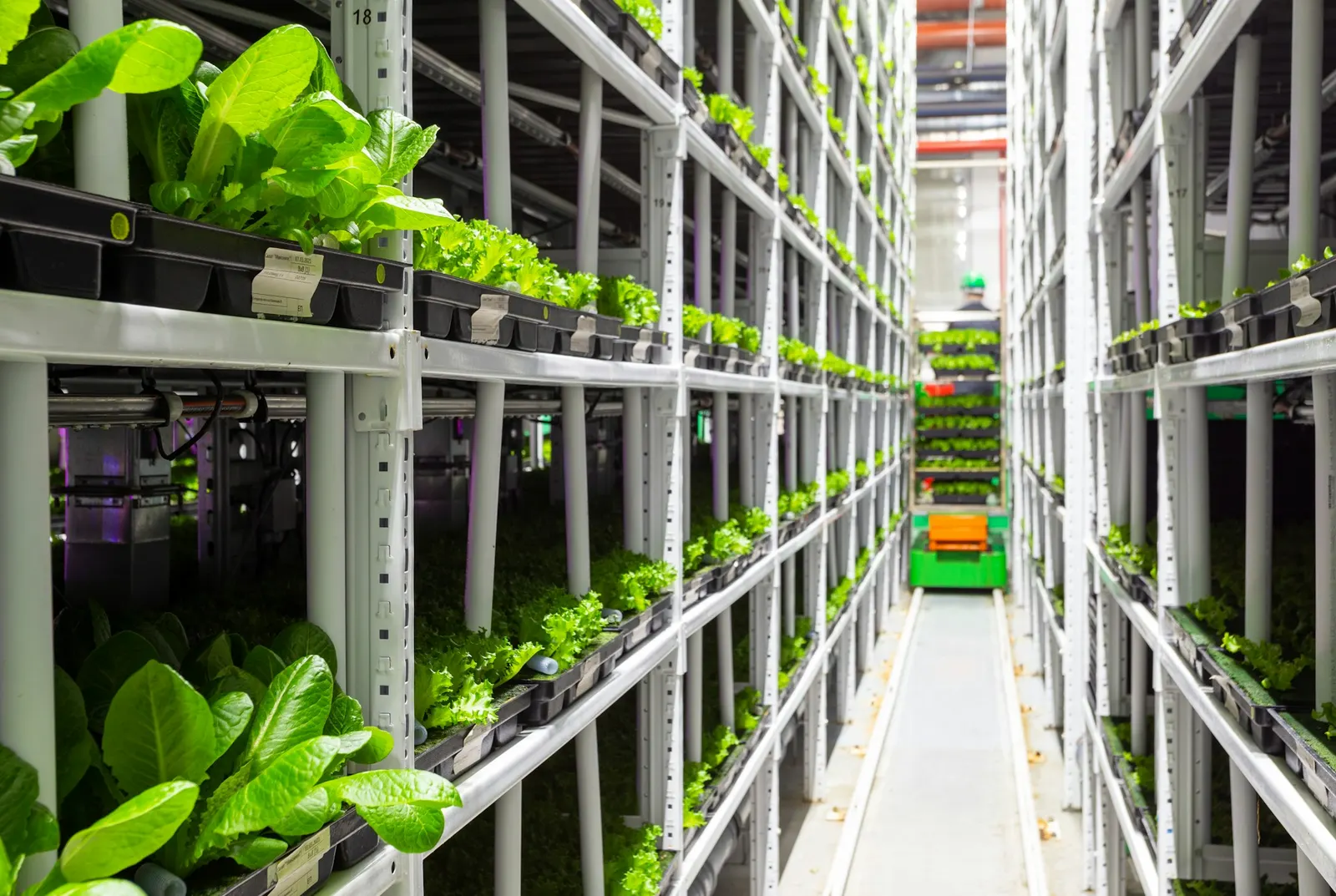
Everything fits in a spare bedroom or a 10-by-12 corner of a garage that stays between 65 and 72 degrees.
| Item | Lean setup (1 room, 2 racks) | Full setup (grow room, 4 racks, climate control) |
|---|---|---|
| Wire shelving racks, 48 x 18 x 72 inches, 5-tier | $220 (2) | $500 (4) |
| LED shop lights, 4 ft, 2 per shelf, 6500K | $200 | $520 |
| 1020 trays: shallow with holes and solid, 40–160 | $180 | $500 |
| Timer, power strips, oscillating fans | $60 | $150 |
| Growing medium (Pro-Mix or coco coir), first 3 months | $150 | $350 |
| Seed, first 3 months, 5–7 varieties from a bulk supplier | $250 | $600 |
| Harvest knife or hedge shears, scale, sanitizing supplies | $80 | $200 |
| Clamshells (2 and 4 oz, 500) and labels | $180 | $400 |
| Cooler or used commercial refrigerator | $0 (household fridge shelf) | $600–$1,200 |
| Mini-split or window AC, dehumidifier, thermometer/hygrometer | $0 | $1,400–$2,200 |
| Insurance, first year | $350 | $900 |
| LLC, EIN, business license, market permits | $150 | $500 |
| Website, domain, Google Business Profile | $50 | $300 |
| Market tent, table, signage, cash box, card reader | $0 | $450 |
| Total | $1,870 | $7,400–$8,800 |
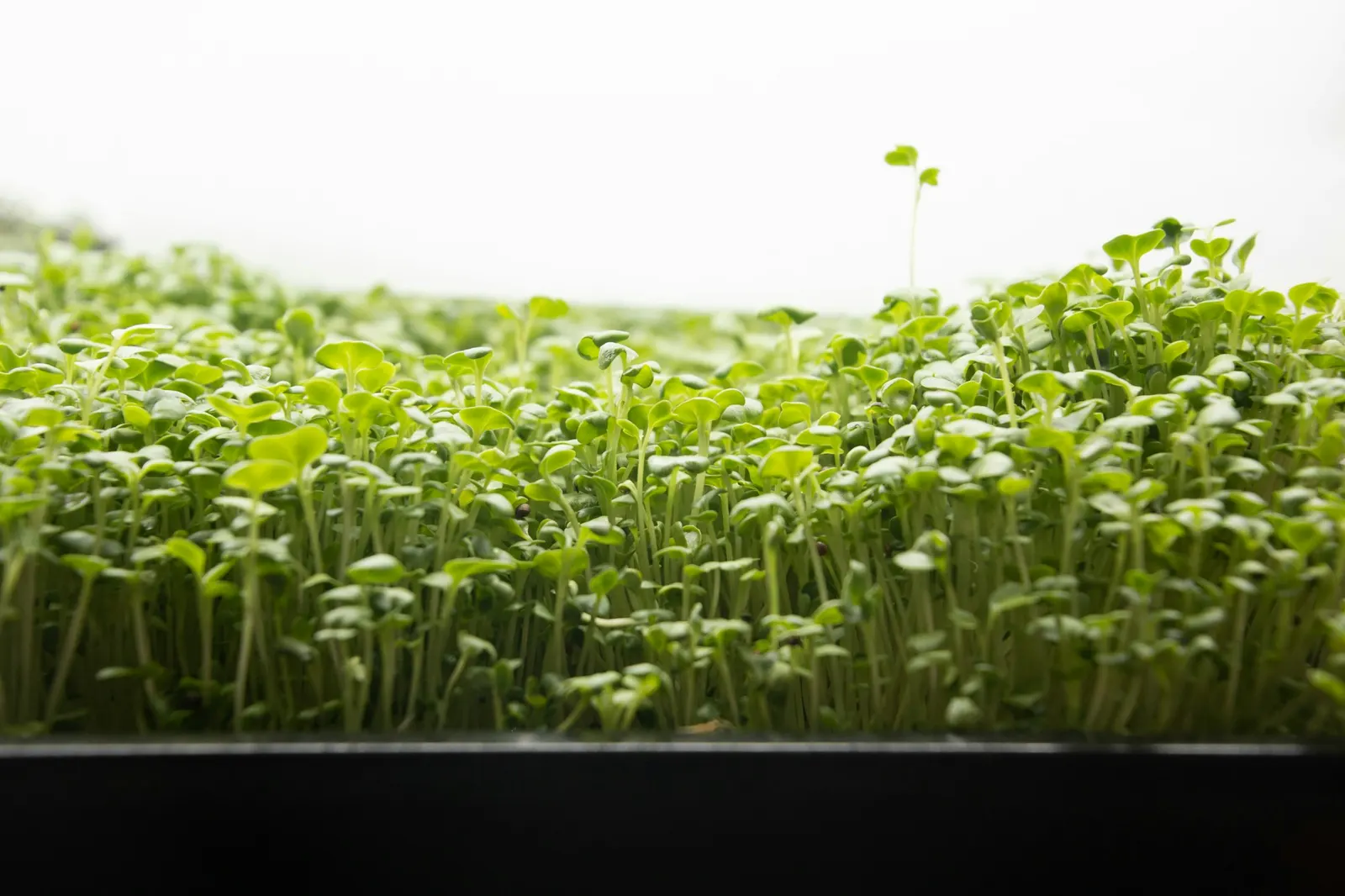
Notes from growers. Buy shallow 1020 trays with holes nested in solid trays so you can bottom-water, the single biggest mold reducer. Two 4-foot LED shop lights per shelf at about 6500K is enough; you do not need horticultural lights for a 10-day crop. Order seed by the pound from a bulk supplier (True Leaf Market, Johnny’s, Mumm’s and others sell to small growers); sunflower and pea are $3 to $6 a pound, radish $8 to $14, broccoli $12 to $20. Soak sunflower and pea seed 8 to 12 hours before seeding, and weight trays for the first 3 to 4 days in the dark for even germination.
Step 5: Pricing that pays for the labor, not just the seed
Price per ounce or per pound for restaurants, per clamshell for consumers, and per tray for living product. Your floor is easy to compute: seed and soil are $2 to $4 a tray, packaging $0.30 to $0.50 a clamshell, and labor roughly 15 minutes a tray. If a tray yields 10 ounces and you want $50 an hour for your time, that tray needs to gross about $17 before packaging, delivery and overhead. Every price below clears it.
| Product | Unit | Typical 2026 price | Per-pound equivalent |
|---|---|---|---|
| Sunflower or pea, restaurant | 1 lb bag | $18–$26 | $18–$26 |
| Radish, broccoli, mixes, restaurant | 8 oz clamshell | $14–$22 | $28–$44 |
| Specialty (amaranth, basil, cilantro), restaurant | 4 oz clamshell | $12–$18 | $48–$72 |
| Farmers market clamshell | 2 oz | $4–$6 | $32–$48 |
| Farmers market clamshell | 4 oz | $7–$10 | $28–$40 |
| Living tray, 10 x 20 | each | $15–$30 | |
| Living tray, 5 x 5 or 10 x 10 | each | $6–$15 | |
| Weekly subscription box, 2 clamshells | per week | $12–$20 | |
| Grocery wholesale, 2 oz clamshell | each | $3.00–$3.50 | $24–$28 |
Set restaurant prices by variety, not one blended rate, and publish a simple sheet. Chefs will compare your radish to the distributor’s at $5 for a 4-ounce clamshell (about $20 a pound); you are selling freshness (cut this morning versus a week in a truck), local, and a mix they cannot get elsewhere, so hold $28 to $40 a pound on specialty crops and let sunflower and pea be the value items.
The math to a monthly income: 12 restaurant accounts averaging $60 a week is $720, plus one Saturday market at $350, is about $1,070 a week or $4,600 a month gross from roughly 45 trays a week. Direct costs (seed, soil, packaging, fuel, market fee) run $500 to $650 a month, leaving about $4,000 before insurance, utilities and your time. Doubling that requires 25 accounts or a second market, and 90 trays a week is near what one person can grow well.
Step 6: Get online so chefs and market customers can find and reorder
A chef who liked your sample at the market will search your farm name on Monday. What they need to find: the varieties with photos, a wholesale page with per-pound or per-clamshell prices (or a downloadable price sheet), your delivery days and area, a short story about where and how you grow, and an order-request form they can fill in from a phone in a walk-in cooler. Market customers want the market schedule, the subscription option and the same photos.
You can have Restart build the site: describe the farm, your varieties, your pricing, your delivery days and how you want chefs to reach you, and it builds the pages, writes the copy, designs the site and publishes it to a real URL. When you add a variety or change a price, ask and it changes. Restart’s local businesses page shows what it produces for small producers like this.
Around the site:
- Instagram is the growers’ portfolio: a tray under lights, a harvest, a chef’s plate. Tag every restaurant you supply; chefs follow each other and this is how the second account finds you.
- Google Business Profile as a “Farm” or “Produce wholesaler” with your service area, market schedule and 15 or more photos. “Microgreens near me” is a small but very high-intent search.
- A weekly availability text or email to every account every Sunday night: what is ready this week, what is new, reply with your order. This one habit is worth more than any ad.
- A price sheet PDF with your farm name, varieties, prices, minimums and delivery days for handing to chefs.
Step 7: Land the first six accounts
Sell before you grow at scale. Your first two trial cycles produce samples; the samples produce accounts; then you seed to the orders.
- Walk into kitchens between 2 and 4 p.m. with a sample box of three varieties in 2-ounce clamshells and your price sheet. Ask for the chef or sous chef, say you are a local grower, and ask what they use and what they wish they could get. Ten kitchens produce two to four accounts. Target independent restaurants with seasonal menus, sushi bars (radish and shiso), cocktail bars (garnish) and caterers.
- A farmers market stall in the first month, even a small one, for cash flow and for chefs. Sell 2-ounce clamshells at $5 and living trays, and put a “wholesale to restaurants” sign on the table.
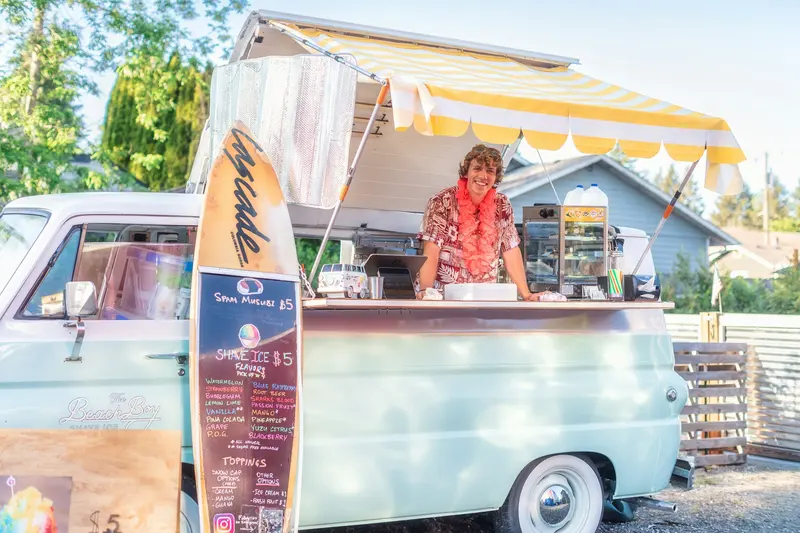
- Other market vendors and local farms. A vegetable farm with a CSA and a wholesale route often adds microgreens from a partner grower rather than growing their own. A shaved ice or snow cone vendor or a mobile bar wants a garnish supplier.
- Grocery and co-op produce managers once you can guarantee a weekly quantity; bring the labeled clamshell and a COI.
- Nextdoor and neighborhood groups for living trays and subscriptions.
For the first six accounts, price at your published sheet, not below it, and make the offer small: “I’ll bring you 8 ounces of the mix and 8 ounces of radish Tuesday, $34, and you tell me Thursday if you want it every week.” Invoice weekly by email, net 15, and deliver exactly when you said. Reliability is the entire pitch; the distributor is cheaper, and you win because your greens are cut this morning and you never miss a Tuesday.
Watch out: Never let one restaurant become more than a third of your revenue. Chefs change jobs every 18 months on average, and the new chef has their own supplier.
Step 8: Operate, scale the racks and know when to hire
The production schedule. Work backward from delivery days. For Tuesday and Friday deliveries, seed radish and mixes on Friday and Tuesday (9 days), sunflower and pea on Thursday and Monday (11 days), and harvest at dawn on delivery day. Keep a seeding log with variety, seed weight, date, yield and any mold; after a month you will know your exact yields and can quote confidently.
Food safety habits. Sanitize trays between cycles (a diluted hydrogen peroxide or vinegar soak), wash hands and knives before harvest, harvest into clean food-grade bins, chill to 38 to 40 degrees within an hour, and record harvest dates. A free produce safety course from your state extension program pays for itself the first time a restaurant group asks about your practices.
Waste and pricing signals. If you compost more than 10 percent of trays, you are growing ahead of sales; cut back and sell harder. If you sell out at the market by 10 a.m. three weeks running, raise the clamshell price by a dollar.
Scaling. Each additional rack (about $360 with lights and trays) adds 16 to 20 trays a week of capacity, or roughly $450 to $600 a week at restaurant prices. The bottleneck arrives between 80 and 120 trays a week: seeding, harvesting and packing become 25 to 30 hours, deliveries another 10, and something has to give. That is when growers hire a part-time helper at $16 to $20 an hour for seeding and packing (workers’ comp follows). Growers who go past that typically reach $120,000 to $200,000 in revenue with two or three employees, a walk-in cooler and a van, and net 25 to 35 percent. The ceiling is not demand in most cities; it is that every dollar is tied to a tray somebody has to touch six times.
How much can you make?
Realistic 2026 numbers before income tax.
| Level | Volume | Monthly gross | Monthly costs | Monthly profit |
|---|---|---|---|---|
| Side income (2 racks, 1 market or 6 accounts) | 20 trays a week | $2,100 | $550 (seed, soil, packaging, market fee, utilities, insurance) | $1,550 |
| Full-time solo (4 racks, 12–15 accounts plus a market) | 50 trays a week | $5,400 | $1,300 (adds fuel, fridge, more packaging, software) | $4,100 |
| Small team (10 racks, 30 accounts, 2 markets, 1 part-time helper) | 130 trays a week | $14,000 | $7,200 (wages, workers’ comp, walk-in cooler, van, utilities, insurance) | $6,800 |
A solo grower with a full rack room and a full customer list nets $40,000 to $60,000 a year and works six days a week, two of them starting at 5 a.m. The side-income version is one of the better $15,000-to-$20,000-a-year businesses you can run from a spare room. Past $80,000 in profit you are managing people, coolers and a delivery route, and the greens are the smallest part of the job.
Mistakes that sink new microgreens business owners
- Growing 40 trays before selling one. A rack of unsold greens teaches you composting. Fix: two trial cycles for samples, then seed only to orders plus 15 percent.
- Too many varieties too soon. Twelve crops with twelve schedules and twelve seed bags. Fix: three volume crops and two specialty crops for the first 90 days.
- Pricing off the seed cost. $20-a-pound radish because “seed is cheap” ignores 15 minutes of labor a tray. Fix: price from the table in Step 5 and hold it.
- Top-watering and no airflow. Mold on sunflower by day six. Fix: bottom-water, run fans, keep humidity under 60 percent.
- One big account. The hotel that took 10 pounds a week changes chefs and you lose 40 percent of revenue overnight. Fix: 15-plus accounts, none over a third.
- Missing a delivery. A chef who planned a dish around your greens will not order again. Fix: a backup cycle on every variety and a rule that you deliver early or call the day before.
- Skipping the certificate of insurance. No market will let you set up, and restaurant groups will not onboard you. Fix: the $300 to $700 liability policy in week one.
Your first 30 days
Week 1
- Choose five varieties and your sales model (restaurants plus one market for most people).
- File the LLC, get the EIN, open the business bank account, apply for the business license; call the state department of agriculture about produce grower registration.
- Buy the liability policy and request a certificate for the farmers market you intend to join.
- Order two racks, lights, 80 trays, medium and seed; set up the room with a timer and a fan.
- Build the website on Restart and start an Instagram for the farm.
Week 2
- Seed the first trial cycle of all five varieties; log seed weights and dates.
- Apply to one or two farmers markets and order clamshells and labels.
- Draft the price sheet and the Sunday-night availability message.
- Take the free produce safety training offered by your state extension or produce safety program.
Week 3
- Harvest the first trays, weigh yields, taste, photograph and pack samples in 2-ounce clamshells.
- Seed the second cycle, adjusted for what you learned about germination and mold.
- Visit 10 kitchens between 2 and 4 p.m. with samples and the price sheet.
- Post the first harvest photos and tag any kitchen that tried your samples.
Week 4
- Deliver the first paid orders from the second cycle; invoice weekly by email.
- Work your first market if accepted, or set up a pickup point for living trays and clamshells from Nextdoor orders.
- Seed the third cycle to actual orders plus 15 percent, and set your permanent seeding schedule.
- Follow up with every kitchen that said “maybe,” with a fresh sample.