A 16-ounce shaved ice costs about $0.70 to make and sells for $5, which is why this is one of the few food businesses where a first-timer can clear $1,500 in profit on a good Saturday with $4,000 of equipment. The number that matters is not the margin. It is how many good Saturdays you can find between May and September, because 90 percent of a shaved ice operator’s annual revenue arrives in about 20 weekends.
People asking how to start a shaved ice or snow cone business usually start with the trailer they saw at a festival. Most profitable operators started under a 10-by-10 tent at youth baseball tournaments, learned which events draw and which don’t, and bought the trailer with the second season’s cash. This guide is for someone with $3,000 to $45,000, a summer to commit, and a tolerance for heat, sticky hands and 6 a.m. load-outs. It covers the shaved ice versus snow cone decision, health permits and the commissary question, insurance, a startup cost table, cost-per-cup math and event pricing, how to get booked at events that actually sell, and what a stand plus a trailer makes in a season.
What a shaved ice business actually looks like day to day
A festival Saturday: pick up 300 pounds of block ice at 7 a.m., set up the tent, shaver, syrup rail and coolers by 9, sell steadily from 11 to 2, get slammed from 2 to 5 when the heat peaks, break down at 7, wash everything at the commissary, and count $1,800 in sales. A June weekday at a walk-up stand: open at 2 p.m., sell 40 cups to kids after camp, rush at 8 when the ball fields let out, close at 9 with $350. The work is repetitive and fast; a good shaver fills a cup in 20 seconds and two people can push 100 cups an hour.
Demand tracks temperature and crowds. Above 85 degrees, sales double. Rain cancels everything. The season runs Memorial Day to Labor Day in the northern half of the country and April through October in the South. The best events are outdoor, hot, and full of families waiting around: youth sports tournaments, county fairs, church festivals, swim meets, Fourth of July celebrations.
The people who thrive here enjoy the carnival atmosphere, stay organized about supplies and permits, and treat event selection like an investment decision. What kills these businesses is bad events (a $600 booth fee at a festival that draws 800 people), running short on ice, too few hands during the 2 p.m. rush, and buying a $40,000 trailer before knowing whether the local calendar can fill it.
Two signals: a busy Saturday event yields $1,200 to $3,000 in sales for one unit, and a private-party booking pays $450 to $900 for two hours. Twenty strong Saturdays and a dozen private parties is a $40,000 season.
Step 1: Shaved ice or snow cones, and stand or trailer
The product decision
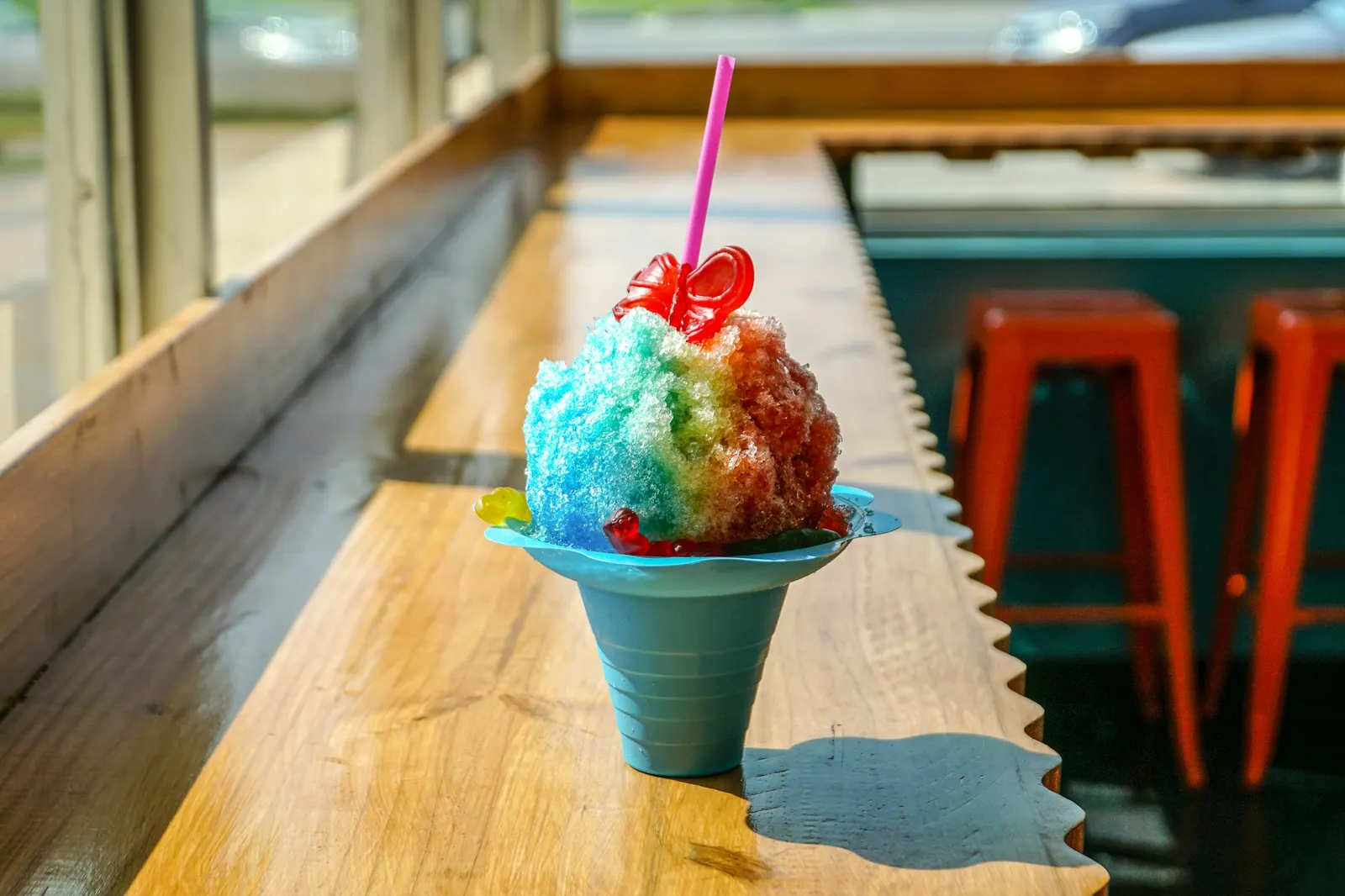
A snow cone is crushed ice; shaved ice is a block shaved into snow. Snow cone machines cost $300 to $1,500, run on bagged cube ice, and produce a granular cup that sells for $3 to $4. Block shavers (Snowie, Southern Snow, Swan and Hatsuyuki are the common brands) cost $1,500 to $4,000, need block ice or a block-mold system, and produce the fluffy texture that sells for $4 to $7 and gets photographed. If your market has ever tasted real shaved ice, sell shaved ice.
Add-ons decide your average ticket: a “snow cream” pour of sweetened condensed cream ($0.75 to $1.50), sour spray or candy toppings ($0.50 to $1), and a “stuffed” version with a scoop of vanilla ice cream in the middle ($1.50 to $2.50). The stuffed shaved ice at $8 is where many operators make their best margin.
How to start a shaved ice or snow cone business: tent, stand or trailer
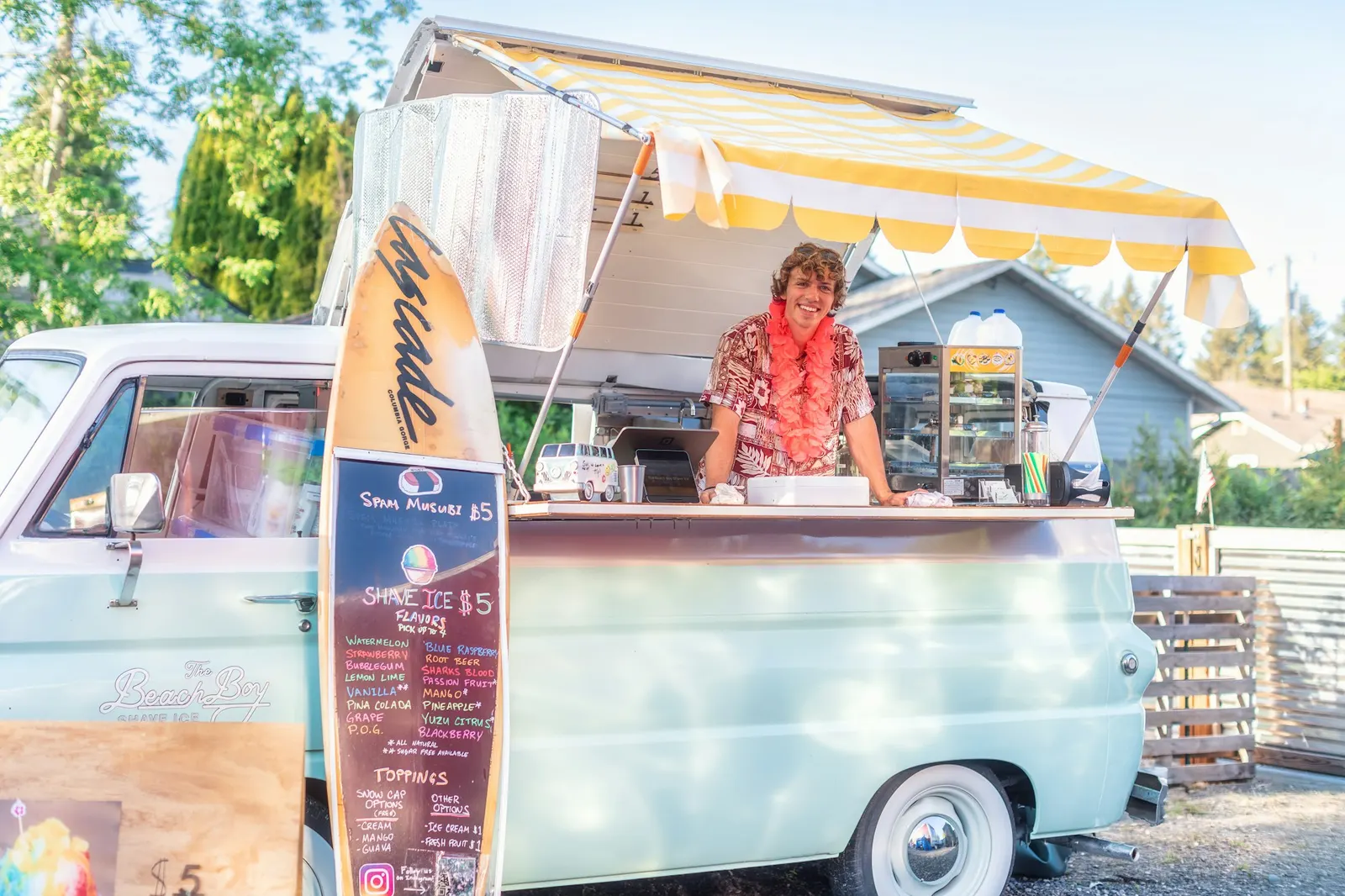
- Tent and table ($3,000 to $6,000 all in): a 10-by-10 canopy, shaver, syrup rail, coolers, handwash station and tables. Fits in an SUV. Best for events and private parties. Some health departments limit tent vendors to temporary event permits, which restricts you to sanctioned events.
- Walk-up stand or kiosk ($8,000 to $20,000): a small building on leased ground near a busy lot or ball fields. Lower daily sales than a festival, but it runs every day; a good corner does $300 to $800 a day in July. Ground leases run $300 to $1,200 a month.
- Concession trailer ($12,000 to $60,000): serving window, three-compartment sink plus handwash, fresh and gray water tanks, generator or shore power. Meets most mobile food unit codes, which allows daily street vending. Needs a tow vehicle and a commissary in most counties.
Tip: Start with the tent for one season and book every tournament and festival within an hour. Buy the trailer or lease the lot once you know which events pay and which weekends you can fill.
Step 2: Permits, food safety and the commissary question
Entity and tax
Form an LLC, or start as a sole proprietor and convert once you buy a trailer; the liability here is slips, allergens and a trailer on the highway. Get an EIN, open a business bank account, and register for a sales tax permit. Prepared food is taxable in nearly every state, and event organizers ask for your sales tax number.
Health department permits
Shaved ice is a food product and every US jurisdiction regulates it. Search “[county] mobile food vendor permit” and “[county] temporary food establishment permit,” then call the environmental health office. Expect some combination of:
- A mobile food unit permit for a trailer or cart ($100 to $800 a year), which requires a plan review, an inspection of sinks, tanks, surfaces and refrigeration, and often a commissary agreement: a licensed kitchen or approved facility where you store supplies, fill water and wash equipment. Commissary rentals run $200 to $600 a month, and some counties exempt beverage-only or ice-only units.
- Temporary food establishment permits for events ($25 to $150 per event, or a seasonal permit) if you operate under a tent.
- A food handler card for every worker ($10 to $20 online) and often a certified food protection manager (ServSafe Manager, $150 to $200) for the owner or the person in charge of the unit.
- Handwashing setup: a gravity-fed water container with a spigot, catch bucket, soap and paper towels for tents; a plumbed handwash sink separate from the three-compartment sink for trailers.
- Ice source rules: ice from an approved commercial source or made in an approved unit, stored in food-grade containers, handled with scoops.
The same trailer can pass in one county and fail next door. Get your primary county’s checklist first, then ask about reciprocity for the neighboring counties where events happen.
Event and vending permits
Cities regulate where a trailer can park and sell; some require a peddler’s license ($50 to $500) or restrict vending to designated zones. Festivals and fairs handle their own vendor permits. Sports complexes and church festivals usually just want your health permit and insurance certificate.
Step 3: Insurance for a stand or trailer
- General liability ($1M/$2M): a child slips on melted ice, an allergic reaction to a topping. $400 to $1,200 a year for a small vendor. Event organizers will require a certificate naming them as additional insured; some fairs require $2M.
- Product liability: usually included in a food vendor GL policy; confirm it.
- Inland marine / equipment: shaver, generator, tent and syrup inventory in transit and at events. $150 to $400 a year.
- Trailer coverage and commercial auto (or hired and non-owned auto): personal auto policies usually exclude towing a business trailer to a paid event. $600 to $2,000 a year depending on trailer value.
- Workers’ compensation: required in most states once you hire, even seasonally. $800 to $2,500 a year for two part-time teens.
- Business property for a fixed stand and its contents: $300 to $800.
Budget $700 to $1,500 for a tent operation, $1,500 to $4,000 for a trailer with staff. Buy from a carrier that writes food vendors; several offer event-only policies and same-day certificates.
Step 4: Equipment and startup costs
| Item | Lean start (tent and table) | Full setup (used concession trailer) |
|---|---|---|
| Block ice shaver (plus a backup snow cone machine) | $2,200 | $3,500 |
| Trailer with sink package, tanks, window, shelving | $0 | $18,000 |
| Generator (quiet inverter, 3,500–7,000 W) or shore power kit | $700 | $1,800 |
| Canopy, tables, weights, signage, menu board | $700 | $600 |
| Coolers, ice chests, block ice storage or block molds and a freezer | $500 | $2,000 |
| Syrup rail, pumps, 20 starter flavors, cream toppings | $500 | $900 |
| Cups, spoon-straws, lids, napkins, gloves, sanitizer (first 2,000 cups) | $450 | $700 |
| Handwash station, sanitizer buckets, thermometer, scoops | $150 | $300 |
| Health permits, food handler and manager certificates, LLC | $500 | $1,400 |
| Insurance (first year) | $900 | $2,500 |
| Trailer wrap or vinyl graphics | $0 | $2,500 |
| Website, business cards, event application fees, POS reader | $400 | $900 |
| Total | $6,900 | $35,100 |
Two purchases matter more than the rest. Buy the best block shaver you can afford, because a slow shaver caps your sales during the rush. And solve ice supply before you sell a cup: a 300-pound day needs a reliable block source (many ice companies deliver 10 and 25-pound blocks; a block mold system and a chest freezer let you make your own for pennies).
Step 5: Price per cup, per event and per booth
Cost per cup and menu prices
A 16-ounce shaved ice uses about 12 ounces of ice ($0.10 to $0.25 depending on your ice source), 2 to 3 ounces of syrup ($0.25 to $0.40 from concentrate), and a cup, spoon-straw and napkin ($0.15 to $0.25). Call it $0.55 to $0.90. Sell it for $4 to $6, and price by size so the medium looks like the deal.
| Item | Typical price | Food cost | Notes |
|---|---|---|---|
| Small (12 oz) | $3.50–$4.50 | $0.50 | Kids’ default |
| Medium (16 oz) | $4.50–$6.00 | $0.75 | Your volume seller |
| Large (24–32 oz) | $6.00–$8.00 | $1.10 | Shareable; sells at fairs |
| Snow cream or sour spray topping | $0.75–$1.50 | $0.15 | 30–40% attach rate |
| Stuffed with ice cream | $7.50–$9.00 | $1.60 | Highest margin per cup |
Take cards. Cash-only stands lose 20 to 30 percent of sales to parents who left their wallets in the car; a phone reader costs nothing up front and about 2.7 percent per swipe.
Private events
Price flat-rate unlimited for two hours: $6 to $9 per guest with a $450 minimum in most markets, plus a travel fee beyond 20 miles. A 100-guest company picnic at $7.50 is $750 for two hours of serving and about $80 in product. Or quote per serving ($4 to $6) with a $350 to $500 minimum, which suits school events where the PTA wants a cap.
Festival and fair booth economics
Organizers charge a flat booth fee ($100 to $1,000) or a percentage of sales (10 to 25 percent), sometimes both. Before you pay, ask last year’s attendance, how many other frozen-dessert vendors are booked, and where your spot is relative to the stage or ball fields. A $400 fee at a 5,000-person event on a hot day is a bargain; the same fee at a 1,200-person craft fair in a shaded pavilion loses money.
The monthly math
A July for a tent operator: four Saturday events averaging $1,600 in sales ($6,400), four Sunday tournaments averaging $900 ($3,600), and three private parties at $650 ($1,950). Revenue: $11,950. Costs: product at 16 percent ($1,900), booth fees ($900), a helper for 60 hours at $15 ($900), ice, fuel and supplies ($500), insurance and permits ($250). About $7,500 for the owner before tax in the best month of the year; May and September are half that.

Step 6: Get online so organizers and parents can find and book you
PTA presidents, HR coordinators and birthday-party parents search “shaved ice catering [city],” “snow cone truck near me,” and “shaved ice for parties.” They want to see flavors, prices and a picture of your setup, and to book without a phone call. Your site is also where festival-goers find out where you will be next weekend.
A shaved ice website needs: a flavor menu with photos, event packages with per-guest pricing and minimums, a “where to find us” calendar, a gallery of your setup at real events (the tent or trailer, the line, happy kids), proof you are health-permitted and insured, a short FAQ (sugar-free options, power and space needs, rain policy), and a book-us form asking for date, location, guest count and event type. Answer messages the same day; parties go to whoever replies first.
You can have Restart build it: describe the business, your flavors and packages, your area and how you want people to book, and it builds the pages, writes the copy, designs the site and publishes it to a real URL. Change anything afterwards by asking, which you will do every week when the event calendar changes. See what other local businesses have set up with Restart if you want a starting point.
Then create a Google Business Profile as a service-area business under “Shaved ice shop” or “Caterer,” post your event schedule and photos, and ask every private-party host for a review. Instagram and Facebook matter more here than in most service businesses: a post announcing “We’re at the Riverside tournament Saturday” reliably brings customers, and parents share party photos.
Step 7: Book your first ten events
Your first season should be spent finding the 15 to 20 events in your area that reliably sell, and stacking private parties on the days in between.
Channels that work for shaved ice
- Youth sports tournaments and complexes. The best recurring venue in the business: hot, long, families waiting. Many complex managers charge $50 to $200 or a percentage and let a permitted vendor set up every weekend of the season.
- Festivals, fairs and city events. Apply in January and February; good events fill early. Search “[city] festival vendor application.”
- Schools, PTAs and churches. Field days, teacher appreciation, end-of-year parties, VBS treat days. One school leads to five.
- Corporate HR and office managers. Employee appreciation and summer picnics pay flat-rate and book weekdays.
- Swim clubs, pools and camps. Recurring weekday afternoons in June and July.
- Party rental companies. A bounce house or photo booth operator already talks to your customers and will trade referrals or bundle.
- Facebook groups and Nextdoor for birthday parties and neighborhood block parties.
What to say and what to charge
For the first five private events, quote your standard package and offer a launch bonus instead of a discount: a free topping upgrade or an extra 30 minutes. Say: “We’re new this season and building our photos; mind if we take a few and ask for a review?” Take a 50 percent deposit, the balance on the day. For your first three public events, pick percentage-fee tournaments over flat-fee festivals until you know your numbers.
Watch out: Never commit to more than one flat-fee festival a month in your first season. A bad event costs you the fee, a day, $150 in ice and product, and the private parties you turned down for it.

Step 8: Run a tight season, then add a unit
Operations
Build an event checklist and use it every time: permit copy, COI, shaver and spare blade, blocks and backup cube ice, syrups with pumps, cups by size, handwash station filled, sanitizer, card reader, extension cords, tent weights (wind takes canopies at every fair). Log sales per event with weather, attendance and fee, and by September you will have the only list that matters: which events to rebook.
Ice is the daily puzzle. Know your per-cup usage (about 0.75 pounds), pre-order blocks two days ahead, and keep 20 percent extra. Running out at 3 p.m. at a fair is the most expensive mistake in the business, because that is the hour you sell the most.
Hiring
Your first hires are high school and college students at $13 to $17 an hour for weekends, each with a food handler card. Train them to shave, pour and take payment in a fixed order so a line of 30 moves. Two people run a tent; three run a trailer at a big fair. Schedule a week ahead and pay on time; seasonal teen labor is reliable if you are.
Adding a second unit
A tent plus a trailer, or a stand plus a trailer, covers a tournament and a festival on the same Saturday and roughly doubles revenue to $60,000 to $90,000 a season. What breaks first is you: you cannot shave at both, so you need a lead you trust at the second unit. What breaks second is storage and commissary space for twice the gear. Add the second unit only after a season in which you turned down more than ten paying events.
How much can you make?
| Level | Events per season | Avg. sales or fee per event | Product, fees, labor, insurance | Owner net before tax |
|---|---|---|---|---|
| Side income (tent, 10 weekends, 6 parties) | 22 | $850 | $6,700 | $12,000 |
| Full-time seasonal (tent plus parties, 5 months) | 55 | $1,100 | $22,000 | $38,500 |
| Stand plus trailer with staff | 110 | $1,150 | $66,000 | $60,500 |
Anyone deciding how to start a shaved ice or snow cone business should plan around the middle row. It is what a motivated solo operator with a tent and a good event list earns from May to September, with their own labor inside the number and the winter off. The stand-plus-trailer row is a real small business with two or three teenagers on payroll, and about the ceiling for one owner without a full-time manager. Past that, growth is a third unit or year-round product at a stand (coffee, kettle corn, hot cocoa), and the seasonality never fully goes away.
Mistakes that sink new shaved ice owners
- Buying the trailer first. A $35,000 trailer needs 40 events a season to pay for itself. Run a tent season first and buy with proof.
- Paying flat booth fees blind. Ask attendance, weather history and vendor count. If the organizer cannot answer, skip it.
- Running out of ice. Know your per-cup usage, order 20 percent extra, and keep a bagged-ice backup and a snow cone machine in the vehicle.
- Skipping the health permit for “just a party.” One complaint shuts you down for the season and forfeits future event permits.
- Underpricing private events. A $250 party is a day lost. Hold a $450 minimum and let small parties choose per-serving with a cap.
- Ignoring the shoulder months. Book May and September school and church events in March; those calendars fill while you are still thinking about summer.
Your first 30 days
Here is how to start a shaved ice or snow cone business in a month, timed so you are selling before the first hot weekend.
Week 1
- Decide shaved ice with a tent for season one; pick 20 flavors and three toppings.
- Form the LLC (or register as a sole proprietor), get the EIN, open a bank account, register for sales tax.
- Call the county environmental health office; get the mobile or temporary food vendor checklist and ask about commissary requirements.
- Complete the food handler course and register for the food manager exam.
- Build the website on Restart with flavors, event packages, a calendar and a book-us form.
Week 2
- Buy the block shaver, canopy, coolers, syrup rail, starter syrups and first 2,000 cups.
- Get two quotes for general liability plus equipment coverage; buy and get a certificate template.
- Find a block ice supplier or set up a block mold system and freezer; test your per-cup ice usage.
- Set menu prices and private-event packages; write a one-page event agreement with deposit terms.
Week 3
- Submit your first health permit applications; schedule the inspection.
- Apply to every tournament, festival and city event within an hour that falls in your first 90 days.
- Email ten schools, five churches and three sports complexes with your packages and COI.
- Set up Google Business Profile, Instagram and Facebook; post setup photos from a backyard test run.
Week 4
- Run a friends-and-family event to time your shave, pour and pay flow; photograph it.
- Book your first two private parties at standard pricing with a launch bonus; collect deposits.
- Work your first percentage-fee tournament; log sales, weather and attendance.
- Order syrup and cup restock based on actual usage and set a two-day ice ordering routine.