A full detail on a mid-size SUV takes a competent solo detailer about three hours and sells for $225 to $300. Chemicals and consumables for that job cost $15 to $25. Those two numbers explain why mobile detailing keeps attracting people with a few thousand dollars and a truck, and why so many quit within a year: the margin is real, but it only shows up if you book two of those jobs a day within a tight radius and stop saying yes to $60 wash-and-vacs.
This guide covers how to start a mobile detailing business the way operators who last actually do it: a service mix that pays, the water and wastewater rules cities now enforce, the right equipment bought once, pricing by the hour you really spend on a car, and a calendar of repeat customers instead of one-time deal hunters. It is written for someone starting solo in the US with under $20,000 who wants to be full-time within a few months.
What a mobile detailing business actually looks like day to day
You load water, chemicals and equipment in the morning, drive to a driveway or office lot, spend two to four hours on one vehicle, take photos, get paid, and drive to the next one. A good day is two full details or three or four smaller jobs. A bad day is 90 minutes of driving between two $80 jobs and a “lightly used” interior that turns out to contain a dog, two toddlers and a spilled milkshake.
The work is physical: on your knees, bent into footwells, polishing black cars in 95-degree lots. Summer is peak season almost everywhere; in the northern half of the country, December through February drops to 30 to 50 percent of summer volume unless you lean on interior-only work.
Two market signals worth knowing. The average American car is now over 12 years old, which means more owners paying to make an older car feel new. And ceramic coatings have gone mainstream: a $1,200 coating on a new truck is a normal ask in most suburbs, and it is the single biggest reason a solo detailer can cross $100,000 a year.
People who thrive here are picky about finish, comfortable talking to strangers in their driveways, and disciplined about routing. What kills these businesses is underpricing, taking every job regardless of distance, and never building a repeat base, which leaves you starting from zero every Monday.
Step 1: Pick your service mix and your customer
“Mobile detailing” covers several different businesses. Lead with one.
- Residential full details. Driveways in suburbs with $60,000-plus household incomes. Tickets of $175 to $325, two to four bookings a year per customer. Best margin per hour and the natural route into coatings.
- Fleet and commercial. Used-car lots, rental returns, HVAC and plumbing vans, corporate campuses. Tickets of $40 to $120 but 8 to 15 vehicles in one spot with no driving between them. Slow to land, very stable once landed, usually invoiced net-30.
- Maintenance washes at offices. Every other Tuesday at the same office park, 10 to 20 employee cars at $40 to $70. A volume model that needs property-manager permission and water reclamation, and the one most exposed to runoff rules.
Most successful solos start with residential full details, add ceramic coatings around month three, and pick up one or two fleet accounts for the slow season. Trying to be all three in month one makes your website, equipment and pricing incoherent.
Decide early what you will not do: $50 washes more than 15 minutes from your last job, biohazard interiors until you own an ozone generator, and paint correction until you have put 20 hours into a junkyard hood.
Step 2: Legal setup, permits, and the water question
Entity and tax registration
Form an LLC. It costs $50 to $500 depending on the state and matters more here than in most small businesses because you are working on $40,000 vehicles with a polisher; a sole proprietorship puts nothing between a burned-through clear coat and your savings. Get a free EIN from the IRS the same day and open a business checking account.
Register for a sales tax permit with your state’s department of revenue. Detailing labor is taxable in some states (Texas taxes motor vehicle cleaning, for example) and not in others. Search “[your state] sales tax car detailing services” and read the department’s own page.
Local licenses
Expect a general business license from your city or county ($25 to $150 a year), sometimes a home-occupation permit, and in a few cities a mobile vendor permit for work on commercial property. Call the licensing office and say, “I’m starting a mobile car detailing service from my home; what do I need from you?” They hear this weekly.
Wastewater and stormwater rules
This is the step beginners skip and the one that generates fines. Under the Clean Water Act, wash water carrying soap, oils and brake dust cannot enter storm drains, and cities enforce this through stormwater programs with citations that commonly run $250 to $1,000. A customer’s driveway that slopes to the street is a storm-drain discharge.
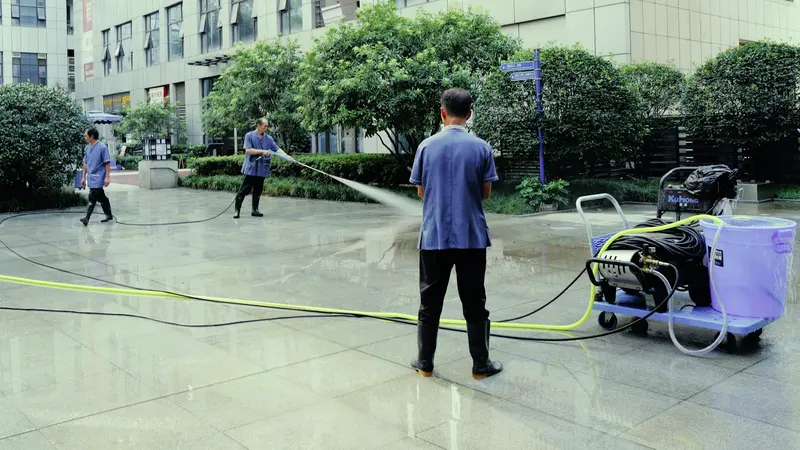
Your options, cheapest first: rinseless and waterless exterior methods that use about two gallons per car and leave no runoff; washing on grass or gravel where water infiltrates, which most programs accept for residential work; and a $300 to $900 containment mat with a recovery pump for commercial lots. Search “[your city] mobile car wash stormwater” for the local best-practices sheet and follow it.
Watch out: Property managers increasingly ask for proof of water reclamation before letting a detailer on the lot. A mat and recovery vac in your van is a sales tool as much as a compliance item.
Step 3: Insurance that covers the car you damaged
General liability covers you if you break a customer’s garage window. It does not cover the vehicle you are working on, because that car is in your care, custody and control. Most new detailers do not learn this until a claim is denied.
- Garage keepers coverage (sometimes sold as a detailers’ or care-custody-control endorsement) pays when your polisher burns through a fender or a gritty mitt scratches a whole panel. Expect $600 to $1,800 a year for $50,000 to $100,000 in coverage.
- General liability, $1 million per occurrence: $500 to $1,200 a year.
- Commercial auto if the van or truck is dedicated to the business: $1,500 to $3,500 a year. A personal policy will deny a claim once the adjuster sees the water tank. If you are using a personal vehicle for now, ask about a business-use endorsement.
- Inland marine for equipment living in the van: $200 to $400 a year, worth it past $6,000 in tools.
- Workers’ comp the day you hire anyone, typically $4 to $8 per $100 of payroll for detailing class codes.
Use an independent agent who writes detailers specifically. Realistic all-in for a solo operator in year one: $1,800 to $4,500.
Step 4: Equipment and startup costs
Buy the equipment that makes money before the equipment that looks good. The wrapped van and the heated extractor are month-twelve purchases.
| Item | Lean start | Full setup |
|---|---|---|
| Baffled water tank (50–100 gal), pump, hose | $350 | $900 |
| Pressure washer (1,500–2,000 PSI) | $250 | $800 |
| Inverter generator (2,000–3,500 W) | $0 (customer power) | $900 |
| Foam cannon, buckets, grit guards, mitts, 40+ towels | $250 | $500 |
| Vacuum | $150 | $450 |
| Carpet extractor (portable to heated) | $250 | $1,800 |
| Dual-action polisher, pads, compounds | $250 | $700 |
| Steamer | $0 | $600 |
| Chemicals, first 60 days | $400 | $900 |
| Ceramic coating starter kit | $0 | $700 |
| Containment mat and recovery pump | $0 | $1,000 |
| Lighting, shelving, racking | $230 | $1,250 |
| Signage (magnets to full wrap) | $150 | $2,500 |
| Enclosed cargo trailer (if not using a van) | $0 | $4,000 |
| LLC, licenses, first insurance payment | $350 | $1,200 |
| Total, excluding the vehicle | $2,630 | $18,200 |
The vehicle is the big variable. If you own a pickup, SUV or minivan, start with it and $150 of magnetic signs. A used cargo van in decent shape runs $12,000 to $25,000 in 2026; a 5x8 or 6x12 enclosed trailer behind what you already drive is often the smarter first move at $3,500 to $6,000.
Spend on towels and chemicals first. You need 40 to 60 towels to get through a day without laundry, and buying gallon concentrates from a detailing supply house instead of retail 16-ounce bottles cuts consumables from about $30 a car to $15.
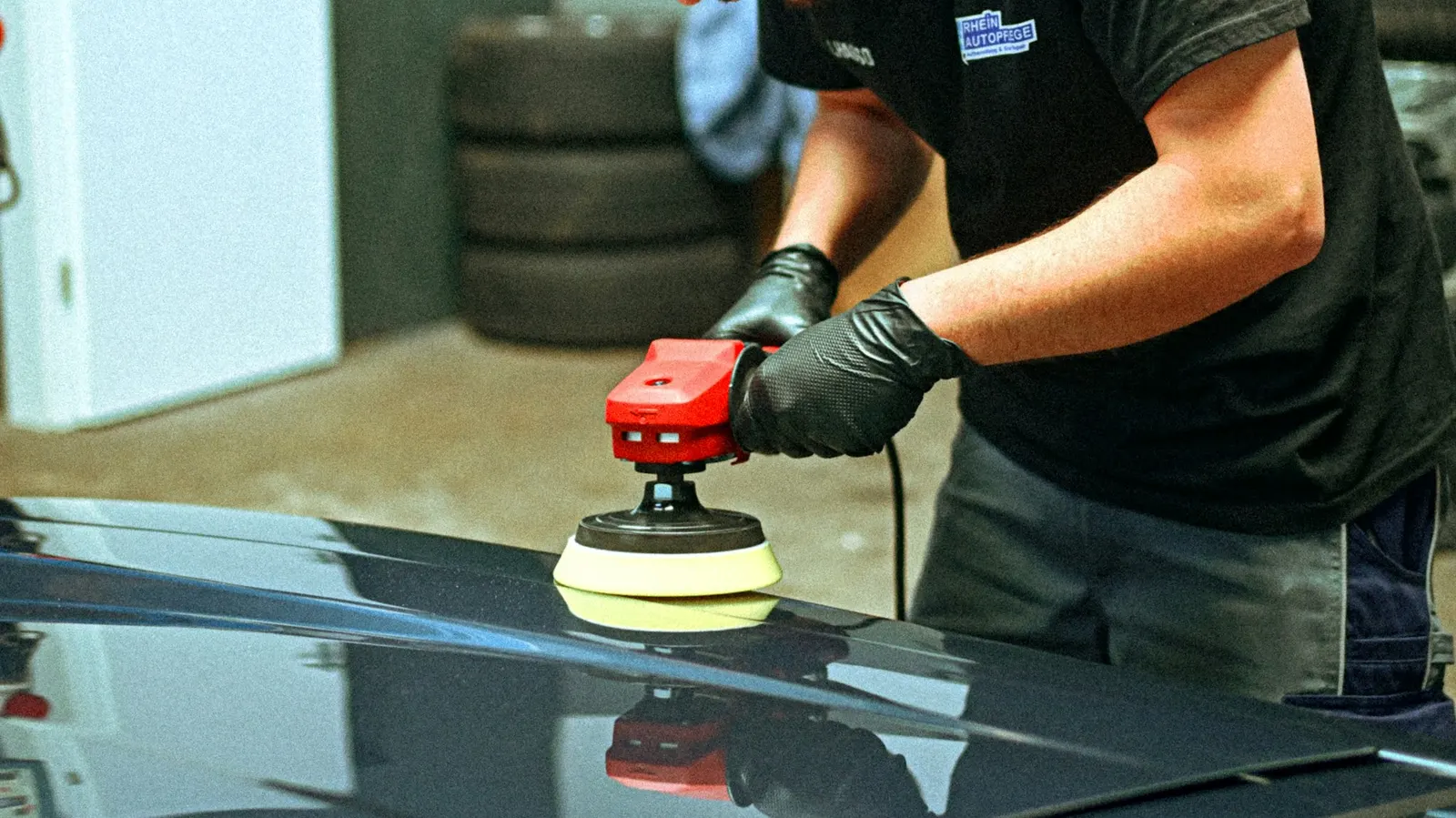
Tip: Buy a dual-action polisher, not a rotary. It is nearly impossible to burn paint with a DA at beginner skill, and it does 90 percent of the correction work customers pay for.
Step 5: Pricing that survives a three-hour SUV
Price by vehicle size and the time the job really takes. Your target is $60 to $90 of revenue per hour on-site, because roughly a third of your day is driving, loading, quoting and following up.
Typical 2026 mobile detailing prices
| Service | Sedan | SUV / truck | Time on-site |
|---|---|---|---|
| Exterior wash and spray sealant | $60–$90 | $75–$110 | 45–75 min |
| Interior detail | $130–$200 | $160–$250 | 1.5–2.5 hrs |
| Full detail (interior + exterior + light decon) | $175–$300 | $225–$375 | 2.5–4 hrs |
| One-step paint correction and sealant | $350–$550 | $450–$700 | 4–6 hrs |
| Ceramic coating (2–5 year), including prep | $800–$1,500 | $1,000–$2,000 | 6–10 hrs |
| Maintenance wash (repeat client, every 2–4 weeks) | $45–$70 | $55–$85 | 30–45 min |
Publish surcharges on your site so they are never a driveway argument: pet hair $30 to $75, heavy soil or biohazard $50 to $150, oversized vehicles plus 20 percent, travel beyond a 20-mile core zone at $1.50 to $2 per mile.
The monthly math
Two full details a day, five days a week, at an average of $240 is $10,400 a month. Subtract about $600 in chemicals, $500 in fuel, $300 in insurance and $200 in software, phone and marketing, and you net roughly $8,800 before taxes and any vehicle payment. Two jobs a day is realistic once the calendar is full and jobs sit within 15 miles of each other; in month one you will average closer to one. Swapping two details for one $1,200 coating each week adds about $1,500 a month at the same hours.
Step 6: Get online and look like a real company
A mobile detailer’s website has one job: convince a homeowner who found you on Google or through a neighbor to text or book. It needs your packages with starting-at prices for sedan and SUV, your service area written out as towns and zip codes, 15 to 30 before-and-after photos of cars you actually did, your reviews, a sentence saying you are insured, and a phone number plus a request-a-quote form. Detailers who hide prices lose the customers who were ready to book and keep the ones who wanted to haggle.
You can have Restart build it: describe the business (services and packages, your area, starting-at prices, how you want people to reach you) and it builds the pages, writes the copy, designs the site and publishes it to a real URL. When you add coatings in month three, ask it to add the page. It is the quickest route from “I have a van” to looking like the local service business you are becoming.
Then, in order:
- Google Business Profile as a service-area business (address hidden, towns listed) with your logo, 10 photos, services with prices and hours. This listing will send you more customers than the website for the first year, and it runs on reviews.
- Reviews from day one. Ask in person as you finish, then text the direct link within the hour. Twenty reviews at 4.8 stars puts you in the map pack in most suburbs.
- Photos of every car, same three angles, before and after. Wet paint at golden hour is your best marketing.
- A business line that takes texts. Reply to a quote request within 10 minutes and you win most of them.
Step 7: Land your first customers
Your first 20 cars should be within 10 miles of your house, so you learn timing and routing cheaply.
- Your own street and Nextdoor. Detail your car in the driveway on a Saturday, then post the before-and-after on Nextdoor and the neighborhood Facebook group with a founding-customer rate. This reliably produces 3 to 10 bookings in two weeks.
- Facebook Marketplace and local groups. List the service with three photos and prices; post fresh before-and-afters twice a week. Most suburban detailers get half their first-year customers here.
- Google Business Profile plus reviews. Slow to start, compounds forever.
- Used-car lots, realtors and property managers. Walk in with a card and an offer to do one car free. One independent lot sending eight cars a month at $90 is $720 of predictable work with zero driving.
- Office parks and local fleets. Ask the property manager for a wash day; bring your insurance certificate and your mat. Pitch HVAC, plumbing and pest-control owners on $60 to $100 per van monthly.
Skip Thumbtack and Angi in month one; you will pay $15 to $40 per lead to compete on price against six other detailers. Come back if the calendar is empty in January. If you already run a pressure washing or window cleaning route, your existing customers are the cheapest first-20 list you will ever have.
What to say and charge on the first five jobs
Price your first five jobs at your real rate minus 15 to 20 percent, and say so: “My regular price for a full detail on this SUV is $260. As a founding customer you’re at $215, and I’d love a review and a before-and-after photo if you’re happy.” Never work free except for a fleet account that can send volume; free sets an anchor and attracts people who will never pay full price. Before you start, walk the car with the owner, point at every existing scratch and stain, and photograph them. Five minutes, and it prevents most disputes.
Step 8: Run the calendar, protect the margin, then add a second van
Take a $50 deposit on any job over $150 and 25 percent on coatings, and put a 24-hour cancellation policy in your confirmation text. For coatings and correction, use a one-page work order listing the vehicle’s condition, the service, the price and a line acknowledging pre-existing defects.
Cluster your days. Assign zip codes to weekdays and steer customers: “I’m in your area Tuesday and Friday; which works?” Almost everyone says fine, and it takes a solo from five jobs a week to eight at the same hours.
Offer every full-detail customer a maintenance wash every two to four weeks at $50 to $75. Thirty maintenance clients is $3,000 to $4,500 of recurring revenue that survives winter and does not depend on posting. Price it for a quick visit; if the car comes back trashed, it is a full detail again.
At around 10 full details a week you are turning work away. Your first hire is a part-time helper at $16 to $22 an hour doing wheels, vacuuming, glass and towels while you do paint and interiors. That cuts a full detail from 3 hours to 2, a 50 percent capacity gain for about $200 a day. Put them on W-2 with workers’ comp from day one; someone you schedule and direct is not a contractor.
The second van is where this becomes a business and where most operators break. It roughly doubles revenue potential to $200,000 to $250,000 a year, but needs a lead tech you trust with a $70,000 truck, someone dispatching, and marketing that fills two calendars. Do not buy it until the first van is booked five days a week for three straight months and your lead tech has done 100 cars beside you. Skip that sequence and you own two half-empty vans and a payment.
How much can you make?
| Scenario | Jobs per week | Average ticket | Monthly revenue | Monthly profit (pre-tax) |
|---|---|---|---|---|
| Side income (weekends) | 4 | $200 | $3,450 | $2,750 |
| Full-time solo | 10 | $240 | $10,400 | $8,500 |
| Solo plus helper, with coatings | 14 | $275 | $16,700 | $11,500 |
| Two vans, small team | 28 | $260 | $31,500 | $14,500 |
Profit is after chemicals, fuel, insurance, software and marketing, and in the last two rows after labor, workers’ comp and a vehicle payment. It excludes your own pay and income taxes.
The honest ceiling for one person is $100,000 to $130,000 a year of profit: six to eight full details plus one coating a week and a maintenance base, in a metro with the household income to support it. Beyond that you are running crews, a different business with thinner margins per vehicle and the two-van problems above.
Mistakes that sink new mobile detailing owners
- Pricing like a car wash. A $60 “full detail” on a minivan is a $20-an-hour job after chemicals and fuel. Fix: publish prices by vehicle size, hold them, and let price shoppers go to the car wash.
- Driving all day. Two jobs 40 minutes apart is 80 minutes of unpaid work. Fix: zip-code days, a 20-mile core zone, a travel fee outside it.
- No care-custody-control coverage. A burned-through clear coat on a Tesla is a $1,500 to $3,000 repaint that general liability will not pay. Fix: garage keepers coverage before the first paid job.
- Skipping the walk-around. Customers genuinely forget that scratch was already there. Fix: photograph every panel and the interior before you touch the car, with the owner watching.
- Ignoring wastewater rules. One complaint and a $500 citation erases a week. Fix: rinseless exteriors, grass or a mat for anything with runoff.
- No repeat base before winter. Riding summer walk-ins into November means discovering January. Fix: pitch the maintenance plan to every full-detail customer, starting with the first.
- Buying the wrap before the towels. Fix: buy what lets you do more cars first, and wrap the van from profit.
Your first 30 days
Week 1
- Form the LLC, get the EIN, open the business bank account.
- Call the city licensing office; apply for every permit a home-based mobile detailer needs.
- Read your city’s mobile car wash stormwater guidance; decide on rinseless, grass or mat.
- Get quotes from two insurers for general liability, garage keepers and commercial auto.
- Build the website on Restart with three packages, sedan and SUV prices, service area and a quote form.
- Create the Google Business Profile as a service-area business.
Week 2
- Order the lean-column equipment: tank, pressure washer, vac, DA polisher, 60 towels, gallon chemicals.
- Detail your own car and two friends’ cars for practice and photos; time every step.
- Set up a business phone line that takes texts and a payment app that takes deposits.
- Write the surcharge sheet and cancellation policy; put both on the site.
- Order 250 business cards and 100 door hangers.
Week 3
- Post before-and-afters with a founding-customer offer on Nextdoor, the neighborhood group and Marketplace.
- Complete your first 4 to 6 paid jobs within 10 miles of home, walk-around and photos on every one.
- Ask for a review at the end of each job; text the link within the hour.
- Visit two used-car lots and two realtor offices with cards and a free-first-car offer.
Week 4
- Review job timings; raise prices on anything that ran under $60 an hour on-site.
- Assign zip codes to weekdays and start steering bookings.
- Pitch the maintenance plan to every Week 3 customer.
- Ask one office-park property manager for a wash day; bring the insurance certificate.
- Add 10 more photos and your first reviews to the Google Business Profile and the website.