A permanent jewelry bracelet sells for $60–$90 and costs $8–$15 in chain and jump rings. The weld takes about ninety seconds. Those three numbers explain why so many people have started permanent jewelry businesses since 2022, and also why the market is now crowded: the barrier is a $1,500 welder and a steady hand, and the hard part is not the weld, it is getting forty wrists in front of you on a Saturday.
This guide explains how to start a permanent jewelry business the way the operators who are still profitable in 2026 do it: which welder and chain to buy first and what to skip, the sales tax and vendor permit rules that trip up market sellers, how to price by chain type and event type, and how to build a calendar of pop-ups, parties and boutique residencies rather than chasing one-off markets forever. It is written for someone starting solo in the US with a few thousand dollars and free weekends.
What a permanent jewelry business actually looks like day to day
The work happens in bursts. A Saturday market or boutique pop-up runs four to six hours: set up a table, a light, a mirror and chain displays; greet, fit, cut and weld, one customer at a time, for two to four minutes each; take payment; take a photo for social media. A good event is 20–40 welds. A bad one is six, and you still paid the $75–$200 booth fee. Private parties (bridal showers, birthdays, girls’ nights, sorority and corporate events) are two to three hours, with a guaranteed minimum and 8–20 guests.
Weekdays are for inventory, social media, booking parties and residencies, and answering DMs. Most operators post the welding moment on Instagram and TikTok several times a week because that clip, more than anything else, drives party inquiries. In a busy season a solo operator works two or three events a weekend plus one or two weeknight parties.
Market signals: a 14k gold-filled bracelet sells for $55–$85 in most US markets, anklets $65–$100, and solid gold pieces $150–$350. Chain costs $4–$12 per bracelet for gold-filled and $25–$80 for solid gold. Demand peaks around spring bridal season, graduations, summer festivals and the eight weeks before Christmas, with a quiet January and February.
People who thrive are outgoing, patient with a line, precise under a bright light, and comfortable selling. What kills these businesses: buying too much chain in styles nobody picks, paying for markets with the wrong crowd, inconsistent welds that break and generate refund requests, and the slow realization that the business is 20 percent welding and 80 percent booking.
Step 1: Pick your model and your chain menu
Market and festival pop-ups
Farmers markets, makers markets, street fairs, festivals. Booth fees $50–$300, big crowds, unpredictable conversion. Good for exposure and your first few hundred welds; hard to build a business on alone because the fees and the weather eat the margin.
Boutique, salon and brewery residencies
A recurring spot in a boutique, hair salon, nail bar, brewery or coffee shop, on a fixed Saturday each month or every week. Terms are usually a flat fee ($50–$150) or a 10–20 percent commission to the host. The host promotes you to their customers, the crowd is pre-qualified, and the repeat schedule builds a following. This is the best channel for most operators by year two.
Private parties
Bridal showers, bachelorette weekends, birthdays, sorority events, corporate wellness days. You charge a booking fee or a guaranteed minimum ($300–$600) that converts to bracelet credit, plus per-piece pricing beyond it. Highest revenue per hour, best photos, most referrals.
Studio or storefront
A permanent chair in your own space or a rented corner. Only after you have a following that will come to you; rent and hours make it a different business.
Whatever the mix, start with a tight chain menu: six to ten chains in 14k gold-filled (a dainty cable, a paperclip, a satellite or beaded, a figaro, a rope or twist), the same three or four in sterling silver, and one or two solid 14k options for the customer who asks. Add connector charms (small heart, initial, birthstone) at $10–$25 each because they lift the average ticket without adding weld time. Skip rose gold and rare styles until customers ask for them twice.
Tip: Buy chain by the foot from jewelry-industry suppliers, not by the finished piece. Gold-filled cable chain at wholesale runs roughly $2–$6 per foot in 2026 depending on gauge and style; a bracelet uses 7–8 inches. Your material cost per bracelet should land under $12.
Step 2: Legal setup, sales tax and permits
Form an LLC ($50–$500 depending on the state). You are operating a welder on people’s wrists at events run by other businesses; the liability separation is worth it, and hosts and insurers prefer to see a registered entity. Get a free EIN from the IRS and open a business bank account.
Then handle these:
- Sales tax permit. Jewelry is taxable in every state that has a sales tax. Register with your state’s department of revenue (free in most states). Market organizers and boutiques will ask for the number, and it lets you buy chain from suppliers tax-free with a resale certificate. If you sell at events in other states, you may need to register there too; many states have a temporary or event vendor registration for this.
- Vendor and event permits. Markets usually handle the master permit and charge you a fee, but city street fairs and festivals may require an individual vendor permit ($20–$100). Ask the organizer what you need in writing.
- Home business rules. If you store inventory and do occasional appointments at home, check your city’s home occupation rules. Most allow it; some HOAs restrict customer visits.
- Health and safety. There is no jewelry welding license in the US. Some venues (especially those with liquor licenses) will ask for a certificate of insurance and may ask how you handle sparks near alcohol; a fire-resistant table cover and a small extinguisher in your kit answers the question.
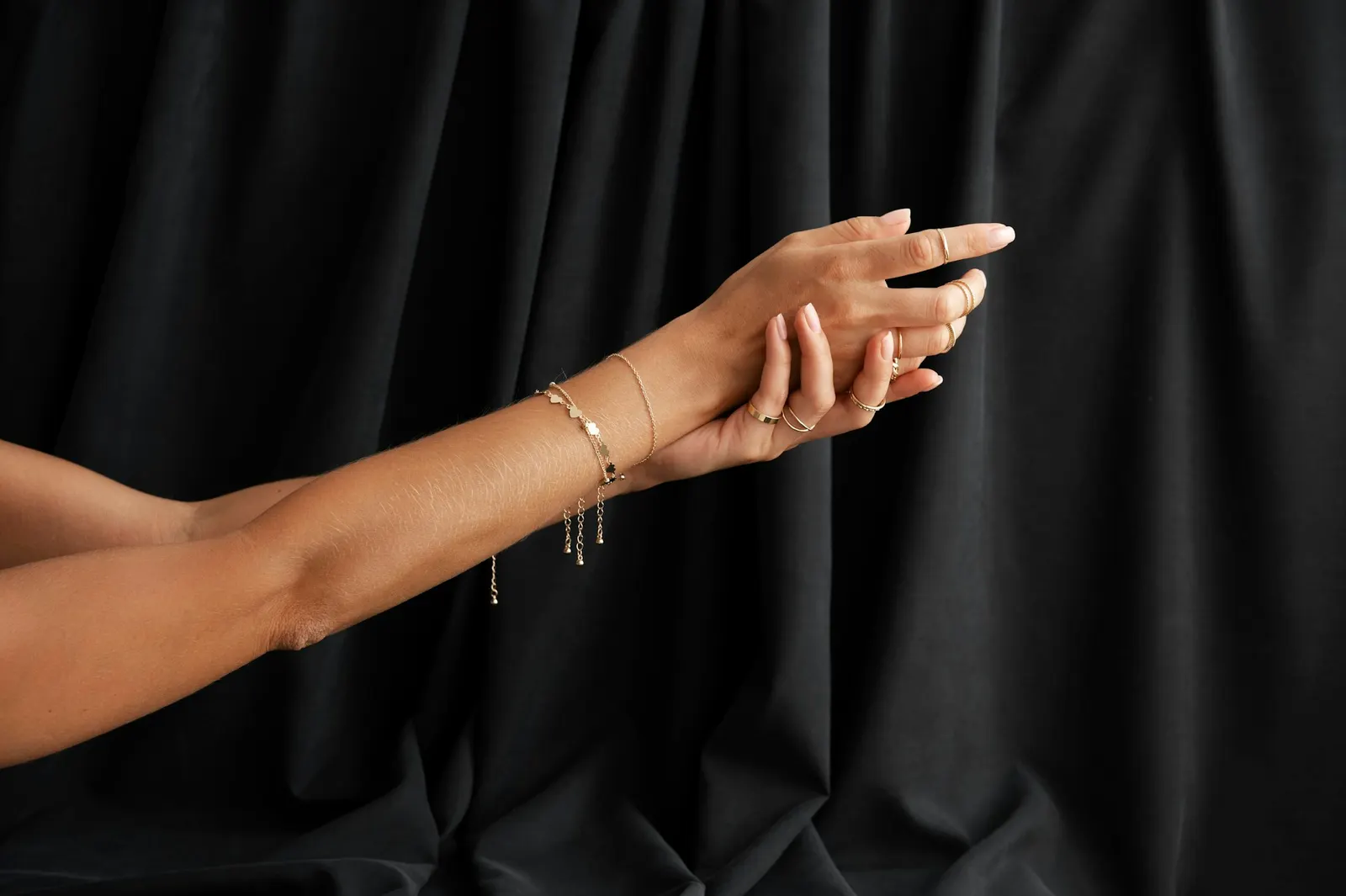
- Care card and policy. Print a card that explains how permanent jewelry works, how to remove it (scissors at the jump ring), and your repair policy (free re-weld within 30 or 60 days if the jump ring fails). Put the same on your site.
Step 3: Insurance
Permanent jewelry is low risk compared with most event businesses, but you are using a welder on a customer’s skin in a public place, and the venues know it.
| Coverage | What it does | Typical annual cost |
|---|---|---|
| General liability, $1M/$2M | Injury to a customer (burn, allergic reaction claim), damage at a venue | $350–$900 |
| Products liability (often bundled) | Claims about the jewelry itself | Included or +$100–$250 |
| Inland marine / equipment | Welder, chain inventory and displays stolen or damaged at events or in transit | $150–$400 |
| Event vendor day policies (alternative) | Single-event liability when you are just starting | $50–$150 per event |
Many small-business insurers and event-vendor programs write annual liability for craft and jewelry vendors, and some market organizers include vendors under their own policy. Once you do more than four or five events a year, the annual policy is cheaper than day policies and lets you send a certificate to any venue within an hour, which is often what wins a residency over another operator.
Your homeowner’s or renter’s policy will not cover $3,000 of chain and a welder in your car. The inland marine line is small and worth it.
Step 4: Equipment and startup costs
| Item | Lean start | Full setup |
|---|---|---|
| Pulse-arc welder (entry-level Orion mPulse, Sunstone Zapp Plus or equivalent) | $1,000–$1,800 | $2,500–$4,500 (higher-end or with argon) |
| Welding shade eyewear or shield (if not built in), skin guards (leather or silicone) | $50–$150 | $100–$250 |
| Training course (manufacturer or independent) | $0–$500 | $300–$1,000 |
| Starter chain: 6–10 styles gold-filled, 3–4 sterling, 5–10 ft each | $400–$900 | $1,200–$2,500 (incl. solid 14k) |
| Jump rings (matching metals, 3–4 sizes), connector charms | $80–$200 | $300–$700 |
| Tools: flush cutters, chain-nose pliers, tweezers, ruler, third hand | $60–$150 | $150–$300 |
| Work light, magnifier, mirror, tabletop stand | $80–$200 | $200–$500 |
| Displays: chain boards, charm trays, signage, price cards, care cards | $100–$300 | $400–$1,000 |
| Table, tablecloth (fire resistant), chairs, tent (for outdoor markets) | $100–$300 | $400–$900 |
| Rolling case for welder and inventory | $60–$150 | $150–$400 |
| Card reader and phone stand | $50–$100 | $50–$150 |
| Insurance (first year) | $150–$600 | $600–$1,300 |
| LLC, sales tax permit, first event permits | $100–$600 | $200–$800 |
| Website, domain, business cards, first booth fees | $200–$500 | $500–$1,200 |
| Total | $2,500–$4,500 | $6,000–$9,000+ |
The welder decision matters more than anything else on the list. Buy new from a supplier that includes training, support and a warranty. Used welders from operators leaving the business can be good value but ask for a video of consistent welds first. Whatever you buy, practice: aim for a hundred clean welds on scrap chain before your first paid event.
Step 5: Price by chain, by charm and by event type
Permanent jewelry is priced per piece, with the chain determining the tier, and parties priced with a minimum. Do not price by the inch at the table; it slows the line and invites haggling.
| Item | Typical 2026 price | Material cost | Notes |
|---|---|---|---|
| Sterling silver bracelet | $45–$65 | $4–$8 | Your entry price point |
| 14k gold-filled bracelet, dainty cable or satellite | $55–$85 | $6–$12 | Your bestseller |
| 14k gold-filled, paperclip, figaro or rope | $70–$110 | $9–$18 | Heavier styles |
| Anklet (any chain) | +$10–$20 over bracelet | +$2–$4 | Longer chain, harder weld |
| Necklace | $95–$200 | $15–$40 | Fewer, higher ticket |
| Solid 14k gold bracelet | $150–$350 | $40–$120 | Mark up 2.5–3× |
| Connector charm | $10–$30 | $2–$8 | Add-on; 30–50% of customers take one |
| Re-weld (own piece, out of warranty) | $10–$20 | $0.50 | Goodwill; brings people back |
| Private party minimum (2 hours, up to 15 guests) | $300–$600 credit toward pieces | — | Plus travel beyond 20 miles |
| Boutique residency fee or commission | $50–$150 flat or 10–20% | — | Negotiate for promotion |
The income math: a Saturday market with 25 welds at an average ticket of $78 (bracelet plus some charms) is about $1,950 in sales. Chain and rings cost around $250, booth fee $125, card fees $55: you clear roughly $1,500 for a six-hour event plus setup and travel. A two-hour bridal shower with 12 guests at the same average is about $940 in sales for $120 in materials and no booth fee.
Three events a weekend at those numbers, most weekends of a busy season, is $10,000–$14,000 a month in sales. In reality, events are uneven and January exists; the “How much can you make” section below is more honest about the year.
Collect payment before the weld. Card, tap-to-pay or cash app, at the table. For parties, take a $100–$200 non-refundable deposit at booking, applied to the minimum.
Step 6: Get online so parties and boutiques can find you
Your customers find you in person first, then look you up. A bride who saw you at a boutique wants to book you for her shower; a boutique owner who saw your Instagram wants to know your residency terms. Both will look for a website, and if there is none, they book someone else.
Your site needs: a chain menu with photos and prices (customers want to know the number before they walk up), a party page with the minimum, what is included, guest counts and a booking request form, a “find us” calendar of upcoming pop-ups, a page for boutiques and venues that explains your residency terms, a care and repair policy, photos and short video of the welding moment, and reviews. Your Instagram handle should be everywhere on it, and the site should be everywhere on your Instagram.
You can have Restart build it: describe the business, your chains and prices, the events you do and how you want people to book, and it builds the pages, writes the copy, designs the site and publishes it to a real URL. When your calendar changes or you add solid gold to the menu, you ask for the change and it is live. It is a fast route to looking established, which for a local event business is the difference between a boutique owner saying yes to a residency and asking you to check back.
Then set up a Google Business Profile as a service-area business (people search “permanent jewelry near me” and “permanent jewelry [city]”), add your events as posts, and ask customers for reviews via a QR code on your care card. Answer DMs and booking requests the same day; party bookers are usually planning for a date a few weeks out and will move on.
Watch out: Post your own photos and videos only. Chain supplier product shots and other operators’ welding clips are easy to recognize and undermine the trust you are trying to build.
Step 7: Book your first events and parties
- Markets and makers fairs. Apply to three or four in your first month. Choose ones with a female 20–45 crowd and disposable income: makers markets, boutique-district street fairs, wine and brewery markets. Skip flea markets and produce-only farmers markets.
- Boutiques, salons and nail bars. Walk in with a printed one-pager, your Instagram open and a bracelet on your own wrist. Offer a free Saturday trial with 10 percent to the store. Owners say yes to foot traffic they do not have to pay for.
- Breweries, wineries and coffee shops. Same pitch, and they often have a vendor night already.
- Your own launch party. Invite 15–20 friends, weld at a launch price, film everything, and ask each guest to post and tag you. This is your first content library and your first ten reviews.
- Bridal and event vendors. Photo booth operators, event planners, bridal boutiques and shower venues all get asked for activities. Offer a 10 percent referral fee and a bracelet for the planner.
- Sororities, corporate HR and team leads. Recruitment week, philanthropy events, employee appreciation days. Email with a flat party price and a photo.
- Instagram and TikTok. Post the weld, the reaction and the layered wrist, three to five times a week, with your city in the caption and location tags on every event. Party inquiries come through DMs within a few weeks of consistent posting.
For your first five events, price at your list price and offer a small opening incentive (a free charm with a bracelet) rather than a discounted bracelet; the discount trains customers to wait for the next one. What to say to a boutique owner: “I set up for four hours on a Saturday, bring my own table and light, promote your store to my followers, and give you 10 percent of sales. If it works we do it monthly.”
Step 8: Run it well and grow beyond your own hands
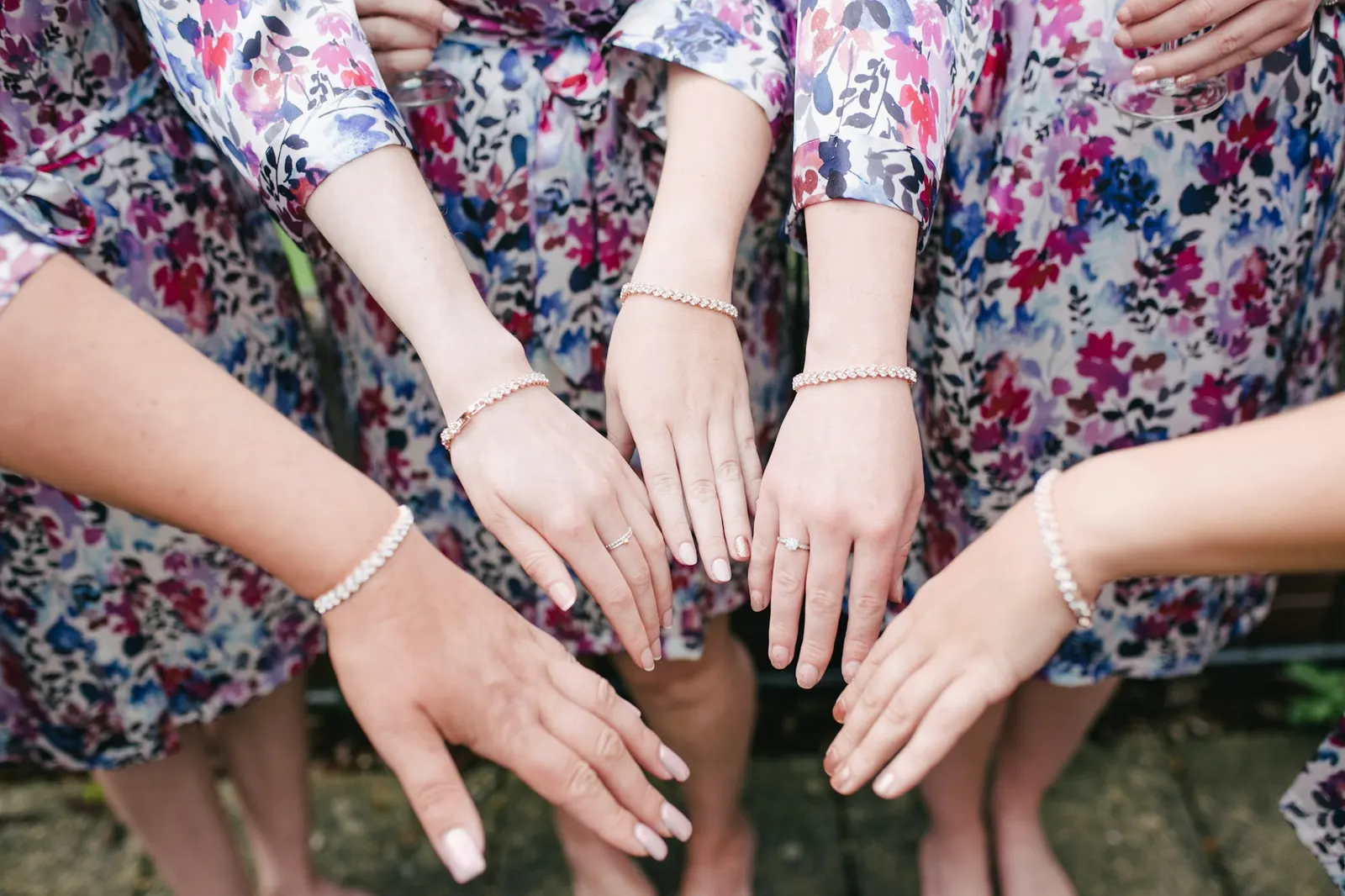
Calendar. Book residencies on fixed dates (first Saturday at the boutique, third Sunday at the brewery) so customers know where to find you, and fill the rest with markets and parties. Keep the “find us” calendar on your site current; it is the page that turns a follower into a customer.
Inventory and repairs. Track chain by the foot and reorder at a third remaining; suppliers can take two weeks. Keep a repair log: which chain, which jump ring, how long it lasted. If a style breaks often, drop it or change the jump ring gauge. Honor re-welds cheerfully; a customer who comes back for a free fix brings a friend.
Weld quality. Consistent welds come from consistent settings, a clean jump ring, correct fit (snug with a finger’s width of room) and a stable hand. Test each weld with a gentle tug before the customer leaves. Under-welded rings are the number one source of refunds and bad reviews.
Hiring a second welder. When you are turning down parties because they overlap, train a second person (a friend, a stylist from a partner salon) at $20–$30 an hour plus a per-weld bonus, and buy a second welder. This is a $2,000–$4,000 step that doubles your event capacity, and it is where your brand starts to matter more than your hands.
What breaks at 2×. Quality control (their welds are your reviews), scheduling (two calendars, two kits, two cars), inventory (two sets of chain), and the tendency to accept low-quality markets to keep the second person busy. Growth in this business comes from better events, not more events: raise the party minimum, add solid gold, and trade weak markets for residencies.
How much can you make?
These scenarios assume 2026 prices, an average ticket of $75–$85 including charms, and material costs around 15 percent of sales. Costs include chain and rings, booth fees, card fees, insurance, fuel, software and, where relevant, wages.
| Scenario | Events per month | Welds per month | Sales (year) | Costs (year) | Profit before tax |
|---|---|---|---|---|---|
| Side income (3–4 events a month, seasonal) | 3.5 | 55 | $46,000 | $19,000 | $27,000 |
| Full-time solo (residencies, markets, 4–6 parties) | 12 | 180 | $165,000 | $70,000 | $95,000 |
| Small team (you plus one welder) | 20 | 320 | $290,000 | $175,000 | $115,000 |
The side-income version is the most common and, done well, it is a genuinely good weekend business: around $27,000 for roughly 40 event days a year. The full-time solo row is the ceiling of what one person can do; it demands consistent content, two or three residencies and a steady stream of parties, and many full-time solo operators land closer to $45,000–$65,000 because winter is slow and not every weekend fills. The small team is where you stop welding every piece and start managing a brand, a calendar and a second person’s quality.
The ceiling for a single-city permanent jewelry brand is a small studio plus two or three mobile welders and $400,000–$600,000 in sales. Beyond that you are franchising, wholesaling chain kits or teaching, which are different businesses.
Mistakes that sink new permanent jewelry owners
- Buying $3,000 of chain in twenty styles before the first event. Half of it never sells. Fix: six to ten gold-filled styles, three sterling, reorder what moves.
- Paying for the wrong markets. A $200 booth at a produce market with a retiree crowd produces six welds. Fix: pick events with a female 20–45 crowd and ask organizers for last year’s vendor count and attendance.
- Skipping the practice. Inconsistent welds break in a week and generate refund DMs. Fix: 100 clean welds on scrap chain, then friends, before charging anyone.
- No sales tax permit. The market organizer asks for your number and you have no answer, or the state audits you later. Fix: register in week one and collect tax on every sale.
- Pricing to the cheapest operator in town. Someone will always weld for $35. Fix: sell the experience, the materials and the warranty; hold your price and add charms to lift the ticket.
- Treating Instagram as optional. Parties come from video of the welding moment, not from a booth alone. Fix: film at every event and post three to five times a week.
- Chasing markets instead of residencies. Fees and weather eat the margin. Fix: convert your two best pop-up hosts into monthly residencies by month three.
Your first 30 days
Week 1
- File the LLC, get an EIN, open a business bank account, register for a sales tax permit.
- Order the welder, safety gear and a training course or the manufacturer’s training package.
- Order starter chain (six to ten gold-filled, three sterling), matching jump rings, cutters and pliers, a light and a mirror.
- Build the website on Restart: chain menu with prices, party page, find-us calendar, boutique page, care policy, booking form.
- Create Instagram and TikTok accounts and post the setup process.
Week 2
- Practice welding: 100 clean welds on scrap chain, then bracelets on friends and family with photos and video.
- Get a general liability and equipment insurance quote; bind it.
- Apply to three or four markets and makers fairs for the coming six weeks.
- Design and print price cards, care cards with a review QR code, and a one-pager for boutiques.
- Set up Google Business Profile and a card reader.
Week 3
- Host a launch party for 15–20 friends; film everything; ask each guest to post and tag you.
- Walk into five boutiques, salons or nail bars with the one-pager and a bracelet on your wrist; offer a free trial Saturday at 10 percent.
- Email three event planners and two bridal boutiques with a referral offer.
- Post the launch party content daily.
Week 4
- Work your first market or boutique pop-up. Track welds, average ticket, charm attach rate, and which chains sold.
- Follow up with every host: propose a monthly residency date.
- Answer party inquiries within a day and take deposits.
- Reorder the chains that sold, drop the ones that did not, and review the numbers before booking the next month.