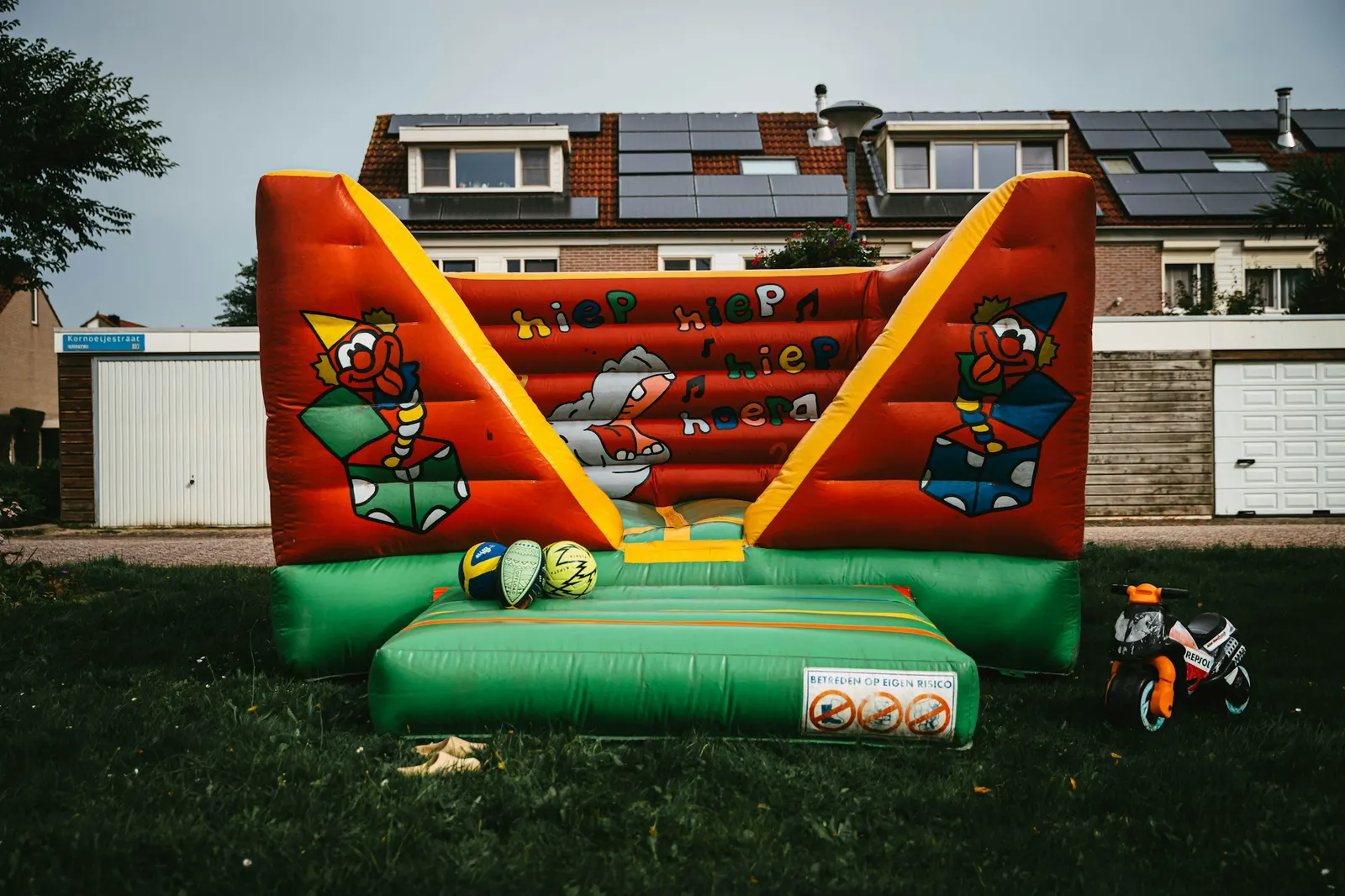
A commercial bounce house costs about $2,000 and rents for about $200. That single ratio is why so many people start a bounce house rental business, and it is also why so many quit after one summer: the unit pays for itself in ten rentals, but those ten rentals all want to happen on Saturday afternoons between May and September, and each one involves you hauling 250 pounds of vinyl into a stranger’s backyard.
This guide walks through how to start a bounce house rental business the way operators actually do it: which units to buy first, the insurance nobody wants to pay for and the state inspection rules that catch people off guard, how to price a rental so the truck and your Saturday are both covered, and what it takes to grow from two units in a garage to a trailer and a crew. It is written for someone starting with a truck or SUV, some savings, and free weekends, in a US suburb or small city.
What a bounce house rental business actually looks like day to day
The work is concentrated. A typical Saturday for a solo operator with five units: load at 7 a.m., deliver and set up four rentals between 8 and 11, deliver a late-afternoon rental, then pick up all five between 6 and 9 p.m. Setup takes 15–25 minutes per unit once you are practiced (unroll, stake or sandbag, connect the blower, inflate, brief the customer, take a photo). Teardown takes longer because the unit has to be deflated, wiped down and rolled tight enough to fit back in the truck.
Monday through Thursday you answer inquiries, deep-clean and repair, and try to book weekday work: daycares, schools, churches, corporate picnics and city recreation departments. Weekday bookings are what separate a hobby from a business, because they use inventory that would otherwise sit still.
Two market signals to know before you buy anything. In most US metros a standard bounce house rents for $150–$250 per day and a combo unit with a slide for $250–$400, and customers rarely negotiate because the party date is fixed. And demand is brutally seasonal: 70 percent or more of revenue lands between April and October in northern states, spread more evenly in Texas, Florida, Arizona and Southern California.
People who thrive are physically fit, organized about scheduling, comfortable talking to parents, and not squeamish about cleaning up after fifteen sugared-up eight-year-olds. What kills these businesses: cheap residential units that cannot be insured, underpricing to win bookings, one uninsured injury, and burning out because every weekend for six months belongs to the truck.
Step 1: Choose your inventory strategy
The first decision is not which color castle to buy. It is what kind of rental company you are going to be, because that dictates the unit mix, the vehicle and the customers.
Backyard birthday specialist
Standard 13×13 and 15×15 castles, one or two combo units (bounce area plus slide), a small toddler unit. Units weigh 150–300 pounds and fit in a pickup or cargo van. Customers are parents booking two to four weeks out; the average ticket is $200–$350. This is where nearly everyone should start.
Water slide and summer specialist
Inflatable water slides (15–22 feet tall), slip-and-slides, dunk tanks. These rent for $300–$550 per day and are the highest-demand item from June through August, but they weigh 400–700 pounds, need a dolly and ramps to move, and run a hose all day. You will need a trailer and a helper.
Event and institutional
Obstacle courses, interactive games and larger units for school field days, church festivals, company picnics and city events. Tickets run $800–$3,000 for a multi-unit package, often on weekdays, and buyers need a certificate of insurance and an invoice. It is the most profitable segment and the hardest to enter without a track record, so aim for it in year two.
A sensible first-year fleet is two standard castles, one combo unit and one water slide: enough to cover a typical Saturday, priced high enough to matter, small enough to fit in a garage.
Tip: Buy commercial-grade units from manufacturers that sell to the rental industry. They use 18-ounce PVC vinyl, double or quadruple stitching, and ship with an ASTM F2374 compliance label that insurers and state inspectors will ask about. A $400 backyard bouncer from a big-box store cannot be insured and should never be rented out.
Step 2: Set up the business and handle permits
Form an LLC. You are placing equipment that children jump on in other people’s yards; the liability shield is not optional. Filing costs $50–$500 depending on the state and takes an afternoon on the Secretary of State’s website. Get a free EIN from the IRS the same day and open a business checking account.
Then work through these, in order:
- Sales tax permit. In most states equipment rentals are taxable. Register with your state’s department of revenue (usually free).
- State amusement ride registration. This is the one that surprises people. Several states regulate commercial inflatables as amusement rides and require each unit to be registered and inspected annually, typically $50–$150 per unit. Pennsylvania, New Jersey, Ohio, Oklahoma, North Carolina and West Virginia have well-known programs; others have narrower rules. Search “[your state] amusement ride inflatable registration” and call the labor or agriculture department listed. Do this before you buy, because some states require manufacturer engineering documents you will want to request with the order.
- Local business license. Some cities and counties require one ($25–$150 a year).
- Park permits. City parks almost always require a permit and a certificate of insurance naming the city as additional insured. Learn the process now, because customers will ask you to handle it.
- Rental agreement. A one-page contract covering rules of use (no shoes, no flips, adult supervision, no water on dry units, no silly string), weather and cancellation policy, damage responsibility, and a liability waiver. A local attorney will review it for $200–$500, and it is the document that protects you when a parent’s brother tries a backflip.

Step 3: Get insured before your first rental
Insurance is the largest fixed cost of a bounce house rental business, and it is also the thing that makes you bookable by anyone other than a parent in a backyard. Standard general liability policies from mainstream carriers exclude inflatables, so you need a specialty policy written for the amusement or inflatable rental industry.
| Coverage | What it does | Typical annual cost (small fleet) |
|---|---|---|
| Inflatable liability (general liability with amusement endorsement) | Bodily injury and property damage from your units, $1M per occurrence / $2M aggregate | $1,500–$4,000 |
| Inland marine / equipment | Theft, vandalism or damage to your units in transit or on site | $300–$800 |
| Commercial auto or hired/non-owned auto | Your truck or trailer while working; personal auto policies exclude business use | $1,200–$3,000 |
| Workers’ comp | Required in most states once you hire a helper | $800–$2,500 per employee |
Brokers will ask for your unit list with manufacturer, size and purchase date, your rental agreement, and whether you rent water units. Expect them to require that you (not the customer) set up every unit, that you anchor according to manufacturer instructions, and that you have a written weather policy. Some exclude overnight or unattended rentals.
Schools, churches, HOAs and parks will ask for a certificate of insurance naming them as additional insured. Being able to send it within an hour is a quiet competitive edge.
Step 4: Equipment and startup costs
Everything in this table is priced for commercial-grade equipment in 2026. Shipping from the manufacturer typically adds $150–$400 per unit and is included in the ranges.
| Item | Lean start (2–3 units) | Full setup (6–8 units) |
|---|---|---|
| Standard 13×13 or 15×15 castle bounce houses | $3,000–$4,500 (2 units) | $4,500–$7,000 (3 units) |
| Combo unit (bounce + slide) | $0 (skip first year) or $2,800–$4,000 | $3,000–$8,000 (1–2 units) |
| Water slide, 15–20 ft | — | $3,500–$6,500 |
| Toddler unit or small game | — | $1,000–$2,000 |
| Blowers (1–1.5 HP, one per unit plus a spare) | $450–$750 | $1,200–$1,800 |
| Stakes (18–30 in), sandbags, tarps, extension cords (12-gauge) | $250–$450 | $600–$1,000 |
| Hand truck or inflatable dolly, ramps | $150–$400 | $500–$1,000 |
| Cleaning supplies, vinyl repair kit, patches, glue | $100–$200 | $200–$400 |
| Generator (3,500–5,000W inverter) | — | $700–$1,500 |
| Enclosed or utility trailer | — (use pickup/van) | $3,500–$8,000 |
| Insurance (first year, paid or financed) | $1,800–$4,000 | $3,500–$7,000 |
| LLC, permits, state unit registration, contract review | $300–$900 | $600–$1,500 |
| Website, domain, Google Business Profile, business cards | $100–$500 | $300–$800 |
| Total | $4,000–$12,000 | $18,000–$25,000+ |
Buy one more blower than you have units; a dead blower at a party is a refund. Buy 12-gauge extension cords, because a blower on 100 feet of thin cord runs hot and sags the unit. Get a good inflatable dolly early: it lets one person move a 300-pound combo unit up a driveway. And if you have no dry garage or shed, budget $100–$250 a month for a storage unit near your delivery area.
Step 5: Price your rentals so the day pays for itself
Bounce house pricing is per day (or per event, usually up to 6–8 hours), with add-ons. The mistake beginners make is pricing off the competitor with the lowest number on Facebook Marketplace, who is often uninsured and will be gone by next summer. Price as the reliable, insured, on-time option.
| Rental | Typical 2026 day rate | Notes |
|---|---|---|
| Standard 13×13 bounce house | $150–$250 | Your volume product |
| 15×15 or themed castle | $200–$300 | Licensed-character banners add $25–$50 |
| Combo unit (bounce + slide) | $250–$400 | The most requested unit for ages 4–10 |
| Water slide, 15–20 ft | $300–$550 | Summer only; requires hose access |
| Toddler bouncer | $125–$200 | Pairs well with a larger unit |
| Obstacle course, 30–40 ft | $400–$750 | Schools, festivals, teen parties |
| Delivery beyond 15–20 miles | $2–$3 per additional mile | Or a flat zone fee of $25–$75 |
| Generator | $50–$90 | Parks, fields, no outlet within 100 ft |
| Overnight or multi-day | +50% of day rate per extra day | Only for fenced private yards |
| Holiday weekend | +15–25% | Memorial Day, July 4, Labor Day |
Now the math. Four units on a Saturday at an average of $250 each, plus $60 in delivery and generator fees, is about $1,060 in revenue. Fuel, cleaning supplies and card fees take 8–10 percent, so you net about $950 for a long day. Do that 24 Saturdays a year, add half as much again in Sunday and weekday work, and you have around $34,000 in gross profit before insurance, repairs and truck costs. That is the honest shape of a first-year solo business with a small fleet.
Take a 25–50 percent deposit at booking (non-refundable except for weather), balance due on delivery. Most operators let customers reschedule or take a rain credit when sustained rain or wind over 15–20 mph is forecast, and never set up in lightning or high wind regardless of what the customer wants.

Step 6: Get online and look like the safe choice
Parents planning a party either search “bounce house rental near me” and click the first site that shows prices and looks trustworthy, or ask a local Facebook group and book whoever answers first with a photo and a price. You need to win both.
Your website needs an inventory page with a photo, dimensions, age range and price for every unit; a service-area page listing the towns you deliver to; your insurance status and safety rules in plain language; photos from real parties; reviews; and an obvious way to check a date and request a booking. A parent should be able to answer “how much, will it fit in my yard, and are you legit” in thirty seconds.
You can have Restart build it: describe the business, your units and prices, the towns you serve and how you want people to reach you, and it builds the pages, writes the copy, designs the site and publishes it to a real URL. When you add a water slide in June or raise prices for July 4 weekend, you ask for the change and it is live. Restart is built for exactly this kind of local service business where a clear, current site is the difference between getting the inquiry and losing it to the competitor whose prices are visible.
Then create a Google Business Profile with your service area, upload twenty real photos, and ask every customer for a review at pickup while the kids are still glowing about it. Text back within ten minutes during party-planning hours (weekday evenings, Saturday mornings); speed of response wins more bookings in this industry than any other single factor.
Watch out: Never use manufacturer stock photos or licensed-character artwork you do not have rights to. Take your own photos at every setup, with permission, before the guests arrive.
Step 7: Book your first customers
The first five bookings are the hardest and they set your reputation. What actually fills a calendar in the first two months:
- Local Facebook groups and Nextdoor. Post in mom groups and “[town] buy sell trade” groups with a real photo, a clear price and your insurance status. Answer every “how much” comment with a direct message and a date check.
- Your own network. Offer friends and family 20 percent off in exchange for photos and a Google review. These become your first ten photos and first five reviews.
- Daycares and preschools. End-of-year parties, fall festivals and graduation days, usually on weekdays. Walk in with a flyer and your certificate of insurance and ask for the director.
- Churches. Fall festivals, VBS week and Easter egg hunts book two to three units at a time. Reach the children’s ministry director, not the main office.
- Party vendors. Photo booth operators, mobile bartenders, face painters and snow cone vendors get asked for inflatables constantly. Offer a 10 percent referral fee and be reliable enough that they keep sending work.
- Parks and recreation departments. Get on the vendor list. Community events pay well, book multiple units and repeat every year.
Charge close to full price for the first five jobs. A $175 rental instead of $225 is a fine launch offer; $99 attracts the customers who will also argue about a $50 cleaning fee. When someone asks for a quote: confirm the date and start time, ask about yard size, surface and outlet distance, quote one price with delivery and setup included, and send the deposit request within the hour.

Step 8: Run the operation and grow the fleet
Once you have bookings, the business becomes logistics.
Scheduling. Cluster deliveries by geography and offer a delivery window (8–11 a.m.) rather than an exact time, confirmed by text the night before. Use a rental booking tool that shows unit availability by date so you never double-book; it is worth the monthly fee once you pass three units.
Cleaning and maintenance. Wipe every unit on pickup, deep-clean weekly with a vinyl-safe cleaner and disinfectant, and dry fully before rolling. Inspect seams, netting, anchor points and blower tubes each time. A $10 patch applied today prevents a $300 seam repair. Keep a repair log per unit; state inspectors and your insurer will ask.
Hiring your first helper. At five or six rentals on a Saturday you cannot do it alone. Pay $18–$25 an hour for 8–10 hours on Saturdays; the helper pays for themselves in the two extra rentals you can now deliver. Add workers’ comp when you do.
The second truck. At roughly twelve units and $8,000+ in a strong weekend month, a second vehicle and crew of two doubles Saturday capacity. Fixed costs (insurance, storage, software) stop growing much while revenue keeps climbing, and margins improve.
What breaks at 2×. Storage (a warehouse bay runs $600–$1,500 a month), scheduling (a second crew means dispatch, not a list), damage (more repairs and one or two write-offs a year), and cash flow (insurance and state registrations renew in spring, right before the season pays). Keep a reserve equal to two months of fixed costs going into every winter.
How much can you make?
These scenarios use realistic 2026 pricing and assume a 28-week core season plus a light off-season. “Fixed costs” cover insurance, storage, software, unit registration and marketing; “variable” covers fuel, cleaning, card fees, repairs and helpers.
| Scenario | Units | Rentals per week (season) | Avg price | Gross revenue (year) | Costs (year) | Profit before tax |
|---|---|---|---|---|---|---|
| Side income | 3 | 4 (weekends) | $220 | $28,000 | $9,000 | $19,000 |
| Full-time solo | 8 | 10 | $260 | $85,000 | $30,000 | $55,000 |
| Small team (2 trucks, 2 helpers) | 20 | 24 | $290 | $220,000 | $115,000 | $105,000 |
The side-income version is the most common and it is a good business: $19,000 a year for 26 working weekends, with equipment that holds resale value. The full-time solo version is real but exhausting, and the profit depends on booking weekday institutional work. The small-team version is where owners stop lifting vinyl and start managing a calendar and crews. The ceiling for a regional operator with a warehouse, three or four trucks and 50+ units is $500,000 to $1 million in revenue at 25–35 percent margins, and it takes five or more years of focus on institutional and corporate accounts to get there.
Mistakes that sink new bounce house owners
- Buying residential units to save money. They cannot be insured, they tear in a season, and a single injury is a lawsuit with no coverage. Fix: buy commercial 18-oz vinyl with ASTM labels from the start, even if it means two units instead of four.
- Running uninsured for “just the first summer.” One broken arm and the business and your savings are gone. Fix: bind an inflatable liability policy before your first rental, and put “fully insured” on everything you publish.
- Pricing to match the cheapest Facebook Marketplace listing. You cannot cover insurance, fuel and your Saturday at $99 a rental. Fix: price at the market rate for insured operators and sell reliability, cleanliness and speed of response.
- No written weather and cancellation policy. You will end up arguing about a refund in a driveway while it rains. Fix: put the policy in the contract and the confirmation text, and decide the call by 7 a.m. the day of the event.
- Skipping the stakes and sandbags because the yard “looks calm.” Wind is the leading cause of serious inflatable injuries. Fix: anchor every unit per the manufacturer’s instructions, use sandbags on hard surfaces, and pull the unit down when gusts exceed the manufacturer’s limit, no exceptions.
- Letting the customer set up or move the unit. Your insurer almost certainly requires that you set up. Fix: always deliver, stake, inflate and brief the customer yourself; never drop off a rolled unit.
- Rolling damp units. Mildew ruins a $2,500 unit in a couple of weeks. Fix: dry every unit fully, in the sun or with fans in the garage, before it goes back into storage.
Your first 30 days
Week 1
- File the LLC, get an EIN, open a business bank account, register for a sales tax permit.
- Check whether your state registers or inspects inflatables and request the forms.
- Get quotes from two inflatable insurance brokers; ask what rules they require.
- Pick the first-year fleet (two castles and one combo is the standard answer) and request quotes from two or three commercial manufacturers, including shipping and ASTM documentation.
- Build the website on Restart: units, prices, service area, rules, contact and a request-a-date form.
Week 2
- Order the units, blowers (plus a spare), stakes, sandbags, tarps, 12-gauge cords and a dolly.
- Bind insurance and get a sample certificate of insurance.
- Have a lawyer review the rental agreement and waiver.
- Create the Google Business Profile and a Facebook page; set up a booking calendar tool.
- Clear the garage or rent a storage unit.
Week 3
- Units arrive. Inflate each in your yard, practice setup and teardown until both are under 20 minutes, and take photos from a dozen angles.
- Post launch offers to friends and family (20 percent off for photos and a review).
- Join eight to ten local Facebook and Nextdoor groups and introduce the business with a photo and price.
- Deliver a flyer and insurance certificate to five daycares and three churches.
Week 4
- Deliver the first paid rentals: confirm by text the night before, arrive within the window, brief the customer, take photos, ask for a review at pickup.
- Register with the parks department as an approved vendor.
- Propose a referral arrangement to three party vendors (photo booth, face painter, mobile bar).
- Review the numbers: fuel and time per rental, what customers asked for that you do not have, and whether a water slide is the right next unit before summer.